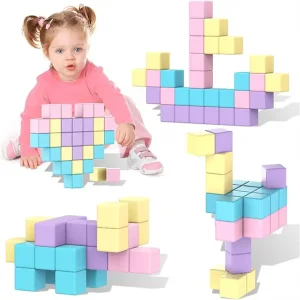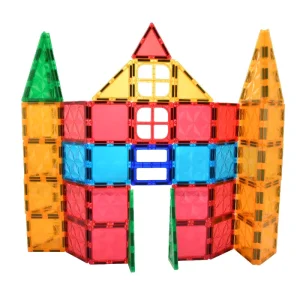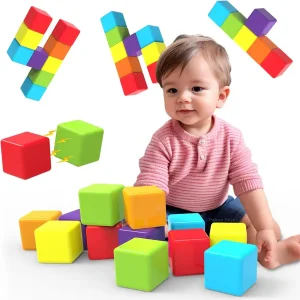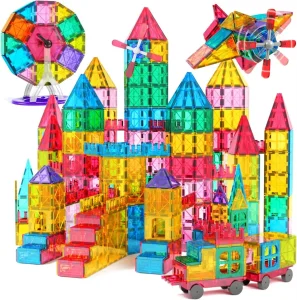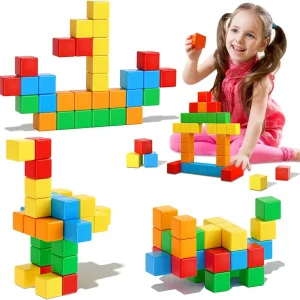
Explore our flagship STEM-certified magnetic building block lines produced via ultrasonic automation and food-grade non-toxic polymers.
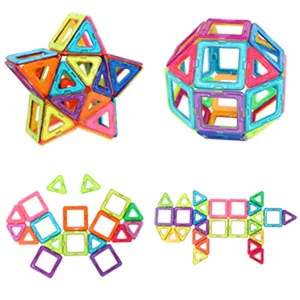
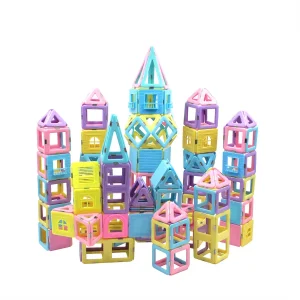
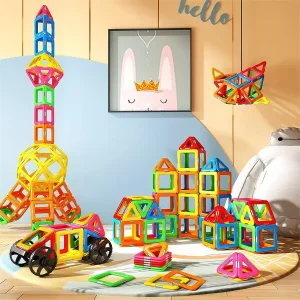


The global magnetic building toys industry has undergone a radical transformation over the past decade. No longer viewed simply as novelty construction sets, magnetic building blocks have matured into an essential cornerstone of early childhood STEM (Science, Technology, Engineering, and Mathematics) education, sensory integration therapy, and architectural play. Modern B2B procurement officers, toy brand managers, and educational distributors are increasingly prioritizing manufacturing partners who can offer more than just low-cost injection molding; they require deep material expertise, structural safety guarantees, continuous innovation, and resilient supply chains.
According to structural data from recent global toy industry market research, the global magnetic building toys segment is expanding at a Compound Annual Growth Rate (CAGR) of over 8.4%, far outpacing traditional plastic construction bricks. This surging consumer demand is anchored by several overarching user intent patterns and buyer motivations:
Parents and educational institutions prioritize toys that facilitate spatial awareness, geometric understanding, and physics fundamentals. Magnetic tiles and 3D cubes allow instant feedback—children intuitively learn about magnetic polarity, structural balance, gravity, and load-bearing geometries without friction.
Due to historical safety recalls of loose high-powered neodymium magnets in unregulated novelty toys, international regulatory bodies enforce zero-tolerance policies. Top tier brand owners search exclusively for factories utilizing ultrasonic riveting, internal structural lattice supports, and heavy-duty encapsulated ABS shells.
E-commerce brands (Amazon FBA, Shopify direct-to-consumer leaders) and boutique educational suppliers require unique aesthetic differentiation. This includes custom Pantone color palettes (e.g., pastel macaron series, clear crystal ice series), customized metallic foils, and modular expansion packs.
Building high-performance, ultra-safe magnetic construction toys requires a deep understanding of polymer chemistry, structural mechanics, and magnetic field physics. As leading manufacturers, industrial engineering teams implement strict raw material control and multi-stage structural reinforcement protocols.
The core structural housing of magnetic building tiles and blocks must exhibit exceptional impact strength, high flexural modulus, and optical clarity. Advanced factories utilize non-toxic, BPA-free, virgin ABS (Acrylonitrile Butadiene Styrene) or transparent MABS (Methyl Methacrylate ABS) plastics. Recycled or low-grade regrind plastics are strictly prohibited, as they induce micro-cracks along the perimeter seam under continuous drop testing.
At the center of every block’s functionality are permanent rare-earth Neodymium-Iron-Boron (NdFeB) magnets (typically N35, N38, or customized N52 grades). Because NdFeB magnets can corrode when exposed to humidity, top manufacturers apply anti-oxidative electroplated coatings (Nickel-Copper-Nickel or Epoxy passivation) before encapsulating them securely inside the plastic chamber.
| Engineering Parameter | Standard Market Specification | Factory Industrial Standard (YuQi Benchmark) | Impact on Product Longevity & Safety |
|---|---|---|---|
| Outer Shell Resin | Recycled / Mixed ABS Plastic | 100% Virgin Food-Grade ABS / MABS Resin | Prevents yellowing, maintains optical clarity, eliminates brittle shell fractures upon impact. |
| Sealing Methodology | Solvent Glue Bonding / Heat Press | High-Frequency Ultrasonic Welding + Internal Riveting | Creates a permanent molecular bond capable of enduring >150 N tensile pull forces. |
| Magnet Encapsulation | Single Wall Pocket | Dual-Chamber Structural Lattice + Corner Lock | Prevents magnet movement or dislodgement even if outer tile shell suffers direct drop impact. |
| Surface Protection | Standard Mold Surface | Scratch-Resistant Beveled Inset Design | Keeps tile face raised 0.5mm, reducing optical friction scratches during play and transit. |
| Magnetic Flux Index | Varies (>50 kG²·mm²) | Strictly < 50 kG²·mm² (Compliant with ASTM F963) | Guarantees powerful magnetic adhesion while remaining 100% compliant with global child safety laws. |
For B2B importers, selling non-compliant toys can result in immediate market removal, customs seizures, and heavy regulatory fines. Reliable manufacturers operate fully certified testing labs (or partner with third-party agencies such as SGS, TÜV Rheinland, and Intertek) to test every production lot against the following regulatory frameworks:
United States Market: Mandatory physical drop testing, torque testing, tension testing, and strict magnetic flux index ceiling caps (<50 kG²·mm²) to eliminate ingestion risks.
European Union Market: Specifies mechanical and physical safety, flammability rating, and migration of 19 toxic heavy metals (lead, cadmium, phthalate restrictions).
Global & Australasia: Harmonized safety specifications governing structural integrity, edge smoothness, and strict small-parts hazard testing for children under 36 months.
Chemical & Environmental: Ensures complete compliance regarding chemical safety, SVHC (Substances of Very High Concern) content, and electrical hazard safety for illuminated LED blocks.
The manufacturing ecosystem for magnetic toys has shifted dramatically toward full-scale industrial automation. Centered in China’s dominant hardware and toy manufacturing clusters—such as Yongkang, Zhejiang—factories have integrated Industry 4.0 paradigms to deliver unprecedented quality control, rapid tooling deployment, and massive cost efficiency.
Manual insertion of magnets into plastic molds introduces human error, polarity inversion, and oil contamination. Modern automated lines utilize high-speed robotic pick-and-place systems equipped with optical sensors to verify 100% magnetic polarity alignment prior to welding.
High-frequency sonic energy (20 kHz to 35 kHz) melts the joint interface in milliseconds, fusing the upper and lower plastic casings into a single structural unit. This process produces clean, hermetically sealed edges without toxic adhesives.
High-resolution AI vision cameras scan every finished piece on the conveyor belt for micro-scratches, internal plastic flash, bubble inclusions, or minor color discrepancies, instantly rejecting non-conforming items.
Located in Zhejiang Province, Yongkang serves as China's legendary hardware and precision manufacturing center. This geographical cluster provides an unmatched competitive moat for magnetic toy manufacturing:
For corporate purchasing departments, toy brand managers, and global importers, selecting the right manufacturing partner is a high-stakes decision. Establishing a robust vendor audit framework guarantees stable inventory supply, brand protection, and healthy profit margins.
Prior to issuing POs, buyers should verify the supplier’s Corporate Social Responsibility (CSR) and quality certifications, including ISO 9001 (Quality Management), BSCI (Business Social Compliance Initiative), or SMETA Audit compliance. This guarantees ethical labor practices, safe factory conditions, and structured quality standard operating procedures (SOPs).
A capable factory must provide full-spectrum customization capabilities: customized packaging (color window boxes, tin boxes, canvas storage bags), custom Pantone color matching, laser-engraved brand logos, and specialized instruction booklets with progressive STEM building challenges.
Request gold samples directly from production lines. Conduct rigorous in-house destructive tests: drop testing onto concrete from 2 meters height, immersion in water tanks to test ultrasonic sealing, and pull testing on individual magnetic joints to verify structural strength.
The versatility of magnetic building blocks extends across multiple commercial and educational channels. Understanding these diverse end-use environments allows B2B buyers to tailor their product lines and packaging strategies effectively.
Used as interactive tactile teaching tools for early geometry, fractional math, and basic physics. Heavy-duty magnetic tile sets with reinforced corners are required to withstand daily communal play by dozens of children.
Occupational therapists utilize 3D magnetic cubes and tiles to develop fine motor skills, bilateral coordination, and spatial visual processing in neurodiverse children, valued for their satisfying tactile and auditory magnetic click feedback.
Wholesale buyers leverage private-label magnetic block sets as high-margin gift items for holiday seasons, birthdays, and back-to-school promotional campaigns on major e-commerce platforms and retail toy shelves.
Large-scale jumbo magnetic blocks and wall-mounted magnetic play boards serve as interactive installations in children's museums, indoor amusement parks, and family entertainment centers (FECs).
Clear, direct answers to common engineering, compliance, purchasing, and logistical inquiries from global wholesale buyers and brand managers.
Explore the full array of high-volume wholesale magnetic tiles, 3D cubes, and sensory construction sets available directly from our China manufacturing facilities.