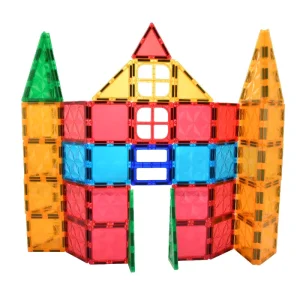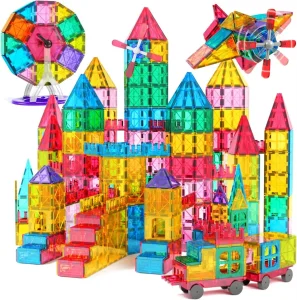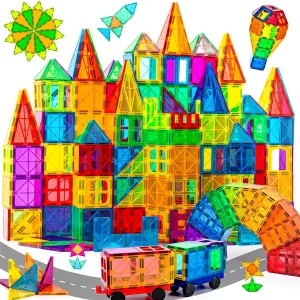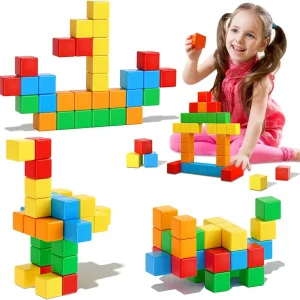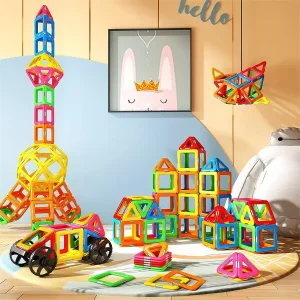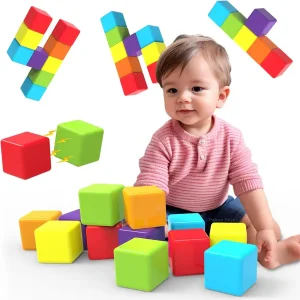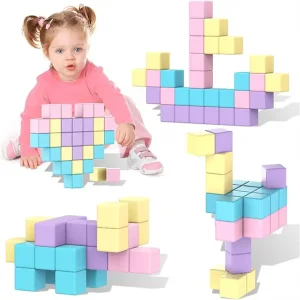
Engineered with ultrasonic perimeter welding and high-grade neodymium magnets to satisfy demanding commercial and institutional standards.
Strategic overview of Indonesia's shifting toy import ecosystem, national education reforms, and regional distribution infrastructure.
Indonesia represents one of Southeast Asia's fastest-growing consumer markets for educational and early childhood toys. With a young demographic profile where over 25% of the population is under 15 years old, national mandates such as the Ministry of Education's Kurikulum Merdeka (Independent Curriculum) have catalyzed unprecedented demand for active, hands-on learning resources.
Educational institutions across major metropolitan areas—including Jabodetabek (Jakarta, Bogor, Depok, Tangerang, Bekasi), Surabaya, Bandung, and Medan—are rapidly transitioning from traditional passive learning tools toward Science, Technology, Engineering, and Mathematics (STEM) accredited tactile hardware. Magnetic building tiles and 3D magnetic cubes have emerged as prime instructional media within private international schools, Montessori centers, and public early childhood educational facilities (PAUD).
While local plastic injection moulding industries exist in centers like Cikarang and Karawang, specialized magnetic encasement requires high-precision ultrasonic welding machinery, food-grade non-recycled ABS resins, and automated magnet insertion technologies. Direct OEM partnerships between Indonesian brand owners and certified specialized manufacturing hubs provide the necessary economies of scale, rigorous SNI quality control, and custom branding versatility required to dominate domestic retail channels such as Tokopedia, Shopee, and offline physical chains.
A technical breakdown of raw material selection, magnet housing design, and anti-choking safety protocols.
Unlike budget alternatives that utilize recycled or regrind polystyrene (PS) which brittles under stress, high-end magnetic tiles feature 100% virgin food-grade ABS resin. This guarantees extreme impact resistance, optical transparency, and complete compliance with non-toxic chemical limits for heavy metals and phthalates.
The operational strength of magnetic tiles depends on internal magnetic flux density. Standard commercial grade uses N35 permanent Neodymium-Iron-Boron (NdFeB) cylindrical magnets. For specialized high-rise construction sets, N38 magnets provide up to 18% higher retention force, preventing collapse in tall structures.
Safety is paramount to prevent loose magnet ingestion. Manufacturing processes utilize high-frequency ultrasonic welding (20kHz-35kHz) combined with interior structural lattice rivets. This dual-containment design exceeds international tensile drop tests, resisting impacts exceeding 25 Joules.
Compare manufacturing standards across standard retail, educational institutional, and premium commercial grade magnetic building sets.
| Performance / Material Parameter | Standard Retail Grade | Institutional / Montessori Grade | Factory OEM Custom Options |
|---|---|---|---|
| Base Plastic Material | Virgin ABS (Food-Grade Options) | High-Clarity Scratch-Resistant Virgin ABS | Custom Color Tinting / Pastel / Translucent Macaron |
| Magnet Material & Grade | NdFeB N35 Permanent Magnets | NdFeB N38 High-Coercivity Magnets | N35, N38, or Custom Flux-Optimized Sizing |
| Encasement Technology | Ultrasonic Edge Weld | Ultrasonic Weld + Stainless Steel Internal Rivets | Beveled Lattice Edge + Double Sealed Cavity |
| Tensile Pull Strength | > 18 Newtons per tile point | > 25 Newtons per tile point | Engineered to Custom Load Specifications |
| Safety Compliance Certifications | SNI ISO 8124, EN71-1/2/3 | SNI ISO 8124, ASTM F963, CPSIA, CE | Full Certificate Mapping for Indonesian Customs clearance |
| Surface Finish & Coating | Glossy Polish | Anti-Scratch Convex Surface Lattice | Embossed Logo / Custom Pad Printing available |
How magnetic tiles and blocks integrate into Indonesian commercial retail, educational, and corporate eco-systems.
Leading institutions in South Jakarta, BSD City, and Surabaya incorporate magnetic building sets into early geometry and physics modules. Teachers utilize 3D magnetic cubes to demonstrate spatial transformations, vector equilibrium, and architectural stability.
Indonesian online sellers on platforms like Tokopedia and Shopee leverage factory-direct OEM packaging (custom color boxes, Indonesian Bahasa translation inserts, local brand logos) to capture high-margin retail sales across the archipelago.
Family entertainment centers and kids' play zones in major shopping centers (Grand Indonesia, Tunjungan Plaza, Pakuwon Mall) utilize heavy-duty institutional tile sets built for continuous multi-child physical usage and quick sanitization.
Anticipating industry trends for 2025–2030 in raw materials, sustainability, and interactive learning tech.
To align with global ESG mandates and Indonesia's plastic waste reduction roadmaps, factories are transitioning toward bio-based PLA (Polylactic Acid) blends and recycled post-consumer PET compounds without compromising optical transparency or tensile strength.
Engineering developments focus on micro-encapsulated housing sleeves that isolate Neodymium magnets from direct plastic contact. This shock-absorbing sub-chamber dampens drop impact forces by up to 40%, virtually eliminating casing fracture risks.
Integrating non-electronic passive AR tracking markers directly onto magnetic tile faces allows mobile apps to scan physical 3D structures constructed by students, converting physical builds into dynamic digital simulations.
Essential regulatory guidelines for B2B importers, distributors, and toy brand owners importing into Indonesia.
All toys imported into Indonesia must strictly comply with SNI ISO 8124 (Parts 1-4), governing physical mechanical properties, flammability, migration of specific chemical elements, and phthalate plasticizer thresholds. OEM manufacturers support buyers by providing detailed lab test data sheets (ITS, SGS, TUV) that accelerate local LSPro testing and Ministry of Industry certification.
Containerized shipments (FCL / LCL) entering main hubs like Jakarta (Tanjung Priok), Surabaya (Tanjung Perak), or Semarang (Tanjung Emas) require precise HS Code classification (typically HS 9503.00 for construction sets). Automated export packing protocols ensure master cartons utilize heavy-duty 5-ply corrugated walls to withstand humid equatorial maritime transport.
From toddler-safe magnetic blocks to advanced geometric tile construction kits—factory-direct solutions with full OEM customization.
Clear answers to common questions regarding minimum order quantities, customization, SNI certification, and shipping turnaround times.
For standard stock sets in neutral packaging, minimum order quantities start as low as 50–100 units. For custom OEM branding—including customized colored retail boxes, Bahasa Indonesia user manuals, and embossed logos—MOQs typically start at 500 sets per item.
Our manufacturing facility provides pre-certified lab documentation (SGS/ITS/TUV) covering physical safety, heavy metal migration, and phthalates. We use virgin food-grade ABS resin and ultrasonic perimeter welding, ensuring smooth approval through accredited Indonesian LSPro testing bodies.
Production cycles generally take 15–25 business days depending on order volume and custom tooling requirements. Ocean freight transit from main Asian manufacturing ports to Tanjung Priok (Jakarta) or Tanjung Perak (Surabaya) typically takes 7–12 days.
Yes. All geometric tile dimensions, magnet position pitch, and thickness profiles are manufactured to standardized international specifications, allowing 100% cross-compatibility with major global magnetic tile brands sold across Southeast Asia.
Partner directly with an ISO-certified OEM factory. Get competitive B2B wholesale pricing, custom sample sets, and complete SNI compliance support today.
Send Inquiry Now