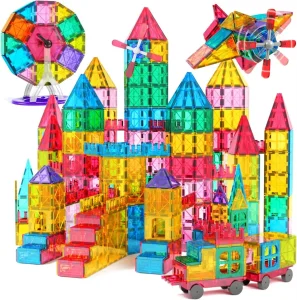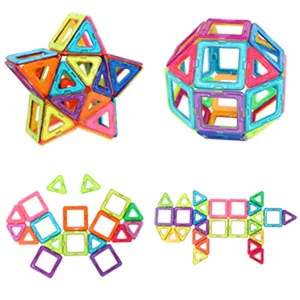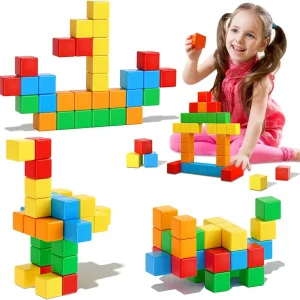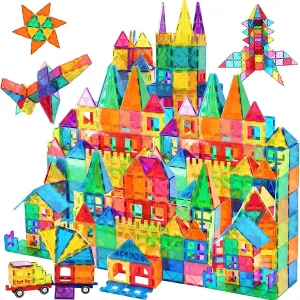
Wholesale Magnetictile Sets Suppliers & Factories

The Definitive Industrial Whitepaper on B2B Sourcing, Global Safety Compliance, Material Engineering, and Supply Chain Optimization for Educational Toy Brands

8+ Years
Manufacturing Expertise
20,000m²
Automated Factory Facility
634+
Skilled Workforce & Engineers
50+
Global Export Destinations

1. Global Market Landscape & B2B Procurement Intent for Magnetictile Sets

Strategic macro-analysis of the global STEM educational toy sector, detailing consumer shifts, procurement criteria, and vendor requirements.

The global magnetic construction toy industry has undergone a monumental shift over the past decade. Previously categorized as niche spatial playthings, magnetic tiles, blocks, and 1.42-inch magnetic cubes have evolved into core structural components of early childhood education (ECE) curricula, Montessori learning frameworks, and mainstream retail toy shelves worldwide. According to recent market intelligence reports, the global market for magnetic building toys is expanding at a Compound Annual Growth Rate (CAGR) exceeding 8.4%, driven primarily by increased demand for screen-free educational toys, STEM/STEAM (Science, Technology, Engineering, Arts, and Mathematics) certification criteria, and heightened parental investment in early cognitive development.

Search Intent & B2B Purchasing Dynamics: Commercial search intent around keywords like "Wholesale Magnetictile Sets Suppliers & Factories", "China magnetic toy manufacturer", and "OEM magnetic building blocks" reflects highly sophisticated buying behavior. Decision-makers—ranging from private-label brand owners and Amazon FBA aggregators to international toy distributors and educational institutional procurement officers—are not merely searching for unit pricing. They are actively seeking verified manufacturing capability, ultra-sonic welding integrity, compliance guarantees, stable lead times, and custom packaging support.

Macro Trends Driving Global Demand

Four primary structural catalysts are shaping how global enterprise buyers engage with Chinese magnetic tile factories:

  • Institutional Integration of STEAM Curricula: Preschools and primary educational institutions across North America, Western Europe, and Asia-Pacific are increasingly standardizing open-ended magnetic construction toys to teach geometry, architectural balance, physics principles (magnetism and polarity), and spatial reasoning.
  • Heightened Product Safety Regulations: Stringent enforcement by global regulatory bodies—such as the US Consumer Product Safety Commission (CPSC) and European ECHA—demands near-zero tolerance for loose magnet hazards. Enterprise buyers require factory partners with automated quality control systems to prevent magnet ingestion risks.
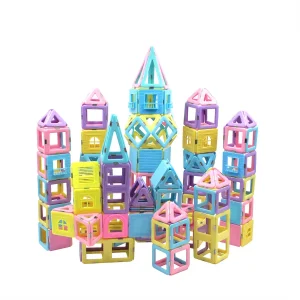
  • Demand for Aesthetic Innovation: Traditional primary-colored transparent tiles are rapidly expanding into sophisticated product variations, including pastel macaron color schemes, diamond-surface light reflection textures, architectural window-and-brick add-ons, and integrated LED luminous blocks.
  • Private Labeling & OEM Customization: Global brands require agile manufacturing hubs capable of executing custom mold design, bespoke packaging, branded instruction manuals, and multi-layered safety certifications under fast turnarounds.
Procurement Criteria Tier-1 China Manufacturers (e.g., YuQi Toys) Low-Cost Sourcing Agents Local Regional Assemblers
Magnet Encapsulation Dual-Seal Ultrasonic Welding + Internal Riveting Single-Layer Glue Bonded (High Risk) Varies / Manual Ultrasonic Assembly
Raw Material Purity 100% Virgin Food-Grade ABS Plastic (BPA-Free) Recycled or Mixed Plastic Resins Imported Virgin Resin (High Cost)
Magnet Grade & Strength Custom N35/N38 Rare-Earth Neodymium Magnets Sub-standard Ferrous or N28 Magnets Standard N35 Magnets
Compliance Documentation Full Suite: ASTM F963, CPSIA, EN71, CPC, ISO9001 Partial / Outdated Certificates Third-Party Relied Documentation
Production Capacity & MOQ High Volume (20,000 m² facility) with Flexible MOQ Unstable Capacity / Variable Lead Times Low Volume Capacity / Extremely High Cost

2. Supply Chain Superiority & Material Engineering of Chinese Factories

An in-depth look at how Chinese industrial clusters deliver unmatched cost efficiency, structural safety, and material engineering.

The concentration of precision plastic injection molding, rare-earth magnet mining, and automated packaging infrastructure in Eastern China—specifically within Zhejiang (Yongkang, Jinhua) and Guangdong provinces—has established China as the unrivaled manufacturing backbone for global magnetic tile suppliers. Achieving structural stability, optical clarity, and absolute magnet containment requires complex industrial synergy that only an established manufacturing cluster can maintain.

Rare-Earth Supply Chain

Direct integration with China's Neodymium (NdFeB) magnet refining hubs ensures stable access to premium N35, N38, and N42 grade magnets with consistent magnetic flux density and long-term demagnetization resistance.

Ultrasonic Welding Tech

State-of-the-art high-frequency ultrasonic welding bonds top and bottom ABS tile casings at a molecular level, eliminating reliance on chemical adhesives and rendering tiles drop-resistant under severe impact.

Anti-Scratch Architecture

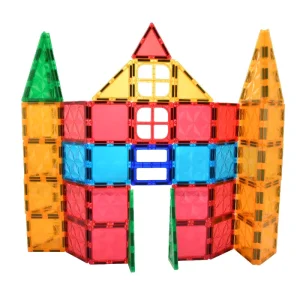
Advanced mold surfaces feature raised structural edge rims (lattice design) that prevent central transparent tile faces from scratching during shipping, handling, and rigorous childhood play.

Deep-Dive into Material Engineering: Food-Grade ABS & Magnet Encapsulation

For B2B buyers, evaluating product safety begins at the molecular level. Leading Chinese suppliers like Yongkang YuQi Industry and Trade Co., Ltd. utilize 100% non-toxic, food-grade Acrylonitrile Butadiene Styrene (ABS) plastic resin. This virgin material provides three vital physical properties: extreme impact strength to prevent cracking, crystal-clear light translucency for vibrant aesthetic appeal, and complete freedom from volatile organic compounds (VOCs), phthalates, and Heavy Metals (Lead, Cadmium, Arsenic).

Furthermore, internal structural design plays a decisive role in physical durability. Inside each magnetic tile, individual cylinders or containment slots hold cylindrical Neodymium magnets. Premium manufacturers incorporate internal security rivets and double-sealed boundary walls around every magnet chamber. Even in the extreme event of a tile housing being fractured under heavy external pressure, the internal mechanical lock prevents the magnet from dislodging, fully satisfying CPSC and EU Toy Safety Directive mechanical force thresholds.

3. Localized Support, Regulatory Compliance & Quality Assurance

Comprehensive breakdown of international safety certifications, customs documentation, and localized fulfillment solutions.

Navigating cross-border toy commerce requires absolute compliance with destination market standards. A single regulatory failure at customs can lead to container seizures, severe brand damage, or catastrophic consumer safety recalls. Industry-leading Chinese magnetic tile suppliers operate as full-service compliance partners, ensuring seamless clearance and market entry into North America, Europe, Australia, and the Middle East.

Global Toy Safety Standards Compliance Matrix

  • United States (ASTM F963-23 & CPSIA): Testing covers total Lead content in substrate materials, phthalates restriction (8 prohibited phthalates), and strict compliance with Section 4.38 for Magnets. The magnetic flux Index must remain under 50 kG²mm² for loose components, or be permanently encased in a way that survives heavy impact, drop, torque, tension, and compression testing.
  • European Union (EN71 Series & CE Marking): Compliance requires passing EN71-1 (Mechanical and Physical Properties), EN71-2 (Flammability), and EN71-3 (Migration of Certain Elements—covering 19 heavy metal limits). Additionally, products comply with REACH regulations for chemical safety and SVHC lists.
  • Australia & New Zealand (AS/NZS ISO 8124): Harmonized physical and mechanical testing protocols focusing on structural integrity and magnet encapsulation limits.
  • Quality Management System Certifications: World-class factories operate under certified ISO 9001 (Quality Management Systems) and ISO 14001 (Environmental Management Systems) protocols, supported by annual BSCI (Business Social Compliance Initiative) social audit reports.
Localized OEM/ODM Support & Supply Chain Services: Professional suppliers provide enterprise buyers with flexible commercial models including DDP (Delivered Duty Paid), FOB (Free on Board), and CIF shipping arrangements. Furthermore, factory engineering teams support custom die-cut artwork design, FSC-certified eco-friendly retail color packaging, private-label barcode printing, and Amazon FBA warehouse preparation (palletization, carton labeling, and drop-ship compliance).

4. Global B2B Sourcing Demands & Custom OEM/ODM Workflow

Step-by-step technical pipeline from initial product concept to mass production and quality verification.

When enterprise procurement teams evaluate potential suppliers for wholesale magnetic tile sets, they utilize structured vendor scorecards. Key performance indicators (KPIs) include defect rates (target < 0.05%), mold precision (tolerance < 0.02mm), sample turnaround times, and post-sale technical support. To meet these stringent enterprise requirements, top-tier Chinese manufacturers follow a standardized 6-stage OEM/ODM product development methodology:

  1. Requirement & Engineering Briefing: Reviewing client design files (STEP/IGS files), defining target age grading (e.g., 3+ years vs. toddler 1.42-inch safety block standards), color pantones, magnet strength specs (N35 vs N38), and custom piece counts (e.g., 32-piece, 60-piece, 100-piece, or 120-piece castle sets).
  2. 3D Prototyping & Simulation: SLA 3D printing of rapid prototypes to verify dimensional ergonomics, snapping force, center-of-gravity balance for tall towers, and acoustic resonance during snapping.
  3. Precision Mold Tooling: Designing multi-cavity injection molds crafted from hardened German or Japanese steel. Molds feature mirror-finish polishing to ensure high optical transparency on clear tile windows.
  4. Automated Injection Molding & Magnet Loading: Utilizing fully automated robotic arms for placing rare-earth magnets into internal slots, eliminating human placement error and grease contamination.
  5. High-Frequency Ultrasonic Encapsulation: Automated ultrasonic welding machines bond the plastic housing within milliseconds under computer-monitored pressure profiles.
  6. Rigorous Batch Quality Assurance: Every production batch undergoes destructive testing—including 1.5-meter drop tests onto hardwood, tensile force tests on welded seams, flux density meter checks, and salt-spray corrosion tests for encapsulated magnet plating.

5. Next-Generation Innovations in Magnetic Construction Toys

Exploring emerging design aesthetics, tactile enhancements, and sustainable raw material developments.

As competition intensifies across global e-commerce platforms and retail chains, product differentiation has become paramount. Leading Chinese factories are moving beyond basic primary geometric shapes to pioneer groundbreaking design innovations:

Macaron & Pastel Palettes

Moving away from harsh neon primaries toward muted, aesthetic macaron tones (sage green, soft rose, lavender, and sky blue) that resonate with modern interior decor and mindful parenting trends.

3D Magnetic Cubes & Bricks

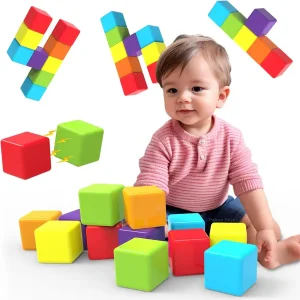
Expansion into 1.42-inch magnetic building cubes featuring 6-sided internal magnetic polarity, allowing children to build solid 3D structures similar to pixel-art and popular digital sandbox games.

Action & Kinetic Expansion Sets

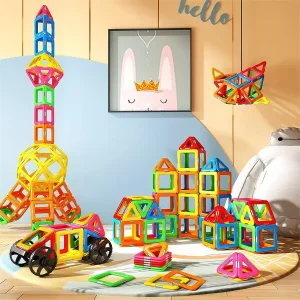
Integrating marble run tracks, magnetic wheel bases, operational cranes, window inserts, and figure characters to transform static buildings into dynamic, interactive playsets.

6. Localized Application Scenarios & Early Child Development

Understanding how end-users engage with magnetic building sets across educational, domestic, and therapeutic environments.

The versatility of magnetic tiles makes them suitable across diverse real-world environments. Understanding these localized application scenarios enables B2B buyers and brand managers to craft targeted marketing campaigns, tailored instruction guides, and specialized expansion packs.

Key Usage Scenarios:

  • Montessori & Reggio Emilia Classrooms: Teachers utilize clear magnetic tiles on light tables to explore color mixing, light refraction, 2D geometric tessellation, and 3D architectural symmetry.
  • Sensory Integration & Occupational Therapy: Pediatric therapists use magnetic cubes and tiles to develop fine motor control, bilateral hand coordination, spatial perception, and tactile feedback in children with sensory processing sensitivities.
  • Screen-Free Home Entertainment & Family Bonding: Parents seek durable open-ended play solutions that engage siblings of different age groups simultaneously, fostering cooperative problem-solving and screen-free creative focus.
  • STEM Competition & After-School Clubs: Elementary engineering clubs employ large magnetic tile sets to build bridge structures, testing load distribution, cantilevers, and structural integrity under physical weights.

7. Enterprise Buyer Frequently Asked Questions (FAQ)

Direct answers to critical sourcing, technical, and regulatory questions surrounding wholesale magnetic tile sets.

Q1: How do Chinese suppliers guarantee that internal magnets will not fall out?
Tier-1 manufacturers employ a multi-barrier safety system: First, magnets are housed in fitted internal ABS plastic cylinders. Second, internal security rivets are molded around the perimeter. Third, the outer shell halves undergo high-frequency ultrasonic welding, fusing the plastic into a single piece. Every batch passes ASTM and EN71 drop, tension, torque, and compression tests.
Q2: What is the typical Minimum Order Quantity (MOQ) for OEM/ODM private-label orders?
For standard factory colors with custom packaging, MOQ typically starts at 500 to 1,000 sets per SKU. For custom plastic Pantone color matching or custom geometric shape mold development, MOQs generally start at 3,000 sets, depending on project scope.
Q3: What magnet grade is recommended for high-building stability?
We recommend custom N35 or N38 Neodymium rare-earth magnets. N35/N38 offers an optimal balance between powerful attraction (allowing kids to construct towers over 1.5 meters tall) and safe handling without pinching small fingers.
Q4: Do your products comply with US CPSC and EU REACH chemical standards?
Yes. All products are manufactured using 100% virgin food-grade ABS resin, completely free of BPA, Phthalates, Lead, and Heavy Metals. Official third-party test reports (from TÜV, SGS, or Intertek) for ASTM F963, CPSIA, CPC, and EN71 are provided with every OEM production order.
Q5: Can the factory assist with Amazon FBA labeling and direct shipping?
Absolutely. Factories offer comprehensive FBA logistics support, including printing and affixing FNSKU labels, 1D/2D outer box barcodes, suffocating warning bags, palletization according to Amazon strict specifications, and DDP shipping directly to FBA fulfillment centers globally.
Q6: What is the lead time for sample development versus mass production?
Existing factory samples can be dispatched within 24–48 hours. Custom printed sample sets take approximately 5–7 business days. Full mass production typically requires 20–25 days following sample approval and deposit receipt.
Q7: How do 1.42-inch magnetic cubes differ from traditional flat magnetic tiles?
1.42-inch magnetic cubes are solid 3D building blocks with encapsulated internal magnets that rotate freely within internal spherical sockets. This allows them to connect magnetically on all six sides regardless of polarity, providing an ideal entry-level building toy for toddlers aged 1 to 3 years.
Q8: How does factory-direct sourcing improve profit margins for toy brands?
By eliminating trading intermediaries and sourcing directly from ISO-certified Chinese manufacturing facilities like YuQi Toys, enterprise buyers save 25% to 40% in unit costs. These savings can be reinvested into brand marketing, bespoke packaging, or competitive retail pricing strategies.