
Direct OEM/ODM catalog selections for international toy importers, retail chains, and educational brand distributors.
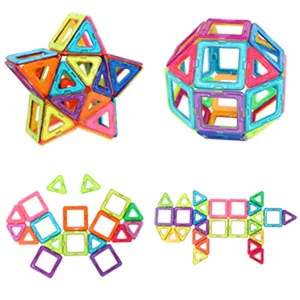
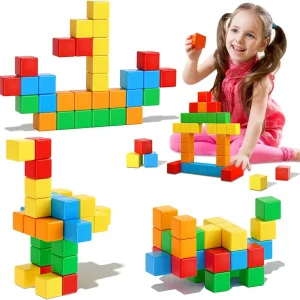
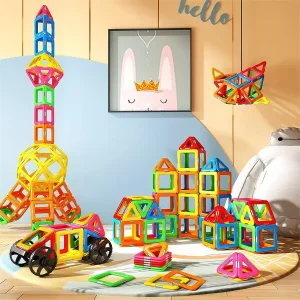
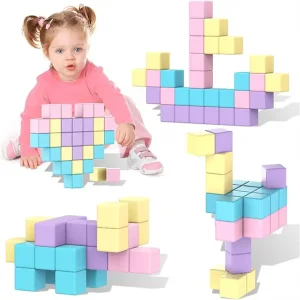
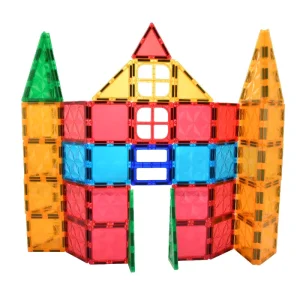

An in-depth macro-economic report for institutional buyers, procurement executives, and retail category managers.
The global market for magnetic tiles building blocks has entered a structural growth super-cycle. Transitioning from specialized niche sensory aids into fundamental components of international early-childhood Science, Technology, Engineering, and Mathematics (STEM) curricula, magnetic construction toys now represent one of the fastest-growing categories in the global toy industry. Market projections indicate that the global STEM toy sector, valued at over $11.5 billion USD, is growing at a compound annual growth rate (CAGR) of 8.4% through 2030, with magnetic tile and block sub-categories outperforming generic plastic building sets by a factor of 1.4x.
This rapid expansion is driven by clear shifts in end-consumer purchasing criteria. Today's parents, educators, and institutional purchasers prioritize open-ended toys that cultivate spatial reasoning, fine motor control, and architectural problem-solving without relies on electronic screens. Consequently, B2B sourcing agents and retail buyers searching for direct wholesale magnetic tiles building blocks manufacturers and factories must evaluate potential suppliers not merely on unit cost, but on structural integrity, chemical purity, acoustic ultrasonic welding standards, and long-term magnetic flux retention.
Modern educational psychology favors unstructured building sets. Magnetic tiles enable instantaneous 2D-to-3D geometric transformation, facilitating immediate spatial visualization for young learners.
Global customs authorities and consumer product safety boards (such as CPSC in the US and EU Safety Gate) have implemented strict zero-tolerance policies regarding small part magnet liberation.
Leading retail brand owners are migrating away from intermediary trading firms toward fully vertically integrated OEM factories in China capable of handling tooling, injection molding, ultrasonic welding, and direct packaging.
Understanding the chemistry, physics, and structural mechanics behind premium commercial-grade magnetic building tiles.
Achieving commercial success in international markets requires strict engineering controls during production. The structural viability of magnetic tiles hinges upon three critical engineering choices: raw resin chemistry, magnetic alloy grade, and structural encapsulation welding technology.
Factory Quality Baseline: Authentic high-grade magnetic tiles utilize 100% virgin, food-contact grade Acrylonitrile Butadiene Styrene (ABS) polymer paired with rare-earth Neodymium-Iron-Boron (NdFeB) permanent magnets, sealed via high-frequency ultrasonic energy and reinforced with internal structural lattice walls.
| Technical Parameter | Commercial Grade Standard | Premium Industrial Benchmark (YuQi Standard) | Impact on Product Safety & Performance |
|---|---|---|---|
| Base Plastic Resin | Recycled / Mixed ABS | 100% Virgin Non-Toxic ABS Plastic | Prevents structural cracking under high impact; high clarity optical transparency. |
| Magnet Composition | N30 Low-Grade Ferrite / NdFeB | N35 to N38 Nickel-Plated Neodymium (NdFeB) | Ensures strong magnetic pull force (up to 3.5 kg/tile load retention for tall structures). |
| Enclosure Welding Process | Glue Bonding / Heat Staking | High-Frequency Ultrasonic Seamless Welding | Eliminates toxic chemical adhesives and prevents small part magnet detachment. |
| Internal Structure | Hollow Center Chamber | Diagonal Rib-Reinforced Lattice Matrix | Distributes impact shock across outer shell, preventing fragmentation during drop tests. |
| Surface Protection | Uncoated Smooth Acrylic | Scratch-Resistant Recessed Bevel Design | Preserves pristine surface gloss and prevents clouding after prolonged play friction. |
In manufacturing, magnet mobility within the peripheral channels of each tile is essential. Floating cylindrical magnets automatically rotate to self-align their North and South poles upon proximity, allowing tiles to connect seamlessly regardless of geometric orientation. Cheap manufacturers often lock magnets in rigid orientation slots, causing repelling forces that frustrate young users and cause structural collapse. Professional direct-factory tooling ensures precise tolerances in magnet channels, allowing 360-degree free rotation.
Comprehensive checklist of international safety certifications required for lawful distribution across Western and emerging markets.
Direct importation into the United States and Canada requires strict adherence to ASTM F963-17 / CPSIA (Consumer Product Safety Improvement Act). Key requirements include:
European market clearance requires full technical documentation matching the EU Toy Safety Directive 2009/48/EC and relevant EN71 standards:
Factory Quality Control Imperative: Factory audit compliance extends beyond chemical testing. Reputable manufacturers maintain ISO 9001:2015 Quality Management Systems and undergo regular BSCI (Business Social Compliance Initiative) or SMETA ethical audits to satisfy global retail compliance standards.
How magnetic tiles perform across distinct commercial verticals, from retail store shelves to institutional procurement.
Institutional classrooms utilize large-format 100-piece to 200-piece magnetic tile bundles. Teachers integrate magnetic tiles into structured lessons covering fraction visualization, 3D geometry, magnetic polarity, and structural engineering load testing.
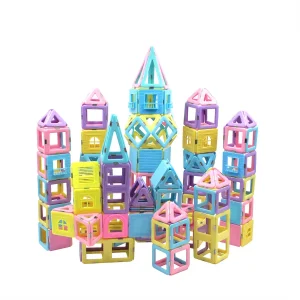
DTC brands and boutique toy store chains order custom color palettes—such as pastel macaron, crystal transparent, or clear glitter collections—in bespoke branded color boxes to differentiate from mass-market marketplace listings.
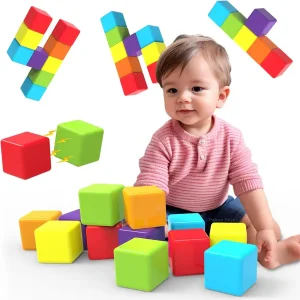
Occupational therapists utilize tactile magnetic building cubes and smooth magnetic tiles for sensory integration training, assisting children with fine motor delays, autism spectrum development, and hand-eye coordination rehabilitation.
Step-by-step technical process for launching proprietary magnetic building set collections.
Custom geometry creation, magnet cavity placement engineering, and logo debossing/embossing mold tooling development (15-25 days lead time).
Pantone color matching for plastic injection resins, including translucent jewel tones, solid pastel shades, and luminescent dark night series.
Robotic magnet placement into injection molded halves followed by high-power ultrasonic welding and automated drop-stress testing.
FSC-certified gift box printing, blister tray insert thermoforming, multi-language manual translation, and master carton export palletization.
Predictive insights into where the magnetic building toy industry is heading over the next decade.
Leading factories are actively testing PLA (Polylactic Acid) and recycled ocean-bound ABS compounds to lower carbon footprints while maintaining clarity and tensile strength parameters required for structural integrity.
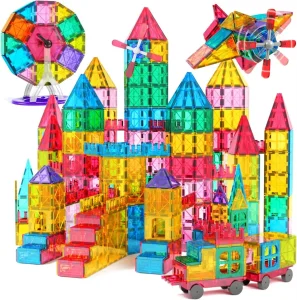
Future iterations combine traditional passive magnetic tiles with integrated micro-LED circuitry, solar-powered kinetic gears, and magnetic marble run tracks to deepen engagement for older age demographics (8-14 years).
Production lines are integrating automated machine vision systems that scan 100% of finished tiles for microscopic weld fissures, internal magnet misalignment, and surface blemishes before automated box loading.
Explore specialized building block configurations, 3D cubes, and educational construction bundles.
Direct answers to crucial operational queries from international procurement managers and retail importers.