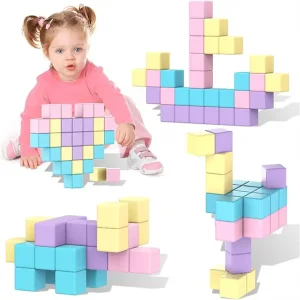
Direct factory supply featuring food-grade ABS/MABS enclosure, certified N35 neodymium permanent magnets, and dual-sealed ultrasonic lattice welds engineered for educational toy distributors.

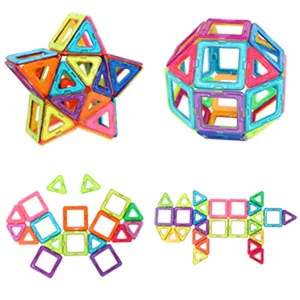
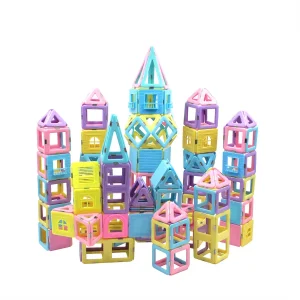
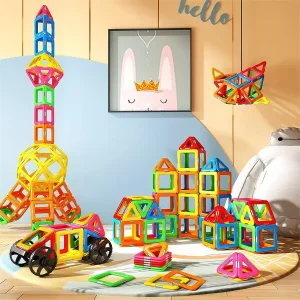

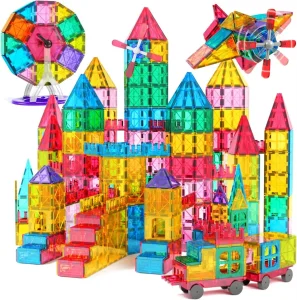
The international educational toy sector is undergoing a profound paradigm shift driven by the rapid institutionalization of STEM (Science, Technology, Engineering, and Mathematics) curricula in early childhood education. Within this expanding ecosystem, Vatenick magnetic tiles have emerged as an indispensable cornerstone of tactile geometry, spatial reasoning, and architectural play. B2B buyers—ranging from specialized educational toy brands and mass-market retailers to regional institutional distributors—increasingly seek reliable China-based suppliers and factory partners capable of delivering uncompromised structural safety, high magnet flux consistency, and scalable manufacturing throughput.
Historically, early iterations of magnetic construction sets suffered from structural fragility, seam degradation, and substandard magnet encapsulation, posing safety risks that restricted commercial growth. Modern manufacturing standards established by premium Chinese production hubs—exemplified by Yongkang YuQi Industry and Trade Co., Ltd.—have revolutionized the product category through advanced polymer engineering, ultrasonic welding precision, and automated quality verification protocols.
From a market positioning standpoint, China Vatenick magnetic tiles suppliers act as the critical manufacturing backbone for over 65% of the globally distributed magnetic building products. By leveraging complete raw material integration—from rare-earth Neodymium-Iron-Boron (NdFeB) magnet refining to food-grade MABS plastic injection—Chinese factories offer global brand partners an unparalleled ratio of structural performance to unit cost.
Achieving commercial dominance in high-end export markets requires rigid adherence to structural physics and material science. The Vatenick architectural standard incorporates three foundational technological pillars.
While generic suppliers utilize recycled ABS resin prone to cloudiness and brittle fracture, high-grade Vatenick magnetic tiles utilize virgin modified Methyl Methacrylate-Acrylonitrile-Butadiene-Styrene (MABS). This delivers crystalline optical transparency (≥92%), exceptional impact resistance, and absolute freedom from Bisphenol A (BPA), phthalates, and heavy metals.
The core structural strength relies on cylindrical Neodymium-Iron-Boron permanent magnets. Calibrated precisely to N35/N38 flux densities, the magnetic polarity allows 360-degree rotation within internal chambers. This guarantees seamless attraction regardless of tile orientation, enabling stable 3D towers up to 2 meters in height.
To prevent magnet displacement—a primary safety concern in child products—factories implement high-frequency (28 kHz) automated ultrasonic welding. The plastic housing undergoes molecular fusion, supplemented by internal reinforcement ribbing, passing 2.5-meter drop tests and 100N pull-force tests without seam separation.
| Engineering Metric | Standard Commercial Grade | Vatenick Premium Factory Standard | Testing Protocol / Compliance |
|---|---|---|---|
| Plastic Polymer Base | Recycled standard ABS | Food-Grade Virgin Modified MABS | FDA 21 CFR / EU No 10/2011 |
| Magnet Material Grade | Ferrite or Low N30 NdFeB | Sintered NdFeB N35 / N38 Precision Cores | ASTM F963-17 Gaussian Limits |
| Seam Welding Technology | Single-pass manual glue / ultrasonic | Automated High-Frequency Dual-Sealed Fusion | EN71 Part 1 Impact & Tension Test |
| Impact Resistance (Drop Test) | 1.0 Meter concrete impact | ≥ 2.5 Meters multi-angle concrete impact | CPSIA Section 101 / ISO 8124 |
| Optical Transparency | 75% - 82% (cloudy finish) | ≥ 92% (crystal brilliance finish) | ASTM D1003 Haze & Luminous Transmittance |
The next generation of Vatenick magnetic building components moves beyond passive geometric assembly toward dynamic smart-learning integrations. R&D pipelines at leading China factories focus on embedding micro-conductive trace pathways directly inside the MABS housing during injection molding. This innovation allows magnetic tiles to transmit low-voltage electrical currents, illuminating LED accent tiles, driving micro-motors, and enabling basic circuit logic without external wiring. Furthermore, research into bio-based bio-polycarbonate matrices promises a 40% reduction in carbon footprint while preserving optical clarity and structural resilience.
The global competitiveness of China Vatenick magnetic tiles factories rests upon an unparalleled industrial ecosystem concentrated in Zhejiang Province (specifically the Yongkang and Jinhua manufacturing corridors). This geographic clustering creates an end-to-end supply infrastructure where mold design studios, precision magnet sinterers, MABS polymer refiners, and automated packaging plants operate within a 30-kilometer radius.
Direct access to domestic rare-earth refining hubs stabilizes Neodymium pricing, insulating global B2B buyers against raw material volatility. In-house mold fabrication reduces tooling turnaround for custom tile shapes from months to just 10 days.
Automated robotic assembly lines operating on continuous schedules enable sample prototyping within 72 hours and complete 40ft High Cube container production cycles within 15 to 20 business days from art approval.
Every production batch undergoes 100% Automated Optical Inspection (AOI) to verify magnet placement and ultrasonic weld continuity, followed by statistical X-ray fluorescence (XRF) heavy-metal testing prior to export staging.
This structural supply chain resilience allows China Vatenick magnetic tiles suppliers to absorb global logistics shocks, maintain rigid quality thresholds, and deliver wholesale pricing structures that empower international brands to achieve sustainable retail gross margins ranging from 55% to 70%.
Vatenick magnetic tiles are engineered for versatile deployment across diverse commercial, educational, and clinical settings globally.
In early learning environments, Vatenick magnetic tiles serve as concrete manipulatives for teaching fundamental geometry, fraction decomposition, and structural mechanics. Educators utilize color-coded translucent tiles on light tables to explore optical color mixing, refraction, and symmetry, translating abstract mathematical concepts into tactile experiences.
Pediatric occupational therapists employ magnetic tiles to assist children with sensory processing disorders, Autism Spectrum Disorder (ASD), and fine motor delays. The crisp tactile feedback and auditory click of magnetic engagement provide essential proprioceptive input, enhancing bilateral coordination, spatial awareness, and grip control.
As families prioritize screen-free recreational activities, Vatenick sets offer open-ended constructive building that scales across age groups. Preschoolers begin with 2D pattern matching, while older siblings construct complex multi-tier architectural castles, bridges, and marble runs, fostering multi-generational family engagement.
Designed to endure continuous public usage, high-durability Vatenick magnetic sets are widely installed in children’s science museums, airport family lounges, and commercial indoor play parks where structural longevity and easy sanitization (smooth MABS surface) are critical prerequisites.
Navigating customs clearability and regulatory safety mandates is a crucial priority for importers of children’s toys. Top-tier China suppliers maintain exhaustive compliance documentation packages tested by tier-one accredited third-party laboratories (SGS, TÜV Rheinland, Intertek).
Fully certified under ASTM F963-17 (Physical & Mechanical Tests, Flammability, Heavy Elements), CPSIA Section 101 (Total Lead content), and CPSIA Section 108 (Phthalates). Includes official Children’s Product Certificate (CPC) issuing support.
Compliant with EN71 Part 1 (Mechanical & Physical), EN71 Part 2 (Flammability), and EN71 Part 3 (Migration of Certain Elements). Carries valid CE Marking and full REACH SVHC chemical safety declaration.
Manufactured under ISO 9001:2015 Quality Management Systems. Harmonized System (HS) code classification (HS 9503.00) documentation provided alongside full DDP/FOB/CIF freight logistics and door-to-door customs brokerage support.
To support global distribution partners, factory services extend to custom color formulation (pantone matching), bespoke retail packaging design (color boxes, window displays, storage tubs), localized instruction manual translation, and low-MOQ trial order arrangements for brand expansion.
Detailed answers to technical, commercial, and logistical inquiries regarding Vatenick magnetic tiles manufacturing in China.
Direct factory catalog items available for international distribution, Amazon FBA fulfillment, and custom OEM private labeling.