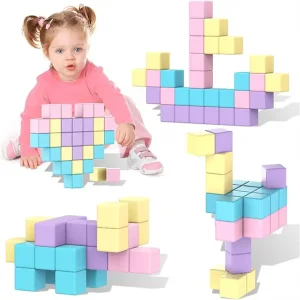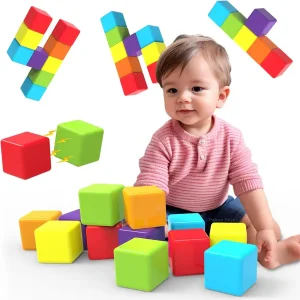
Explore our export-certified 3D magnetic construction sets, toddler STEM building blocks, and custom-molded magnetic tile series manufactured directly in China.
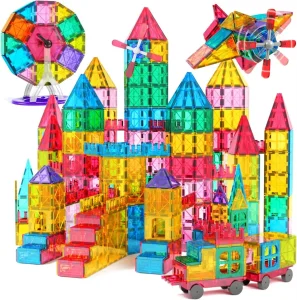

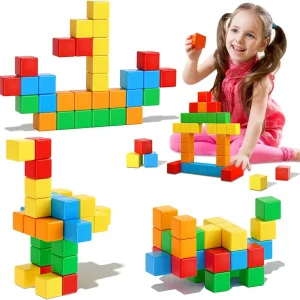

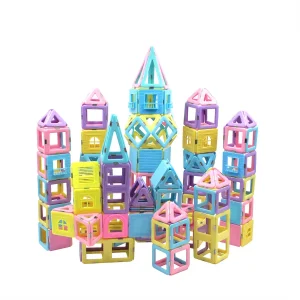
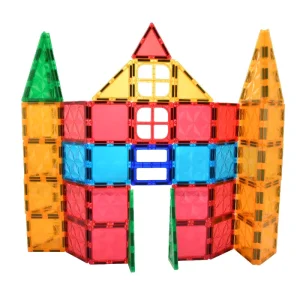
Over the last decade, China's magnetic toy manufacturing landscape has undergone a radical technological metamorphosis. China tile magnets factories have evolved beyond basic plastic molding into high-precision engineering hubs utilizing ultrasonic welding, N35/N38 grade Neodymium magnets, and non-toxic food-grade ABS/PC resins.
Sourcing directly from tier-1 China tile magnets factories enables global brands to reduce landed unit costs by 40-60% while accessing advanced R&D capabilities such as surface faceted geometry, rivet-reinforced corner encapsulation, and customized Pantone macaron color palettes.
Understanding the structural advantages of China's industrial clusters in Zhejiang and Guangdong, raw material integration, and automated production scaling.
China controls over 70% of the world's rare earth magnet production. Local tile magnet factories source high-flux Neodymium Iron Boron (NdFeB) cylindrical magnets directly from domestic refiners, ensuring superior magnetic retention, minimal flux degradation, and competitive bill-of-materials (BOM) pricing.
Modern factories utilize automated high-frequency ultrasonic welding machines that bond upper and lower plastic housings seamlessly. This creates a hermetically sealed internal cavity that prevents small magnet dislodgement, satisfying rigorous international choking hazard regulations.
With fully equipped mold-making workshops featuring multi-axis CNC machines and EDM spark erosion, Chinese factories can turn custom tile geometry concepts into physical injection-molded samples within 15 to 25 business days, drastically lowering product development cycles.
A deep dive into standard material choices, structural reinforcement lattice, and magnet grade selection that define high-tier magnetic building tiles.
| Parameter / Feature | Economy Tier (Generic Suppliers) | Premium Industrial Standard (Leading China Factories) | Engineering & Safety Impact |
|---|---|---|---|
| Plastic Shell Material | Recycled GPPS or Low-grade ABS | Virgin Food-Grade ABS (BPA & Phthalate Free) | Prevents shattering upon high impact; guarantees toxicological compliance for toddler contact. |
| Magnet Grade & Plating | N30 - N33 (Unplated or Single Ni) | N35 - N38 NdFeB (Triple Nickel-Copper-Nickel Plating) | Delivers 25% higher magnetic attraction force; prevents internal oxidation and magnet flaking. |
| Structural Internal lattice | Hollow single-cavity design | Diagonal X-Bracing & Peripheral Ribbing | Distributes physical stress evenly across tile face, eliminating flexing and structural fatigue. |
| Corner Seal Mechanism | Glue Bonding or Single Weld Line | Double-Weld Ultrasonic + Metal Corner Rivets | Provides dual-layer protection preventing magnet exposure even under drop tests exceeding 2 meters. |
| Surface Optical Clarity | Prone to scratching & cloudiness | Diamond-Faceted Anti-Scratch Beveling | Enhances light refraction for crystal/translucent tile lines while reducing surface scuffing during play. |
Ultrasonic welding converts high-frequency electrical energy into mechanical acoustic vibrations. Applied under pressure to plastic tile seams, it causes localized melting at the joint interfaces, forming a solid molecular weld joint within milliseconds without adhesives or solvents.
To exceed strict European (EN71) and American (ASTM F963) drop-test standards, premier factories insert stainless-steel rivets at critical corner junctions. This mechanical locking backup ensures that even if an ultrasonic seam receives catastrophic impact, the magnet remains safely locked inside.
By precisely sizing internal magnet pockets, magnets are allowed to rotate 360 degrees freely within their channels. This auto-orienting polarity eliminates magnetic repulsion, allowing children to connect tiles effortlessly from any angle or edge position.
How magnetic tile systems are deployed across educational, retail, and developmental sectors worldwide.
Educational institutions integrate magnetic tile sets to teach 2D to 3D spatial geometry, structural balance, magnetic polarity, and architectural design principles. Heavy-duty institutional bulk sets with teacher activity cards represent a high-margin opportunity for educational distributors.
Amazon FBA sellers, specialty toy brands, and department store chains utilize OEM factory capabilities to launch custom-branded magnetic tile lines. Customized color ways (Macaron pastels, Vivid primary hues, Glitter translucent finishes) allow brands to differentiate in crowded marketplaces.
Pediatric occupational therapists employ tactile magnetic building blocks to assist children with sensory processing disorders, motor skill impairment, and cognitive rehab. The satisfying tactile click and low barrier to successful construction boost confidence and fine motor precision.
Key technological and market shifts driving the next decade of magnetic building set development.
The market is shifting rapidly from standard geometric flat tiles to integrated functional ecosystems. Leading China factories are introducing marble runs, magnetic car chassis, light-up LED translucent tiles, gear drive modules, and architectural window elements that expand play value and increase average order values (AOV).
With European and North American retail regulations pushing toward circular economies, top-tier factories are investing in bio-based ABS and post-consumer recycled (PCR) food-grade polymers. Maintaining optical transparency while incorporating sustainable resins represents the new frontier in competitive differentiation.
Industry 4.0 automation is entering Chinese assembly lines. Machine vision systems now inspect every welded tile for microscopic flash, weld line gaps, or offset rivets at production speeds exceeding 60 units per minute, reducing defect rates to below 0.01%.
Combining traditional interlocking plastic bricks with enclosed magnetic core cubes creates hybrid construction platforms. These allow users to stack vertically with traditional studs while pivoting laterally with magnetic force vectors.
How international procurement managers can mitigate risks, verify compliance, and ensure factory reliability when importing from China.
Request authentic raw material test reports (REACH, RoHS, Heavy Metals, Phthalate content) and factory ISO9001 quality management system credentials before issuing purchase orders.
Conduct 2-meter drop tests onto concrete, tension-pull testing on welded edges (>70N force requirement), and torque testing to verify zero magnet detachment under severe physical stress.
Use a calibrated Gaussmeter to measure magnetic surface flux. Ensure flux index stays below statutory safety thresholds (e.g., <50 kG²mm² for loose magnets) while maintaining strong wall holding power.
Enforce AQL 1.0 (Critical) / 1.5 (Major) / 4.0 (Minor) sampling standards during final packaging inspections to verify barcode accuracy, piece counts, and packaging integrity.
Expert answers to essential technical, regulatory, and logistics queries for international importers and brand owners.
Direct supplier catalogs for educational macaron blocks, toddler magnetic cubes, and castle building tile kits.