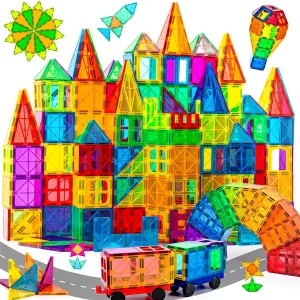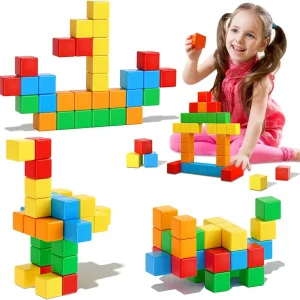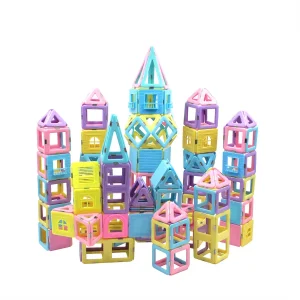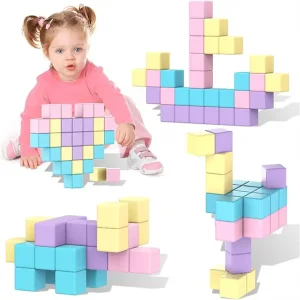
Explore our top-tier precision-engineered magnetic tiles and 1.42-inch safety cubes, certified to international ASTM F963 and EN71 safety standards for global distribution.
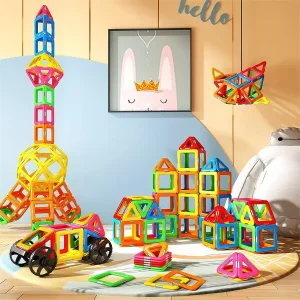
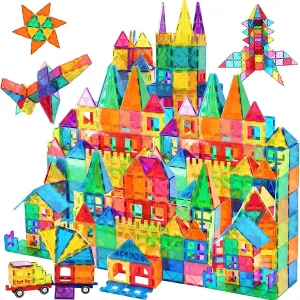
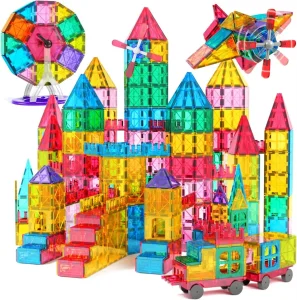
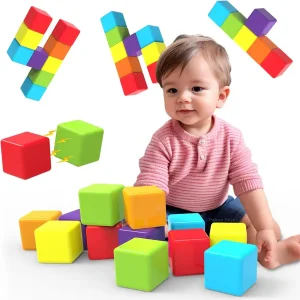
Analyzing the macro-economic drivers, technological evolutions, and regulatory benchmarks defining the multi-billion dollar educational toy sector.
Global educational mandates are driving a projected 9.4% CAGR in STEM toys through 2030. Magnetic building blocks have transitioned from passive novelties to foundational pedagogical instruments across K-12 curricula worldwide.
Preventing magnet displacement is paramount. Leading Chinese manufacturers now utilize high-frequency ultrasonic sonic welding paired with internal geometric lattice ribbing, surpassing international shear and impact mandates.
Modern STEM magnetic construction sets rely on calibrated Neodymium-Iron-Boron (NdFeB) N35 to N42 grade magnets. This ensures optimal flux density for towering 3D spatial structures without exceeding torque safety thresholds.
Global procurement teams navigating the toy industry face a complex matrix of regulatory compliance, manufacturing precision, and supply chain vulnerability. When selecting a China STEM Magnetic Toys Manufacturer & Factory, enterprise buyers must look beyond unit price and conduct rigorous technical audits across four core operational pillars.
Core Procurement Metric: Premium STEM magnetic building tiles require a minimum tensile pull force of 800g per magnet site combined with a food-grade, high-impact ABS plastic casing rated for drop impacts exceeding 2.0 meters onto solid concrete.
The foremost liability in magnetic toy distribution is magnet detachment, which presents severe pediatric ingestion hazards. Tier-1 Chinese factories employ custom 20kHz to 35kHz high-power ultrasonic welding equipment. This process creates a molecular-level fuse between the upper and lower ABS plastic shells, completely enclosing the N35 Neodymium nickel-plated magnets.
Furthermore, internal anti-crush lattice structures (often reinforced with double-riveted steel corners on premium tile lines) ensure that even under extreme torsional stress or thermal expansion (-10°C to 60°C), structural integrity remains intact.
Low-grade manufacturers frequently mix recycled plastic regrind into production batches to cut raw material costs, leading to brittle tile walls, dull transparency, and hazardous chemical leaching. Leading suppliers like Yongkang YuQi Industry and Trade Co., Ltd. enforce strict zero-regrind policies, using 100% virgin, non-toxic ABS resin imported from top-tier chemical producers.
Products undergo comprehensive chemical analysis to guarantee zero content of Phthalates (DBP, BBP, DEHP), Bisphenol A (BPA), Polycyclic Aromatic Hydrocarbons (PAHs), and heavy metal migrations under EN71 Part 3 and ASTM F963-17 specifications.
Market differentiation requires continuous aesthetic and functional innovation. Top-tier factories feature dedicated tooling centers capable of producing complex injection molds within 25–35 days. Current international retail demand has shifted dramatically from traditional primary hues toward sophisticated Macaron pastel palettes, crystalline clear series, and textured scratch-resistant diamond-surface geometric tiles.
Examining Yongkang YuQi Industry and Trade Co., Ltd. — A benchmark of modern automated magnetic toy manufacturing in Zhejiang, China.
By integrating automated robotic pick-and-place systems for precise magnet insertion into injection molds, human error is eliminated. This ensures consistent polarity orientation across 100% of manufactured units, preventing magnetic repulsion defects in final consumer building sets.
Located in Yongkang, Zhejiang, YuQi operates at the heart of China’s hardware and plastics manufacturing ecosystem. Direct proximity to raw material producers, specialized mold makers, and Ningbo/Shanghai deep-water shipping ports reduces lead times by up to 35% compared to non-clustered global suppliers.
From early childhood educational environments to high-margin retail channels, magnetic building sets offer universal cross-market versatility.
Educators utilize 3D magnetic building blocks to teach geometry, spatial mathematics, physics principles (magnetism and balance), and collaborative engineering skills in classroom environments.
Occupational therapists deploy 1.42-inch magnetic cubes to assist children with fine motor skill development, tactile sensory processing, visual-spatial coordination, and cognitive rehabilitation.
High visual appeal, vibrant gift box packaging, and high perceived value make magnetic tiles a top performer for Amazon FBA sellers, specialty toy boutiques, and big-box department stores.
Direct answers to crucial commercial and technical questions from international sourcing managers and brand owners.
Wholesale options engineered for high sensory engagement, exceptional spatial building, and long-term retail profitability.