Direct-from-factory magnetic tiles, building cubes, and 3D educational construction sets certified for international retail and institutional procurement.
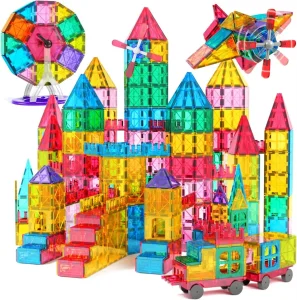
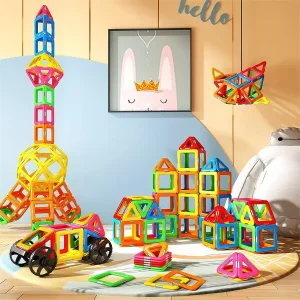

Analyzing the vertical integration, raw material synthesis, and scale advantages of China's primary educational toy clusters in Zhejiang and Guangdong.
Chinese factories operate in direct proximity to rare-earth magnet refining facilities and virgin ABS resin compounders. This ensures raw material purity, zero heavy metal contamination, and uninterrupted supply chains even during global market demand surges.
Leading China suppliers utilize high-frequency ultrasonic plastic welding coupled with internal metal rivets. This dual-containment architecture guarantees that Neodymium magnets remain permanently encapsulated, passing stringent 90cm drop tests and 50N tension stress protocols.
Through multi-cavity automated injection tooling and high-speed robotic assembly, Chinese suppliers achieve unmatched unit-cost efficiency without compromising safety, enabling global B2B buyers to maintain competitive retail margins above 60%.
When enterprise buyers, institutional distributors, and retail brand owners evaluate a China STEM construction toys supplier, the primary technical differentiator lies in structural safety and material science. Modern magnetic tiles and construction cubes must withstand immense dynamic forces while maintaining perfect optical clarity and tactile symmetry.
Top-tier Chinese manufacturers utilize MABS (Methyl Methacrylate ABS) or Virgin Food-Grade ABS (Acrylonitrile Butadiene Styrene) resins. Unlike recycled scrap plastics commonly found in low-grade alternative markets, virgin ABS provides superior tensile strength, optical transparency for clear magnetic tiles, and resistance to environmental stress cracking. Furthermore, the embedded magnets—typically N35 to N42 grade Sintered Neodymium-Iron-Boron (NdFeB)—are coated with nickel-copper-nickel multi-layer plating to prevent internal oxidation and loss of magnetic flux density over long-term usage cycles.
Emerging technological paradigms, sustainability mandates, and pedagogical transformations driving product innovation in 2025 and beyond.
Static building blocks are rapidly evolving into dynamic, kinetic learning ecosystems. Leading factories are incorporating magnetic gear trains, solar-powered kinetic rotors, low-voltage conductive circuits, and micro-LED lighting elements directly into magnetic tiles. This expansion bridges the gap between passive spatial construction and active mechanical/electrical engineering education.
Driven by North American and European regulatory mandates, Chinese suppliers are pioneering the adoption of Post-Consumer Recycled (PCR) food-contact plastics and bio-based PLA (Polylactic Acid) composites in toy housings. Coupled with zero-plastic biodegradable paper packaging, OEM factories are empowering global brands to meet stringent corporate sustainability goals.
Modern procurement is no longer driven solely by toy aesthetic, but by educational alignment. Manufacturers are collaborating with international educators to engineer construction sets that explicitly meet NGSS (Next Generation Science Standards) and Montessori/Reggio Emilia learning goals, supplying step-by-step experiment workbooks and spatial geometry playbooks alongside physical hardware.
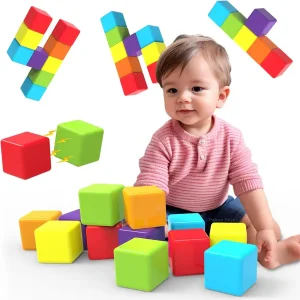
The industry is experiencing high growth in micro-magnetic building cubes (e.g., 1.42-inch / 36mm format). Featuring internal 360-degree rotating magnetic spheres inside sealed poly-carbonate cavities, these cubes allow connection on all faces without polar repulsion, opening up unlimited 3D voxel architectural building possibilities.
From early childhood classrooms to commercial soft-play venues, explore how customized STEM construction sets serve distinct commercial verticals.
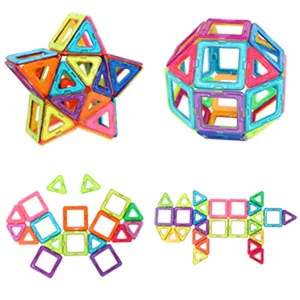
Heavy-duty, oversized magnetic tile sets designed for shared group environments. Engineered with reinforced structural cross-ribs to withstand heavy daily drop impact, serving age groups 3+ in early shape identification, fine motor development, and collaborative play.
Modular 3D magnetic cubes and structural truss blocks optimized for primary school physics and engineering classes. Used to demonstrate cantilever bridge stability, 3D Pythagorean spatial geometry, and magnetic pole interaction dynamics.
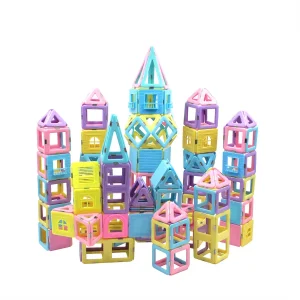
Aesthetically packaged pastel and macaron-colored gift kits optimized for Amazon, target retail chains, and boutique specialty toy stores. Complete with high-gloss storage boxes, magnetic travel tins, and colorful pattern booklets.
Bridging international brand requirements with specialized OEM/ODM capabilities, quality assurance, and compliance documentation.
Enterprise toy buyers, large-scale importers, and global brand licensors face stringent purchasing criteria when selecting a reliable China STEM construction toys manufacturer. Sourcing success extends beyond price negotiations—it demands comprehensive audit trails, strict batch consistency, and legal compliance with target market safety regulations.
International buyers mandate compliance with ASTM F963-17 (USA), EN71 Parts 1, 2, 3 (EU), CPSIA (Phthalates & Lead), REACH, and CCC (China). Premium factories maintain in-house testing labs equipped with XRF spectrum analyzers, drop testers, tensile gauges, and Gaussmeters, providing pre-certified batch inspection reports prior to vessel departure.
Factory solutions include custom 3D CAD modeling, rapid SLA prototyping within 48 hours, customized plastic injection color matching (Pantone system), laser-etched brand logos, custom geometric tile shape tooling, and localized retail box graphics creation.
To support growing Amazon FBA brands and regional educational distributors, leading Chinese factories provide tiered MOQ structures (e.g., 500 sets for standard private-label packaging; 3,000 sets for custom tooling), coupled with buffer stock agreements and DDP/FOB logistics services.
Compliance with global social governance frameworks is mandatory. Top Chinese suppliers maintain up-to-date BSCI (Business Social Compliance Initiative), ISO 9001:2015 Quality Management Systems, and ICTI Ethical Toy Program certifications to ensure fair labor, safe working conditions, and audit readiness.
Addressing critical technical, regulatory, and logistics queries for STEM construction toy sourcing from China factories.
Reliable Chinese factories employ a triple-protection structural engineering approach: First, magnets are housed in isolated internal plastic chambers. Second, the plastic shells are fused using high-power 20kHz ultrasonic welding machines that fuse the ABS resin at a molecular level. Third, internal metal rivets or reinforced perimeter locking pins are added to ensure that even under extreme force or impact crushing, the plastic housing will not split open to release small, swallowable magnets.
According to ASTM F963-17 and EN71-1 safety standards, if a magnetic toy piece fits within the small parts cylinder, its magnetic flux index must be less than 50 kG²mm² (0.5 T²mm²). Chinese manufacturers strictly control the size of Neodymium magnets (e.g., using N35 grade with precise physical dimensions) or design the outer plastic tile dimensions to exceed small-parts criteria, ensuring 100% legal compliance for North American and European imports.
Custom plastic injection molds for new tile or cube geometries typically take 25 to 35 days from approved 3D CAD drawings to first-article samples. Tooling costs in China range from $2,500 to $6,000 per mold, depending on cavity count (e.g., 2-cavity vs. 4-cavity) and steel grade (e.g., NAK80 or S136 hardened steel). Mass production lead times generally require 20 to 30 days after sample approval.
For high-transparency magnetic tiles, suppliers use MABS (Methyl Methacrylate Acrylonitrile Butadiene Styrene) or premium food-grade PC (Polycarbonate) blends. MABS offers excellent light transmission (>90%), high scratch resistance, and brilliant pastel color clarity while maintaining the high impact resistance required for children's construction toys.
Established Chinese manufacturers maintain strategic long-term supply contracts with domestic rare-earth magnet refineries in Zhejiang and Jiangxi provinces. They lock in raw material prices through quarterly forward contracts or maintain buffer inventories of raw magnet stock, ensuring price stability for international B2B clients during global market fluctuations.
Importers must obtain: 1) CPC (Children’s Product Certificate) for the USA based on third-party CPSC-accredited test reports; 2) EC Declaration of Conformity and EN71 Parts 1-3 test reports for the EU; 3) Heavy metals and phthalate test certificates under CPSIA/REACH; 4) ISO 9001 factory audit certificate and Certificate of Origin (Form E or Form F where tariff concessions apply).
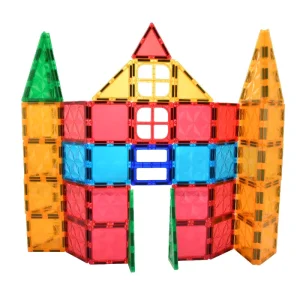
High-demand 3D magnetic building blocks, castle construction kits, and early educational sets direct from top verified Chinese suppliers.