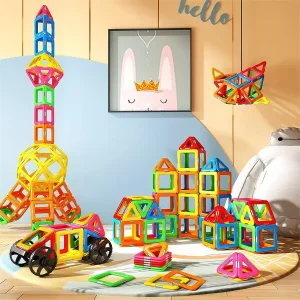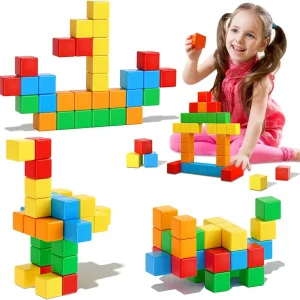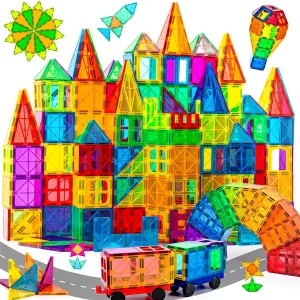
Explore factory-direct OEM/ODM magnetic tiles, sensory cubes, and STEM-certified building block sets engineered for international B2B buyers.
Analyzing intent metrics, market growth drivers, and strategic procurement shifts across North America, Europe, and Asia-Pacific educational markets.
The global marketplace for early childhood education (ECE) and preschool construction toys has undergone a paradigm shift. International B2B buyers—ranging from educational institution procurement officers to high-volume e-commerce brands on Amazon and target retail distributors—are no longer searching merely for cheap wooden or static plastic bricks. Search intent behind queries like "China Preschool Building Toys Manufacturers & Factories" reflects a sophisticated demand for highly durable, non-toxic, STEM-integrated magnetic building tiles, 3D sensory cubes, and modular construction systems.
According to recent supply chain intelligence, early childhood development centers and preschools are prioritizing tactile building sets that foster spatial geometry recognition, fine motor dexterity, logic formulation, and collaborative problem-solving. Consequently, top-tier Chinese manufacturing ecosystems (centered in Zhejiang and Guangdong provinces) have evolved beyond traditional plastic mold processing into high-precision, highly automated STEM toy engineering centers.
Procurement directors require strict adherence to international chemical and mechanical safety standards (ASTM F963-23, EN71, CPSIA, REACH) to completely mitigate recall risks associated with heavy metal migration or phthalates.
The primary structural engineering imperative is magnet encapsulation security. Advanced ultrasonic welding combined with internal perimeter ribs prevents magnet detachment under severe impact stress testing.
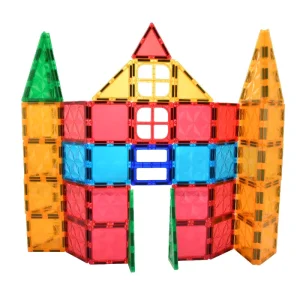
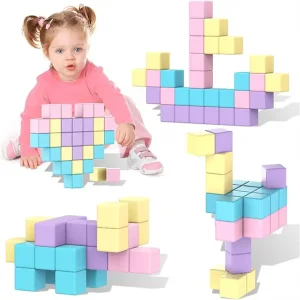
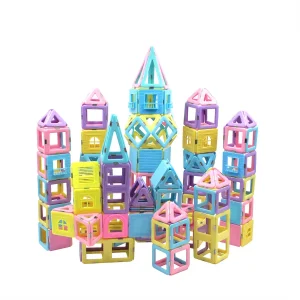
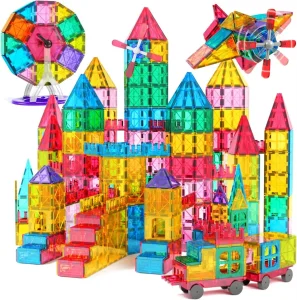
Fast-to-market brands require custom mold prototyping, proprietary color matching (including macaron pastel and crystal translucent series), bespoke packaging, and flexible production MOQs.
An engineering analysis of plastic resin formulation, magnetic flux optimization, and automated sonic welding mechanisms.
Leading China manufacturers utilize 100% food-grade virgin Acrylonitrile Butadiene Styrene (MABS/ABS) polymer. Unlike recycled plastics that exhibit micro-brittleness and cloudiness, virgin resin offers ultra-high tensile strength, superior optical clarity for light-refracting magnetic tiles, and exceptional resistance to UV discoloration over long usage cycles.
The structural stability of 3D towers depends directly on the magnetic energy product. Premium factories integrate high-grade N35 or N38 Neodymium-Iron-Boron (NdFeB) permanent magnets coated with multi-layer Nickel-Copper-Nickel (Ni-Cu-Ni) plating. This prevents internal oxidation and maintains uniform magnetic polarity alignment for seamless snapping connections.
To completely overcome the safety risk of magnet detachment, tier-1 Chinese factories implement automated high-frequency ultrasonic welding (20 kHz). The outer housing features a dual-chamber internal matrix with reinforced perimeter rivets. This creates a hermetically sealed encapsulation that withstands impact forces exceeding 50 Newton drop testing.
A detailed comparative audit designed to assist brand managers in qualifying factory capabilities and mitigating supply chain risk.
| Assessment Parameter | Tier-1 Specialized China Factories | Generic / Low-Tier Workshops | Impact on Importer / Brand Owner |
|---|---|---|---|
| Raw Polymer Grade | 100% Virgin Food-Grade MABS Plastic | Recycled ABS / Regrind Polycarbonate blends | Eliminates brittle fracture & chemical toxicity risks |
| Magnet Encapsulation | Ultrasonic Sealing + Anti-Pry Internal Ribs | Glue bonding or single-point thermal seal | Guarantees zero magnet dislodgement (Child Safety) |
| Magnet Material | N35 / N38 High Flux NdFeB (Ni-Cu-Ni Plated) | Low-grade Ferrite or under-sized Neodymium | Ensures strong structural adhesion in tall 3D builds |
| Compliance Readiness | ISO9001, BSCI, ASTM F963, EN71, CPSIA, CPC | Partial test reports or expired third-party certs | Seamless customs clearance & retailer acceptance |
| Mold Tolerance & Finish | High-Precision CNC Steel Tooling (±0.02mm) | Soft aluminum molds with visible flash edges | Smooth bevel edges, no sharp corners for toddler hands |
| Automated QA Inspection | AI Optical Vision & Automated Flux Testers | Manual random sampling (High human error) | Lowers defect rates below 50 PPM threshold |
Ensuring full regulatory compliance across North America, the European Union, UK, Japan, and Australasia.
Mandatory certification requirements include ASTM F963-23 (Standard Consumer Safety Specification for Toy Safety), specifically Section 4.38 for Magnet Sets and Section 4.7 for Accessible Edges. Additionally, compliance with CPSIA (Children's Product Safety Improvement Act) requires total lead content < 90 ppm and phthalate concentration < 0.1%. A valid Children's Product Certificate (CPC) issued by a CPSC-accepted laboratory is strictly provided.
Full conformance with the EU Toy Safety Directive 2009/48/EC and UKCA guidelines. Testing includes EN 71-1 (Mechanical & Physical Properties), EN 71-2 (Flammability), and EN 71-3 (Migration of 19 Heavy Elements). Products strictly comply with REACH Annex XVII restrictions for SVHCs (Substances of Very High Concern), ensuring complete peace of mind for EU customs clearance.
Tier-1 China manufacturers provide comprehensive localized export support services, including DDP (Delivered Duty Paid) shipping to FBA warehouses, customized barcode (FNSKU) labeling, palletization, custom retail display box artwork design, drop-testing verification, and continuous post-sales engineering support.
Discover specialized magnetic building block configurations, 3D tiles, and brain development sets for global wholesale distribution.
Detailed technical answers regarding factory compliance, magnet security testing, tooling lead times, and custom OEM processes.
Under ASTM F963-23 and CPSC guidelines, loose or detachable magnets with a flux index > 50 kG² mm² pose severe ingestion hazards. Professional China manufacturers utilize a multi-stage engineering approach: First, magnets are completely enclosed within internal plastic pockets. Second, high-frequency ultrasonic welding bonds the outer shell seamlessly. Third, internal diagonal ribs and metal perimeter rivets physically lock the two halves together. The final assembled tile undergoes 100% automated drop-impact testing (dropping 10 times from 4.5 feet onto concrete coated with tile) and tension testing (>50N pull force) to guarantee zero magnet detachment.
Custom tooling for new magnetic building block shapes or geometric tile profiles follows a structured 4-step timeline: 1) 3D CAD design & rapid SLA prototype creation (3-5 business days); 2) Engineering approval & steel mold fabrication using P20/718H hardened steel (25-30 calendar days); 3) T1 sample injection, color matching, and ultrasonic welding calibration (3-5 days); 4) Mass production mold validation. Typical tooling costs range from $3,500 to $9,500 per mold depending on cavity count and shape complexity, with mold costs refundable once batch order volumes reach target thresholds.
Reputable factories use exclusively 100% virgin, non-recycled Modified Acrylonitrile Butadiene Styrene (MABS) resin formulated specifically for food-contact and toy applications. Raw material batches are independently screened via GC-MS (Gas Chromatography-Mass Spectrometry) and ICP-OES (Inductively Coupled Plasma Optical Emission Spectrometry) to ensure complete absence of heavy metals (Lead, Cadmium, Arsenic, Barium, Mercury), phthalate plasticizers (DBP, BBP, DEHP, DIBP), and Bisphenol A (BPA).
Factories offer comprehensive private-labeling support. Custom plastic colors are achieved by blending precise Pantone masterbatch formulas into virgin MABS resin during injection. For packaging, clients can choose between standard FSC-certified color gift boxes, storage plastic buckets, or window display cartons. Production line workers handle custom barcode (FNSKU) sticker application, master box drop-test compliance packaging, and direct palletizing for seamless Amazon FBA or retail distribution.
For standard catalog items with custom brand packaging, the typical MOQ is 500 to 1,000 sets per item. For completely custom plastic colors or proprietary mold profiles, MOQs start at 2,000 sets. Production lead times average 15-20 days following sample confirmation and deposit receipt, with expedited 10-day manufacturing runs available for peak season demand (Q3/Q4 holiday prep).
Follow this standardized 5-step factory evaluation framework before issuing purchase orders to China suppliers.
Verify that the factory maintains active ISO 9001:2015 Quality System Certification and BSCI social compliance audits to ensure ethical manufacturing and consistent process control.
Demand Certificate of Analysis (COA) documentation from raw material suppliers proving 100% virgin MABS/ABS polymer resin usage without recycled scrap filler.
Confirm the presence of internal perimeter rivets and 20 kHz automated ultrasonic welding lines on golden samples before approving mass production runs.
Commission accredited international testing labs (SGS, TÜV Rheinland, Intertek, Bureau Veritas) to conduct ASTM F963, EN71, and CPSIA testing on production batch samples.