
Direct factory wholesale lines engineered for international educational distributors, brand owners, and retail chains.
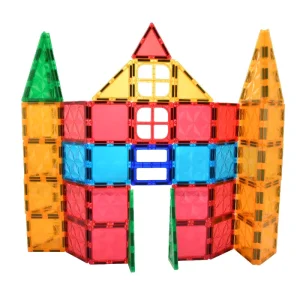
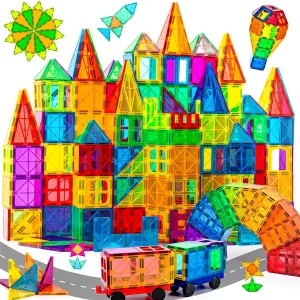
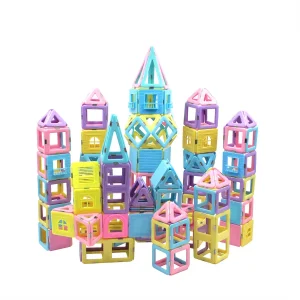
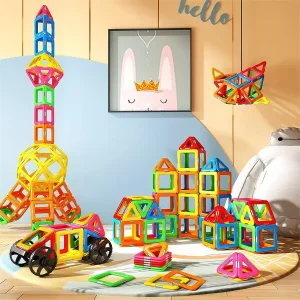
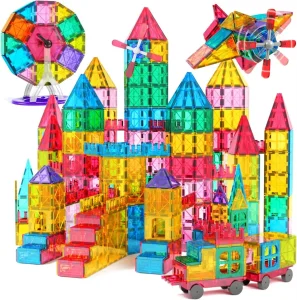
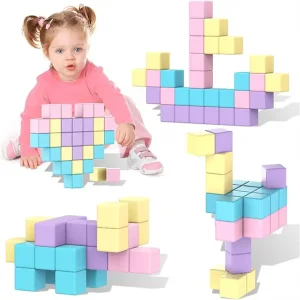
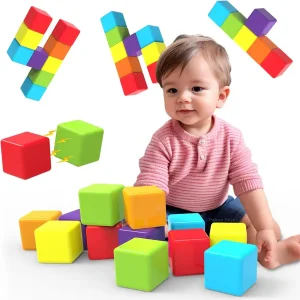
As global demand for STEM (Science, Technology, Engineering, and Mathematics) educational toys accelerates, China has established itself as the undisputed epicenter of magnetic building tile production. However, navigating the landscape requires a granular understanding of structural engineering, material chemistry, and regulatory risk mitigation.
Traditional toy buyers often evaluate suppliers solely on piece price. However, high-value procurement directors prioritize flux density retention over 10-year lifespans, lattice ribbing structural geometry, and ultrasonic seam burst limits. This document outlines the exact technical standards required to secure a resilient, high-margin, patent-compliant supply chain from premier Chinese original manufacturers.
Understanding the geographical and industrial clustering in Yongkang, Zhejiang, and how integrated supply chains deliver unmatched unit economics without sacrificing structural safety.
China controls over 80% of global Neodymium-Iron-Boron (NdFeB) processing. Top-tier manufacturers utilize direct-from-mine N35 and N38 sintered neodymium magnets, securing optimal magnetic flux (Gauss rating) at direct commodity pricing.
Original Chinese suppliers utilize prime-grade, non-recycled ABS (Acrylonitrile Butadiene Styrene) resin with customized refractive index additives. This ensures high clarity in translucent tiles and extreme impact strength.
Leading facilities deploy high-frequency multi-head ultrasonic welding robotics. This automates the insertion of internal magnets, seals perimeter seams continuously, and eliminates manual labor inconsistencies.
Ensuring compliance with western safety authorities (CPSC, EU Safety Directives) requires rigorous architectural design and material certification across the entire assembly pipeline.
| Engineering Metric | Generic Commodity Tile | YuQi Original Manufacturing Standard | Compliance Test Benchmark |
|---|---|---|---|
| Internal Magnet Encapsulation | Single wall, glue assist | Dual-chamber lattice lock + Stainless Steel Rivets | ASTM F963-17 / EN71-1 Pull Force Test (>50N) PASS |
| Magnet Strength Grade | N30 - N33 low flux | Sintered N35 / N38 Neodymium | CPSC Flux Index Limit (<50 kG² kOe²) PASS |
| Polymer Resin Grade | Regrind / Recycled ABS mixed | 100% Virgin Food-Grade ABS (BPA Free) | REACH SVHC 235 items & CPSIA Lead/Phthalate PASS |
| Drop & Impact Resistance | Cracks under 1.0m fall | Shatterproof from 2.0m steel plate drop | ISO 8124-1 Mechanical Drop Test PASS |
| Patent Integrity & Lattice | Copies existing utility patents | Proprietary internal lattice structure & beveling | Global IP Clearance & Design Patent Protection PASS |
The primary hazard associated with low-quality magnetic building tiles is the release of small, powerful magnets upon accidental breakage. To prevent child ingestion risks, original manufacturers implement a dual-defense barrier system:
1. Ultrasonic Fusion: High-frequency sound waves melt the inner perimeter ribs of the upper and lower ABS shells together, forming a continuous molecular bond.
2. Stainless Steel Corner Rivets: Reinforced metallic eyelets are machine-pressed into key pivot points, guaranteeing that even if the plastic shell experiences extreme force, the casing cannot open.
Children aged 3-7 frequently interact with building sets orally during tactile discovery. Original magnetic tiles produced by certified Chinese suppliers undergo rigorous chemical leaching screenings:
• Phthalate Plasticizers: Tested to zero detectable levels (<10 ppm) for DEHP, DBP, BBP, DINP, DIDP, and DNOP.
• Heavy Metals: Full compliance with EN71-3 migration limits for 19 soluble elements, including lead, cadmium, arsenic, and mercury.
• Flame Retardants: Free of polybrominated biphenyls (PBBs) and polybrominated diphenyl ethers (PBDEs).
From private label packaging to custom Pantone palette matching, explore how direct factory partnerships optimize landed costs and brand differentiation.
Stand out in saturated e-commerce markets with custom injection color matching. Manufacturers offer standard neon translucent, soft pastel macaron, frosted glitter, and diamond-cut light-refracting surface textures.
Full support for retail-ready packaging, including high-density corrugated color boxes, storage tubs with custom molded lids, organic cotton drawstring bags, and FBA-compliant barcode labeling.
Optimized palletization and master carton volumetric design reduce ocean and air freight costs by up to 18%. Factory-direct consolidated container shipping (FCL/LCL) available worldwide.
Key growth drivers shaping the international magnetic toy sector through 2030, driven by sensory integration play and eco-conscious polymer sourcing.
Magnetic building tiles are increasingly adopted by occupational therapists and special education professionals. The tactile feedback of click-together polar magnetic forces combined with vibrant transparency provides essential visual and auditory stimulation for children on the autism spectrum (ASD) and those with sensory processing sensitivities.
Environmental regulations in North America and Western Europe are pushing brands toward sustainable manufacturing. Premier Chinese producers are pioneering the use of certified Post-Consumer Recycled (PCR) ABS and plant-based polymers, enabling brands to market eco-friendly STEM construction sets that reduce carbon footprint without sacrificing structural integrity.
The market is shifting away from static 2D/3D building tiles toward dynamic, kinetic open-ended systems. Modern original sets incorporate translucent light-up marbles, spiral slides, waterwheels, and motorized gear components that teach early physics, gravity, and fluid mechanics concepts.
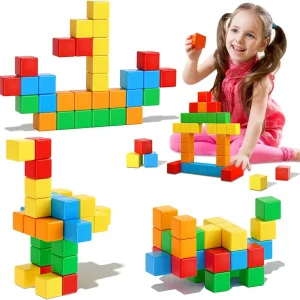
For younger demographics (toddlers aged 18-36 months), suppliers are introducing enlarged 1.42-inch magnetic building cubes featuring rounded safety edges, soft-touch silicone coats, and internal rotating magnet capsules that eliminate magnetic polarity repulsion.
Magnetic tiles serve diverse commercial, institutional, and consumer end-use environments across global markets.
Used extensively in early childhood education centers to teach geometry, spatial awareness, color mixing via light tables, and early engineering principles through cooperative building activities.
Fosters open-ended play and self-directed problem-solving. Children independently experiment with architecture, balance, structural symmetry, and magnetic polarity without pre-determined instruction manuals.
Utilized by pediatric specialists to improve fine motor coordination, bilateral integration, hand strength, spatial planning, and visual-spatial processing in developing children.
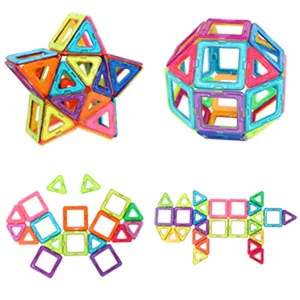
Explore our complete product catalog manufactured to precise OEM/ODM specifications.
Addressing essential technical, safety, minimum order quantities (MOQ), and intellectual property queries for international importers.