High-precision educational building sets engineered for international B2B distributors, educational institutions, and brand owners.
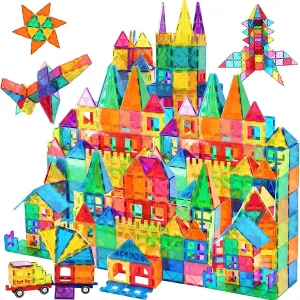
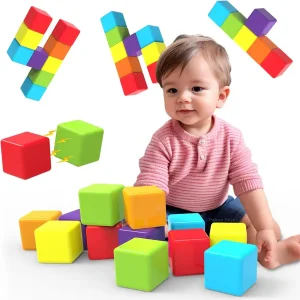
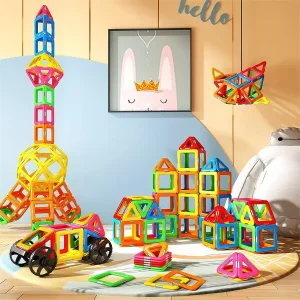
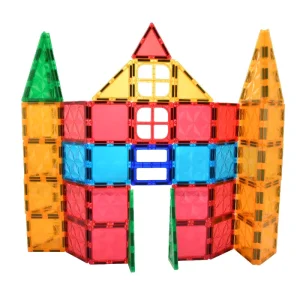
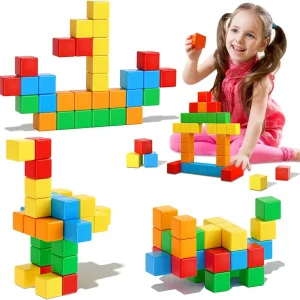
The global educational toy sector is undergoing a profound structural shift. Traditionally defined by static, unvarnished wooden geometric shapes developed in the early 20th century, Montessori blocks have evolved into sophisticated, multi-sensory construction systems. Global B2B procurement managers, institutional buyers, and brand owners are increasingly turning to China Montessori blocks suppliers and factories to source next-generation educational tools that combine classical self-correcting play with advanced 3D spatial engineering.
Dr. Maria Montessori’s core philosophy emphasizes concrete learning precedes abstract thinking, self-directed exploration, tactile geometry, and internal self-correction. While classic wooden blocks provided foundational tactile awareness, they suffered from inherent physical limitations: lack of polarity connectivity, susceptibility to wood splintering, moisture absorption, hygiene degradation in institutional environments, and structural instability when building complex, wide-span architectural forms.
Modern Chinese manufacturing facilities have addressed these historical drawbacks through precision engineering. By integrating high-grade Neodymium Iron Boron (NdFeB) rare-earth magnets within ultrasonically sealed, food-grade ABS housing, Chinese suppliers have pioneered 3D Magnetic Montessori Blocks & Cubes. This technological convergence enables toddlers and young learners to experience tactile geometric feedback while exploring advanced concepts of polarity, spatial rotation, structural equilibrium, and architectural symmetry.
China's manufacturing clusters—specifically located in Zhejiang (Yongkang/Jinhua)—offer unmatched vertical integration, material science expertise, and automated scale.
Leading Chinese factories employ dual-frequency 20kHz ultrasonic welding equipment. This creates a seamless molecular bond between ABS housing halves, completely encapsulating magnets with zero glue usage and ensuring zero choke hazard risks.
To preserve Montessori self-correction principles, internal cylindrical magnets are housed in floating retention chambers. Magnets rotate instantly to align north/south poles automatically, preventing magnetic repulsion frustration for young learners.
Top-tier factories refuse recycled plastics, utilizing 100% non-recycled, BPA-free, phthalate-free virgin ABS polymer resin. This ensures optimal light refraction, high impact resistance during drop tests, and superior color vibrancy.
With in-house CNC mold-making centers, Chinese suppliers can transform conceptual 2D sketches or 3D CAD models into physical injection molds within 15 to 20 business days, dramatically shortening time-to-market for private brands.
Localized access to China's rare-earth processing facilities and petrochemical hubs allows Zhejiang suppliers to deliver industrial cost efficiencies, reducing unit procurement costs by 30% to 45% compared to Western manufacturers.
ISO 9001:2015 certified production processes equipped with fully documented testing histories, providing B2B buyers with seamless access to ASTM F963, EN71, CPSIA, and CPC certified inventory ready for customs clearance.
Evaluating physical, mechanical, and economic metrics across manufacturing methods in the B2B toy procurement market.
| Evaluation Parameter | High-Grade Ultrasonic Magnetic Blocks (YuQi Standard) | Traditional Wooden Montessori Blocks | Low-Cost Recycled Plastic Alternatives |
|---|---|---|---|
| Polymer / Base Material | 100% Virgin Food-Grade ABS (BPA & Phthalate Free) | Natural Beech / Pinewood with Non-Toxic Stain | Recycled PS / Low-Grade PC Plastics |
| Internal Magnet Enclosure | Encapsulated NdFeB Magnets with Dual-Weld Ultrasonic Seam | None (Static Non-Magnetic Joinery) | Glued Outer Magnet Slot (High Detachment Risk) |
| Drop Test Impact Strength | Passed (1.5 Meter Concrete Impact Test > 100 Cycles) | Prone to Denting, Splintering, or Paint Chipping | Brittle Fracture upon First Impact |
| Sanitation & Washability | 100% Waterproof, Washable with Disinfectant (Ideal for ECE) | Absorbs Moisture, Swells, Susceptible to Mold | Permeable Seams Trap Bacteria and Cleaning Fluids |
| Magnet Flux Density (Safety) | Strictly Calibrated Below 50 kG²mm² (ASTM / EN71 Compliant) | Not Applicable | Uncalibrated Magnet Strength (Varying Quality Control) |
| Color Customization & Transparency | Unlimited (Pantone Solids, Pastels, Transparent Crystal) | Limited Wood Stains / Opaque Finishes | Dull Color Output with Impurities & Cloudiness |
| Unit Production Scalability | High (Fully Automated Injection & Sonic Assembly) | Moderate (Semi-Automated Wood Cutting & Sanding) | High (Manual Labor Assembly with Variable Quality) |
Safety is the foundational imperative in educational toy manufacturing. For professional importers, chain store buyers, and Amazon brand managers, sourcing Montessori blocks requires strict compliance with international safety legislation. Failure to comply can result in product recalls, customs seizures, and catastrophic brand reputational damage.
Because infants and toddlers frequently mouth sensory blocks, Chinese factories design Montessori block dimensions to exceed standard small parts cylinder measurements ($1.25\text{ inches}$ diameter / $2.25\text{ inches}$ length). Products such as the popular 1.42-inch Magnetic Building Cube are dimensions-engineered to prevent accidental swallowing. Furthermore, internal magnet retention chambers undergo Torque Testing (> 0.45 Nm) and Tension Testing (> 70 N) to verify that outer ABS walls cannot be separated by physical force.
Following historical market recalls involving loose magnetic components, international safety bodies enforced mandatory maximum flux density indexes. Chinese certified suppliers calculate flux density using precise gaussmeters, ensuring the flux index formula ($B^2 y$) remains strictly below the regulatory limit of $50\text{ kG}^2\text{mm}^2$. If a block contains multiple magnets, each magnet is independently secured within reinforced internal rib structures.
Every batch of ABS resin and color pigment utilized by audited suppliers undergoes Inductively Coupled Plasma Mass Spectrometry (ICP-MS) testing. This guarantees that 19 restricted soluble elements (including Lead, Cadmium, Arsenic, Barium, and Antimony) are virtually non-detectable, remaining well below strict European EN71 Part 3 limits and US CPSIA lead concentration ceilings ($< 90\text{ ppm}$).
From conceptual engineering to private-label shelf delivery, leading Chinese suppliers provide end-to-end customization services.
Suppliers match exact Pantone C code preferences—ranging from vibrant primary colors to trendy macaron pastel palettes and translucent gemstone-inspired clear crystal finishes.
Incorporate your brand identity seamlessly. High-precision laser etching, pad printing, and internal mold logo embossing ensure long-lasting brand visibility that won't scratch or rub off.
Develop custom tile shapes (curved archways, gear attachments, window inserts, track components). In-house tooling teams deliver fast prototyping cycles backed by DFM (Design for Manufacturing) analysis.
Complete packaging solutions including FSC-certified gift boxes, plastic storage bins, velvet drawstring travel pouches, and custom STEM curriculum instruction booklets tailored for your target retail market.
The versatility of modern magnetic Montessori blocks expands across diverse commercial channels, catering to distinct purchasing motivations and end-user environments worldwide.
Preschools and early learning academies require highly durable, easily cleanable tactile aids. Ultrasonic magnetic blocks serve as foundational teaching tools for introducing basic geometry, fraction breakdown, spatial symmetry, and collaborative problem-solving. Their waterproof ABS composition enables rapid daily sanitization using UV chambers or non-corrosive sprays, satisfying strict post-pandemic nursery health standards.
Elementary classrooms and maker-spaces utilize larger geometric tile sets to demonstrate structural engineering concepts, gravity balance, magnetic polarity, and architectural design principles. These hands-on activities bridge the gap between theoretical physical science concepts and real-world construction mechanics.
Occupational therapists utilize magnetic blocks for fine motor skill development, hand-eye coordination training, and sensory integration therapies. The satisfying tactile tactile feedback ("snap") when magnets connect provides immediate sensory validation, helping children with ADHD or sensory processing challenges maintain focused play attention.
In the direct-to-consumer (D2C) retail sector, high-margin product bundling—such as pairing 100-piece magnetic tile sets with themed expansion kits (car bases, Ferris wheels, light-up LED blocks)—delivers high average order values (AOV) and strong customer review scores across Amazon, Shopify, and brick-and-mortar toy chains.
Explore secondary factory-direct configurations optimized for global wholesale, institutional tenders, and e-commerce bundling.
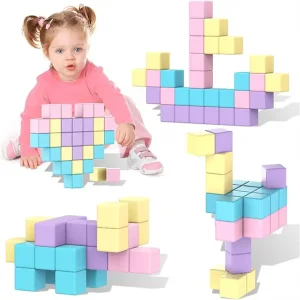
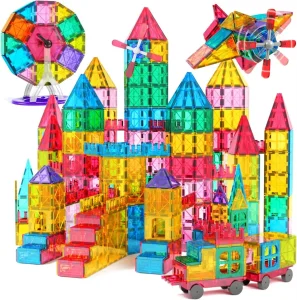
Direct answers to common technical, legal, and operational inquiries raised by international purchasing teams.
Verified factory manufacturers possess in-house injection molding machinery, automated ultrasonic welding equipment, dedicated QA/QC laboratories, ISO 9001 certifications, and direct raw material procurement contracts. Trading intermediaries often outsource production to unaccredited workshops lacking consistent drop testing, cleanroom assembly, or chemical traceability.
Quality factories employ dual-channel 20kHz ultrasonic welding. Rather than using topical adhesives, the high-frequency sonic vibrations melt the peripheral ABS resin, fusing the two housing halves into a unified solid structure. Internal ribbing walls enclose each magnet within its own isolated capsule, enduring over 500 N of pull force and rigorous 1.5-meter concrete drop impacts.
For standard stock color configurations, factory MOQs typically start at 100 to 500 sets. For custom Pantone color matching, personalized logo pad printing, or bespoke private-label retail packaging, the MOQ ranges between 1,000 and 3,000 sets depending on set piece counts and structural complexity.
For North American entry, importers require a Children's Product Certificate (CPC) issued by an ISO 17025 accredited laboratory confirming ASTM F963-17 compliance and CPSIA heavy metal/phthalate clearance. For European Union entry, CE marking backed by EN71 Parts 1, 2, and 3 test reports plus REACH compliance documentation is legally mandatory.
Yes. Manufacturers utilize advanced color-matching systems and masterbatch dosing equipment. Brands can specify translucent clear crystal finishes, high-clarity diamond facets, soft macaron pastel palettes, or solid matte tones while keeping ABS light transmission and structural purity intact.
Standard production cycles for a 40HQ container (approx. 5,000 to 10,000 retail sets) range between 25 and 35 calendar days following artwork approval and deposit receipt. Initial sample evaluation and 3D rapid prototyping require approximately 3 to 7 business days.
Reputable factories accommodate third-party inspection firms (e.g., SGS, TUV, V-Trust, AsiaInspection) under AQL 2.5/4.0 standards. Inspectors verify dimensional accuracy, piece counts, barcode readability, drop testing, magnet flux index limits, and box drop resistance before issuing container loading authorization.
Experienced suppliers provide FOB (Free on Board), CIF (Cost, Insurance, and Freight), and DDP (Delivered Duty Paid) logistics services. By optimizing packaging box dimensions to maximize master carton cubic utilization, suppliers help reduce volumetric freight costs per unit by up to 20%.