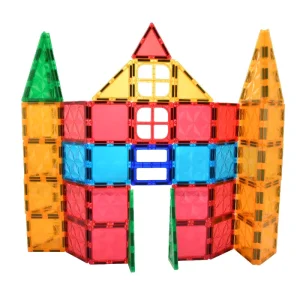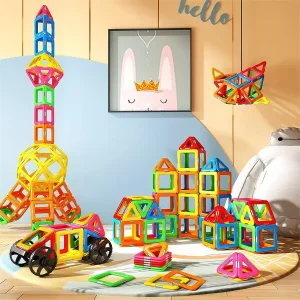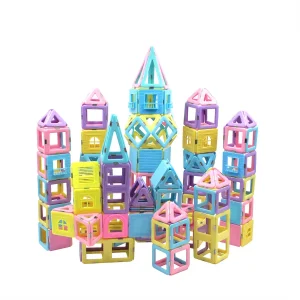
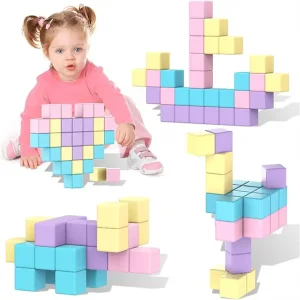
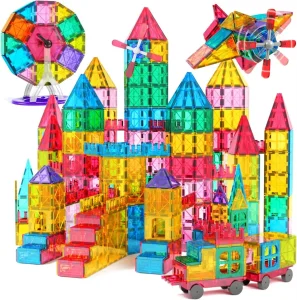
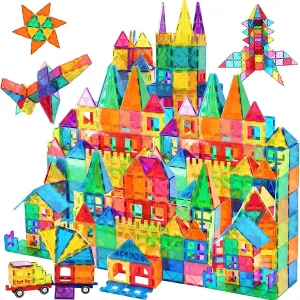
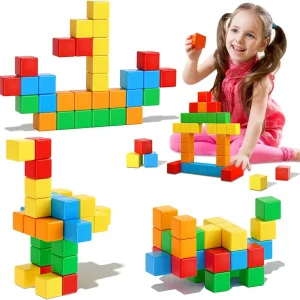
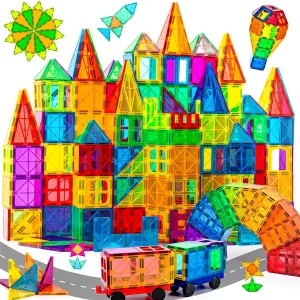
The international educational toy ecosystem is experiencing a structural paradigm shift towards architectural STEM building sets. As B2B importers, brands, and institutional buyers seek robust, safe, and modular magnetic tile castle systems, China's manufacturing clusters in Zhejiang (Yongkang & Jinhua) have evolved into the epicenter of precision magnetic injection molding.
Traditional 2D flat building tiles, while beneficial for basic geometry recognition, fail to satisfy the cognitive and physical demands of children developing advanced spatial reasoning. The modern consumer landscape demands complex, load-bearing 3D constructs—specifically Magnetic Tile Castles featuring turrets, vaulted arches, crenellated parapets, working drawbridges, and multi-tier support columns.
To engineer tiles capable of supporting vertical castle structures exceeding 1.2 meters in height, leading Chinese manufacturers have overhauled traditional toy manufacturing methods. Standard magnetic toys historically relied on glue encapsulation and low-coercivity ferrite magnets. Today, premium B2B manufacturing utilizes automated ultrasonic perimeter welding, internal lattice ribbing, and rare-earth NdFeB (Neodymium-Iron-Boron) cylindrical magnets to deliver unprecedented structural shear strength and permanent magnetic attraction.
Understanding the physical and chemical engineering behind high-performance magnetic castle tiles. Why material selection and encapsulation technology define product longevity and child safety.
Safety is non-negotiable when housing small, high-powered magnets. Premium China suppliers employ high-frequency ultrasonic welding (20 kHz) combined with internal mechanical stainless steel rivets at structural corner points, preventing tile separation under impact drops exceeding 1.5 meters onto concrete.
Standard cheap tiles utilize ceramic or low-tier N30 magnets that lose magnetism over time. Advanced castle tiles integrate anti-corrosion nickel-plated N35 to N52 Neodymium magnets with optimized aspect ratios, ensuring maximum flux density along tile edges while keeping total flux index well within ASTM F963 safety thresholds.
To resist cracking, clouding, and chemical degradation from saliva or cleaning agents, certified factories utilize 100% virgin, non-recycled ABS (Acrylonitrile Butadiene Styrene) resin. This yields crystal-clear transparency for light-refracting castle windows and pastels without toxic plasticizers.
| Performance Specification | YuQi Industry Standard | Generic Low-Cost Wholesalers | Safety / Commercial Impact |
|---|---|---|---|
| Enclosure Assembly | Ultrasonic Welding + Metallic Rivet Lock | Glue Bonding or Single Ultrasonic Seal | Zero Choking Risk |
| Magnet Grade & Plating | N35-N52 Neodymium / Triple Ni-Cu-Ni Coating | Recycled N28-N30 / Single Zinc Coating | Prevents Rust & Maintains Pull Force |
| Plastic Base Material | 100% Virgin Food-Grade ABS (MFR 19 g/10min) | Reground / Recycled Mixed Plastics | High Impact Strength, Optical Clarity |
| Surface Protection | Scratch-Resistant Beveled Edge Radius (R=1.5mm) | Sharp Mold Edges, Unprotected Surface | Longer Shelf-life, Smooth Tactile Feel |
| Compliance Certification | EN71, ASTM F963, CPSIA, CE, REACH, CCC, ISO9001 | Partial / Self-Declared Testing | Seamless Global Import Clearance |
From initial 3D CAD modeling and prototype rapid tooling to private-label macaron color matching, China's leading manufacturers offer comprehensive turn-key services tailored to global toy brands and Amazon FBA power sellers.
Standard square and triangle tiles are insufficient for building realistic medieval or fantasy castles. Superior suppliers provide specialized modular injection molds including:
Visual appeal directly dictates retail shelf velocity. Factories offer tailored color matching based on Pantone TCX / C systems, allowing brand owners to launch exclusive aesthetic lines:
B2B buyers can choose from a range of sustainable, retail-compliant packaging formats engineered to withstand international freight stress:
Navigating international trade barriers and regional toy safety legislation requires robust QA protocols and complete regulatory documentation.
Every production batch undergoes third-party lab testing (SGS, TÜV, Intertek) to ensure total lead limits are under 90 ppm, phthalate content is below 0.1%, and magnetic flux index is rigorously below 50 kG²mm² to prevent intestinal perforation hazards.
Full certification under EN71 Parts 1 (Mechanical/Physical Properties), 2 (Flammability), and 3 (Migration of Certain Elements). Products comply with REACH Annex XVII regulations regarding PAH (Polycyclic Aromatic Hydrocarbons) limits.
Equipped to issue GCC Conformity Mark (G-Mark) certificates for Gulf Cooperation Council countries, CCC for Mainland China, and AS/NZS ISO 8124 for Australia/New Zealand, complete with localized multilingual warning labels.
Magnetic castle building tiles transcend standard home play, serving diverse institutional and commercial markets globally.
Preschools and Montessori centers utilize magnetic castle sets to teach structural balance, geometry, plane symmetry, and cooperative problem-solving. Teachers use transparent tiles on light tables to explore color mixing and optical ray tracing.
High-durability magnetic tiles are deployed in children's museums, airport family lounges, and resort kids' clubs. Heavy-duty ultrasonic rivets ensure tiles withstand thousands of continuous hours of high-impact play.
Private-label brands leverage custom packaging and unique castle accessory molds to build high-margin gift sets for Q4 holiday seasons, achieving exceptional star ratings on Amazon, Target, and specialty retail chains.
How China's leading R&D facilities are pioneering next-generation smart, sustainable, and kinetic magnetic toy systems.
To meet corporate ESG targets and strict EU microplastic mandates, top manufacturers are transitioning toward bio-based ABS substitutes derived from plant sugars and post-consumer recycled transparent polycarbonates that maintain clarity while reducing carbon footprint by up to 40%.
Next-generation magnetic castle sets feature low-power embedded RFID chips and micro-sensors within specific connector tiles. When combined with an interactive tablet application, children can "code" sound effects, dynamic LED lighting patterns, and motorized drawbridge responses as physical castle walls are assembled.
Moving beyond static walls, future product lines incorporate magnetic gear trains, pulley blocks, and counterweighted catapult accessories, transforming traditional magnetic castles into interactive physics laboratories.
Expert answers to technical, commercial, and logistical inquiries regarding magnetic castle procurement from China.