Explore our top-tier OEM/ODM magnetic construction tile sets certified for global educational and retail distribution.
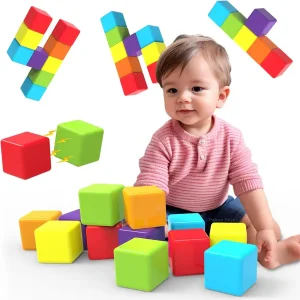
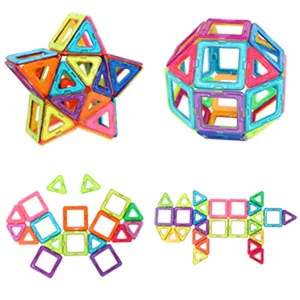
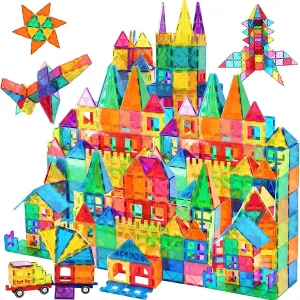
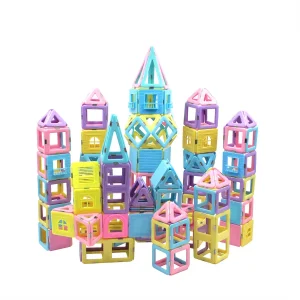
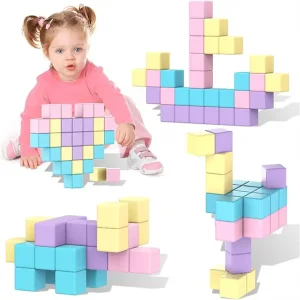
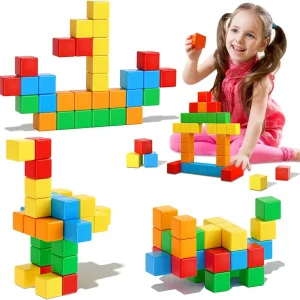
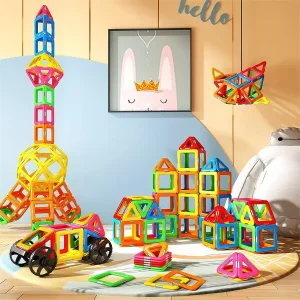
The international demand for magnetic building tiles has transitioned from traditional novelty toys to essential open-ended STEM (Science, Technology, Engineering, and Mathematics) educational assets.
Institutional demand across primary school districts, Montessori academies, and early childhood centers in North America and Western Europe has driven rapid procurement growth. Magnetic tiles provide tactile experiences for geometry, structural load-bearing principles, spatial mathematics, and artistic symmetry. Consequently, commercial buyers require manufacturers to provide certified non-toxic compositions, unified color spectra, and resilient structural housing that can survive intensive classroom usage.
With direct-to-consumer (D2C) brands thriving on platforms such as Amazon, Target Online, and specialized regional toy outlets, obtaining competitive China magnetic tiles deals directly from tier-1 manufacturers is critical to maintaining profit margins. Modern procurement directors evaluate partners based on automated production scaling, rapid prototyping capabilities, custom colorway formulation (such as Macaron pastels and clear diamond facades), and full compliance documentation.
The safety and longevity of magnetic tiles depend on polymer purity, magnetic grade selection, and ultrasonic seam enclosure dynamics.
Premium China magnetic tile manufacturers utilize 100% virgin, food-grade Acrylonitrile Butadiene Styrene (ABS). ABS plastic provides superior impact resistance, tensile strength, and optical clarity for transparent color variants. Unlike recycled or lower-grade styrene plastics, virgin ABS avoids hazardous heavy metal leeching and internal fracturing under mechanical stress, strictly abiding by US FDA and EU REACH standards.
The structural stability of 3D magnetic towers relies on the internal magnetic grade. Professional factories incorporate N35 or N38 Sintered Neodymium-Iron-Boron (NdFeB) magnets protected by anti-rust nickel-copper-nickel (Ni-Cu-Ni) electroplating. The precise sizing (typically 12mm x 4mm x 2mm) and cylindrical geometry enable free 360-degree rotation inside internal pockets, allowing instant polarity matching regardless of orientation.
To prevent magnet detachment—a critical choke-hazard risk governed by international toy safety laws—advanced factories deploy high-frequency ultrasonic welding technology. Friction melts the plastic boundaries into a seamless solid lattice. Additionally, reinforced internal locking columns and structural perimeter rivets double-seal the housing, providing over 50N of pull force resistance and 1.5-meter drop impact survival.
| Engineering Parameter | Standard Commercial Grade | Premium Tier-1 China Factory Standard | Compliance Test standard |
|---|---|---|---|
| Base Plastic Material | Recycled ABS / Styrene Blend | 100% Virgin Food-Grade ABS Resin | ASTM F963 / EN71 Part 3 |
| Internal Magnet Type | Low-grade N30 Ferrite / Weak NdFeB | N35 or N38 Sintered NdFeB Neodymium | CPSIA Magnet Flux Density Limit |
| Magnet Enclosure Method | Glue Bonding / Single Ultrasonic Seam | Dual Ultrasonic Welding + Internal Stainless Rivets | ISO 8124 Impact & Drop Test |
| Surface Hardness & Finish | Uncoated, Prone to Scratches | Anti-Scratch Beveled Concave Edges | Visual Polish & Ergonomic Safety |
| Color Pigmentation | Basic Industrial Dyes | Non-toxic UV-Resistant Food Dyes (Crystal/Pastel) | REACH Heavy Metal Content |
Understanding why China, and specifically industrial clusters like Yongkang, Zhejiang, leads the global market in high-yield, cost-competitive magnetic building blocks production.
Yongkang, located in Zhejiang Province, serves as the global epicenter for precision plastic injection molding and hardware component integration. This concentrated supplier cluster offers unprecedented operational efficiencies:
Partnering directly with a certified China magnetic building blocks factory eliminates multiple layers of regional broker markup. Global brand owners and OEM buyers can achieve wholesale unit prices between 30% to 50% lower than purchasing from overseas domestic importers, creating room for strong Amazon FBA and traditional brick-and-mortar retail margins.
Navigating customs clearing and product liability requires stringent adherence to target market toy safety certifications.
For entry into the USA and Canada, magnetic toys must undergo mechanical abuse testing, torque/tension tests, impact drop tests, and chemical lead/phthalates screening. Crucially, magnet sets must comply with the ASTM F963 flux index standard (<50 kG² mm²) or present fully enclosed designs that prevent detachment under destructive testing protocols.
The European market demands strict compliance with EN71-1 (Mechanical & Physical Properties), EN71-2 (Flammability), and EN71-3 (Migration of Certain Elements). Furthermore, manufacturers must provide a formal Declaration of Conformity (DoC), CE marking, and REACH chemical clearance for all pigments and transparent polycarbonate elements.
Global procurement teams should verify that prospective magnetic tiles manufacturers hold ISO9001 Quality Management certification, ISO14001 Environmental management, and social accountability audits such as BSCI (Business Social Compliance Initiative) or SMETA, guaranteeing ethical labor standards during mass production.
From toddler sensory play to advanced architectural modeling, magnetic building systems serve diverse consumer segments.
Preschools use magnetic tiles for collaborative open-ended play. Children learn color classification, shape matching, counting, basic physics, and early engineering fundamentals by constructing 2D plane tessellations and 3D castles.
Therapists and sensory specialists utilize magnetic building blocks to assist children with fine motor skill delay, autism spectrum disorder, and spatial coordination challenges. The satisfying auditory "click" of magnetic connection provides comforting tactile and acoustic sensory feedback.
High-end gift boxes featuring pastel Macaron colors, clear glitter tiles, and marble run expansion kits represent top-selling birthday and holiday gift SKUs across Amazon, specialized boutiques, and institutional toy stores.
Leading China manufacturers are investing in next-generation product design to capture emerging consumer niches.
Environmental standards in Europe and Asia are pushing factories toward Post-Consumer Recycled (PCR) plastics and cornstarch-derived PLA bio-polymers. Future magnetic tile lines will pair sustainability with optical clarity.
Integrating low-voltage inductive LED lights, sound modules, and kinetic track elements inside transparent magnetic blocks transforms static building into dynamic, illuminated marble runs and interactive structures.
The evolution from 2D flat tiles to solid 3D magnetic cubes (such as 1.42-inch STEM magnetic cubes) enables micro-architectural modeling, attracting older children, teenagers, and adult builders.
Direct OEM order options for international distributors, importers, and e-commerce brand owners.
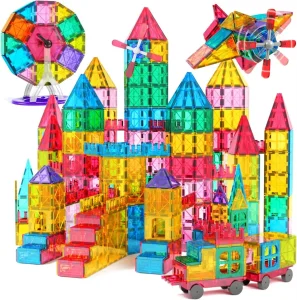
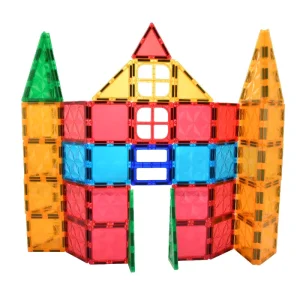
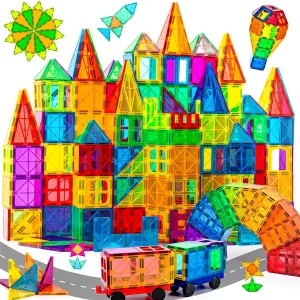
Detailed technical and commercial answers addressing key purchasing criteria, quality assurances, logistics, and OEM customizations.
Wholesale unit pricing depends on four primary parameters: magnet strength grade (N35 vs N38 NdFeB), plastic purity (100% virgin ABS vs blended resin), tile piece count per box, and custom packaging complexity. Volume discounts typically apply at tiers starting at 500 sets, 2,000 sets, and full container loads (FCL).
Tier-1 factories deploy high-frequency ultrasonic welding machines that fuse the ABS plastic shell at the molecular level. Internal structural columns and secondary perimeter steel rivets secure the housing. Finished units are subjected to 50N tensile pull tests and 1.5-meter drop tests onto hard surfaces per ASTM F963 and EN71 protocols.
Standard factory-branded stock items typically have a low MOQ of 100 to 300 sets. For custom private label packaging, bespoke Pantone colorways, or custom logo engraving, the standard OEM MOQ ranges from 500 to 1,000 sets per SKU depending on packaging complexity.
For US import, suppliers must provide ASTM F963-17 test reports, CPSIA lead/phthalate certificates, and a Children's Product Certificate (CPC). For EU import, suppliers must supply EN71 Parts 1, 2, and 3 test reports, REACH SVHC chemical analysis, a Declaration of Conformity (DoC), and CE marking on packaging.
Neodymium magnets are rare-earth alloys offering significantly higher magnetic flux density, allowing tiles to snap together strongly and build towers over 1 meter high. Ferrite magnets are weaker, heavier, and prone to demagnetization. High-quality magnetic tiles exclusively use N35/N38 Sintered NdFeB magnets.
Yes. OEM factories routinely handle Amazon FBA prep requirements, including FNSKU barcoding, suffocation warning polybagging, master carton labeling, custom color box printing, and drop-test packaging engineering to survive courier transit.
Pre-production sample verification (including custom logo printing) takes approximately 3 to 7 business days. Mass production lead times range from 15 to 25 calendar days after sample approval and deposit confirmation, depending on total order volume.
Yongkang possesses the world's most concentrated ecosystem for plastic injection molding tooling, automated ultrasonic assembly machinery, and hardware testing laboratories. This industrial cluster minimizes supply chain friction, reduces manufacturing lead times, and offers superior unit cost efficiency.