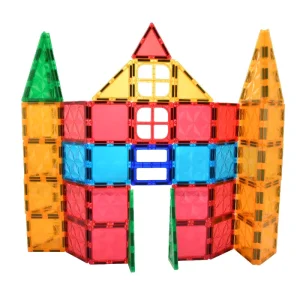
Analyzing global market expansion, structural engineering advancements, and procurement benchmarks for international buyers, brands, and educational institutions.
The global market for early childhood educational constructivism toys has experienced an unprecedented paradigm shift over the past decade. Central to this revolution is the adoption of Magnetic Building Tiles and Blocks—a category that successfully bridges sensory tactile exploration with structured Science, Technology, Engineering, and Mathematics (STEM) learning. As primary procurement hubs, specialized OEM/ODM China Magnetic Tiles Building Blocks factories have evolved from simple plastics assembly workshops into advanced automated manufacturing centers equipped with ultrasonic welding technologies, automated flux calibration systems, and rigorous ISO-certified Quality Management Systems (QMS).
According to recent market intelligence, the global market for magnetic building toys is expanding at a CAGR exceeding 8.4%, driven by surging institutional demand from preschools, elementary STEM centers, and premium consumer retail brands across North America, Europe, and the Asia-Pacific region. B2B buyers evaluating factory partnerships must look beyond basic FOB pricing. Success requires a deep technical understanding of polymer purity, magnet grade retention, structural mechanical fatigue resistance, and absolute adherence to evolving international child safety mandates such as US ASTM F963-17/CPSIA, EU EN71 (Parts 1, 2, 3), and ISO 8124.
Unlike generic product listings, this whitepaper evaluates the critical structural and safety parameters that differentiate top-tier China manufacturing facilities. We inspect precise magnet retention cavity design, ultrasonic horn frequencies, ABS resin refractive indices, and batch-level supply chain traceability to ensure your enterprise minimizes product recall risks and maximizes long-term brand equity.
An in-depth examination of the underlying material science and automated manufacturing techniques that guarantee long-term product durability and zero-defect safety performance.
Top-tier China factories utilize 100% non-recycled, high-impact virgin Acrylonitrile Butadiene Styrene (ABS). This guarantees non-toxicity, crystal-clear optical transparency, high scratch resistance, and zero structural embrittlement over prolonged play cycles.
Engineered with custom-graded N35 or N38 Neodymium-Iron-Boron (NdFeB) permanent magnets. The surface is electroplated with multi-layer Nickel-Copper-Nickel (Ni-Cu-Ni) coatings to permanently eliminate internal oxidation and maintain magnetic attraction forces over decades.
High-frequency ultrasonic welding horns (typically 15–20 kHz) fuse top and bottom ABS tile casings at a molecular level. This eliminate glues, solvents, and seam weak spots, achieving tensile shear resistance exceeding 500 N to prevent magnet dislodgement.
The primary risk associated with low-quality magnetic building block imports is accidental magnet dislodgement, which poses severe ingestion hazards for infants. Premier factories implement a double-layered physical encapsulation framework:
| Engineering Parameter | Tier-1 China Factory Standard (e.g. YuQi) | Generic Low-Cost Workshop | Impact on Enterprise Importers |
|---|---|---|---|
| Plastic Raw Material | 100% Virgin Food-Grade ABS (BPA & Phthalate Free) | Recycled Industrial Scrap / Mixed Regrind Plastics | Passes REACH & CPSIA vs. Fragile & Toxic Hazard |
| Welding Technology | Automated Dual-Horn Ultrasonic Molecular Fusion | Manual Chemical Glue Bonding / Low-Pressure Ultrasonic | Zero Dislodgement Risk vs. High Risk of Child Ingestion |
| Magnet Specification | N35 / N38 Rare Earth NdFeB with Ni-Cu-Ni Coating | Low-grade Ferrite or Uncoated N28 Scrap Magnets | Strong 3D Stability vs. Structural Collapse & Rusting |
| Internal Structure | Ribbed Load-Bearing Columns + Riveted Magnet Slots | Hollow Shell with Free-Floating Loose Magnets | Drop-Test Compliant (3m) vs. Easy Cracking under Pressure |
Navigating MOQs, OEM/ODM custom mold tooling, private label packaging, and international freight optimization for volume importers.
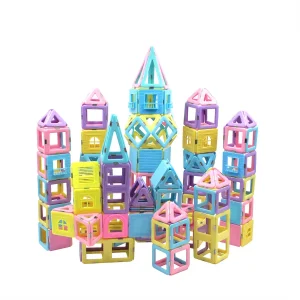
Full CAD/UG design validation, 3D rapid prototyping, and high-precision CNC injection mold creation. Factory partners accommodate specialized shape geometry, unique color palettes (Macaron, Pastel, Translucent Clear), and custom magnetic force specifications.
Equipped with high-tonnage multi-cavity injection molding machinery (ranging from 180T to 450T). Production output capabilities often exceed 50,000 tile sets per month, offering competitive tiered pricing structures across diverse order quantities.
Full turnkey packaging solutions including FSC-certified retail color boxes, shrink wrapping, custom EVA storage cases, master carton drop test integrity (ISTA 3A), and Amazon FBA barcode labeling and palletization direct from factory floors.
When executing contract manufacturing agreements with China factories, enterprise buyers should evaluate the Total Cost of Ownership (TCO) across four distinct cost vectors:
Ensuring seamless customs entry, retail distribution safety, and total protection against product liability across major world markets.
Full compliance with ASTM F963-17 (Physical & Mechanical, Flammability, Heavy Metals), CPSIA (Lead & Phthalates), and Children's Product Certificate (CPC) issuance backed by CPSC-accepted laboratories.
Strict conformity with EN71-1 (Mechanical Properties), EN71-2 (Flammability), EN71-3 (Migration of 19 Elements), REACH Annex XVII, and CE Marking verification for hassle-free EU distribution.
Adherence to strict Flux Index limits (< 50 kG²mm² for loose hazardous magnets). Since factory magnets are 100% ultrasonically sealed, products easily pass soaking, drop, impact, torque, and tension testing.
Leading manufacturing plants like Yongkang YuQi Industry and Trade Co., Ltd. enforce ISO9001:2015 quality frameworks. Every batch undergoes 100% Automated Optical Inspection (AOI) for plastic clarity, followed by random destructive drop testing (10 drops from 1.5 meters onto tile over concrete) and digital gaussmeter magnetic flux calibration.
Tailoring products to specific international market demands, educational frameworks, and regional retail ecosystem standards.
High demand for massive 100+ piece sets including magnetic cars, cranes, and window frame accessories. High-capacity color boxes must feature vivid graphic design, detailed multi-lingual safety warnings, and clear age grading (3+ Years).
Strong focus on eco-friendly paper packaging, minimal single-use plastic wrapping, and muted aesthetic color ranges (Nordic Pastel / Macaron series). Compliance with EU Waste Electrical and Electronic Equipment (WEEE) if light/sound modules are present.
Surging demand for institution-grade bulk storage tubs designed for kindergarten playrooms. Formulations require UV-stabilized ABS resins to resist color fading and thermal deformation in hot regional climates.
Exploring next-generation technologies shaping the future of magnetic building block manufacturing.
To meet strict global carbon neutrality targets, advanced China factories are actively researching bio-based PLA (Polylactic Acid) blends and post-consumer recycled ABS without compromising structural clarity or impact strength. These eco-resins will allow brands to market "Zero-Carbon Magnetic Toys" to environmentally conscious consumers.
The next structural evolution involves embedding non-contact RFID chips and kinetic micro-gears within magnetic tile frames. Coupled with augmented reality (AR) tablet applications, children can build 3D physical structures that trigger interactive digital lessons on architecture, physics, and spatial geometry on screen.
Future magnetic building block designs incorporate 360-degree rotating cylindrical magnets within internal tracks. This engineering breakthrough ensures that regardless of how two tiles are brought together, the internal magnets automatically align polarities (North-South), eliminating magnetic repulsion and making building even easier for toddlers under 3 years old.
Expert answers to critical questions asked by global B2B buyers, sourcing agents, and brand product directors.