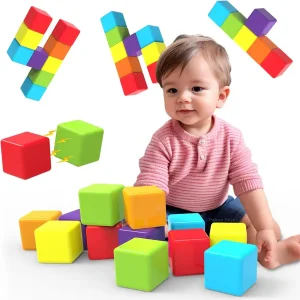
China Magnetic Blocks Cubes for Toddlers - 1.42 Inch Educational Toys for STEM Learning
View Product Details
Explore high-demand catalog items manufactured with ultrasonic rivet sealing, food-grade non-toxic ABS plastic, and high-coercivity permanent magnet cores.
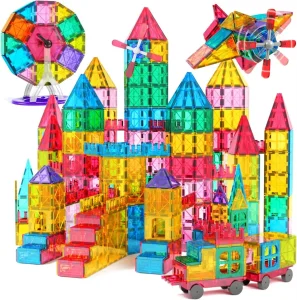
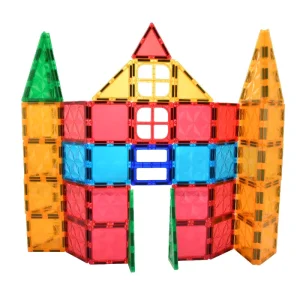
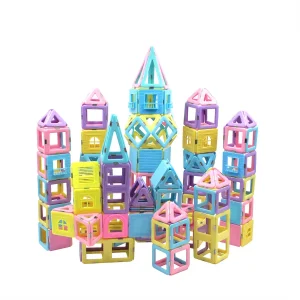
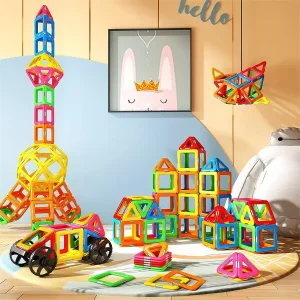
Analyzing market growth metrics, international compliance mandates, and why global brands source over 85% of magnetic building sets from Chinese industrial manufacturing clusters.
The global educational toy ecosystem has undergone a profound paradigm shift over the past decade. Driven by the worldwide adoption of STEM (Science, Technology, Engineering, and Mathematics) and STEAM curricula in primary education, magnetic building tiles and 3D magnetic cubes have transitioned from niche sensory novelties into core foundational play patterns. As global procurement directors, OEM brand owners, and retail chains seek reliable manufacturing partners, China’s specialized magnetic toy manufacturing hub has emerged as the global epicenter for precision manufacturing, structural safety innovation, and supply chain scalability.
Sourcing magnetic construction sets requires navigating complex technical parameters: magnet pull-strength integrity, ultrasonic housing seal security, non-toxic polymer selection, and zero-defect drop-resistance testing. Leading international importers no longer look solely for cheap unit costs; they demand total supply chain transparency, rapid tooling turnarounds, verified audit certifications (BSCI, ISO 9001, ICTI Care), and guaranteed compliance with strict mechanical safety mandates such as ASTM F963-17 in North America and EN71 (Parts 1, 2, and 3) in the European Union.
Modern magnetic toys face intense regulatory scrutiny globally regarding small magnet ingestion risks. Advanced Chinese suppliers utilize dual-locking plastic structures and reinforced internal ribs to ensure magnets cannot dislodge even under extreme impact testing up to 100 Newton tensile forces.
By bypassing multiple intermediary brokers, global buyers working directly with verified manufacturers gain access to proprietary mold designs, custom Pantone color blending, specialized surface textures (such as diamond/prism facets), and customized packaging.
Leading factories in Yongkang, Zhejiang, integrate robotic magnetic placement arms, high-speed plastic injection machinery, and computer-controlled ultrasonic welding arrays to achieve daily output capabilities exceeding 200,000 individual tiles.
A deep breakdown of Neodymium (NdFeB) grade specifications, ultrasonic welding joint physics, and non-toxic polymer selection for B2B engineering evaluation.
| Engineering Parameter | Standard Market Grade (Low-End) | YuQi Factory Benchmark (Export Grade) | B2B Quality Impact & Benefit |
|---|---|---|---|
| Magnet Material | Recycled Ferrite or N30 NdFeB | N35 Premium Neodymium (NdFeB) | Provides 35% stronger magnetic retention; structures stay intact when built high. |
| Enclosure Method | Solvent Glue / Cold Snap-Fit | Dual-Lapped Ultrasonic Spot Welding + Rivets | Zero risk of housing splitting open; completely eliminates magnetic loose hazard. |
| Plastic Polymer | Secondary Recycled ABS Resin | 100% Virgin Food-Grade ABS (BPA & Phthalate-Free) | Superior optical clarity, zero toxic off-gassing, high fracture toughness. |
| Surface Protection | Flat Gloss (Prone to Scratches) | Lattice Bevel Edge & Anti-Scratch Lattice Ribbing | Maintains crystal transparency after extended friction and school usage. |
| Drop Test Standard | 1.0 Meter Drop (5 passes) | 1.5 Meter Concrete Drop Test (30+ passes) | Exceeds ASTM F963-17 impact safety and heavy-duty usage standards. |
The core structural challenge in magnetic tile engineering lies in balancing magnetic flux density with physical weight and child safety. Lower quality suppliers often cut costs by utilizing sub-standard N30 grade magnets or reducing wall thicknesses below 1.2mm. This results in weak structural hold, causing tall 3D towers to collapse and causing consumer dissatisfaction.
Top-tier Chinese manufacturers employ sophisticated 3D stress-analysis software during mold development. By placing internal support pillars inside each hollow tile and locking the cylindrical N35 magnets within custom-molded interior retention caps prior to ultrasonic sealing, factories create a double-defense matrix. Even if an outer wall experiences severe blunt-force impact, the internal retention cap prevents the magnet from exiting the enclosure.
Virgin ABS resins are dehumidified to ensure maximum clarity and structural tensile strength.
High-precision steel molds create bevelled edge halves with zero surface burrs.
Automated high-speed pick-and-place units insert N35 magnets into polarity-checked slots.
High-frequency acoustic vibrations fuse plastic seams into a single homogenous unit.
Batch samples undergo automated pressure testing, drop trials, and magnetic field checks.
Understanding how geographical industrial clusters in Zhejiang and Guangdong deliver unprecedented cost efficiencies, tooling speed, and scale for international buyers.
China controls over 70% of global rare-earth element processing. By sourcing Neodymium directly from domestic refineries, factories eliminate international tariff markups and raw material freight delays, maintaining stable FOB pricing for multi-year contract cycles.
While European or North American mold creation can take 12 to 16 weeks, Chinese tooling workshops in Yongkang and Taizhou utilize 5-axis CNC machining center arrays to produce custom tile shape prototypes within 14 days and full mass production tooling within 25 days.
Proximity to Ningbo-Zhoushan Port and Shanghai Port—the busiest container hubs on earth—enables seamless ocean freight staging, expedited customs declaration, efficient FCL/LCL consolidation, and predictable shipping lead times to major Western markets.
From preschool classrooms to DTC e-commerce brand expansion, magnetic tile building sets serve diverse commercial channels across global markets.
Educational institutions in North America and Western Europe buy magnetic tiles in bulk bulk packs (100–300 pieces). Teachers utilize tiles to physically demonstrate geometry concepts, spatial rotations, structural load distribution, kinetic friction, and color mixing under light tables.
Occupational therapists adopt magnetic building blocks due to their tactile feedback, satisfying magnetic click sound, and low resistance joining mechanics. Highly beneficial for fine motor skill development and children with sensory processing disorders.
Amazon FBA sellers, Walmart marketplace vendors, and independent toy brands leverage OEM factory partnerships to launch custom macaron-themed sets, glitter tiles, translucent pastel series, and expansion kits featuring magnetic cars, window frames, and marble run tracks.
Key evolutionary vectors shaping the next generation of magnetic toys from 2025 through 2030.
Environmental regulations in Europe (EU Green Deal) are nudging manufacturers toward post-consumer recycled (PCR) non-toxic resins and bio-based plastics. Forward-thinking Chinese factories are actively running trials with optical-grade plant-derived resins that retain high transparency without compromising tensile fracture strength.
Standard static building tiles are increasingly complemented by kinetic add-ons. Future production trends emphasize integrating internal micro-LED units charged via magnetic contact points, gear-driven mechanical pulleys, magnetic marble run funnels, and motorized track elements to increase engagement for older age groups (7+ years).
To operate safely in tier-1 retail channels (Target, Walmart, Fnac, Smyths Toys), global buyers must partner with factories that hold non-infringing structural patents. Certified Chinese manufacturers maintain clear international patent portfolios covering magnetic rivet arrangements, bevel contours, and hinge mechanisms, insulating buyers from patent litigation.
Addressing technical engineering questions, compliance mandates, custom tooling workflows, and logistics optimization.
Explore additional high-demand models, including 3D cubes, macaron creativity sets, and heavy-duty building block configurations.
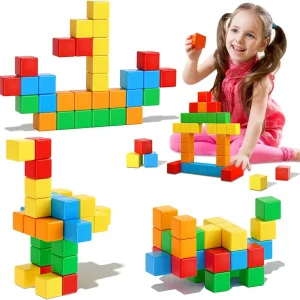


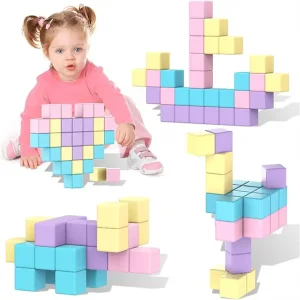
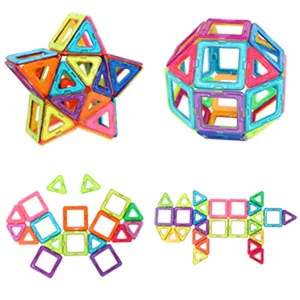
Achieve supply chain resilience, superior engineering quality, and competitive margin performance through direct factory collaboration.
In the highly competitive global educational toy market, securing a certified, reliable, and technically capable manufacturer in China is the single most critical factor for sustainable profitability and brand equity. By combining N35 Neodymium magnet stability, food-grade virgin ABS resins, ultrasonic rivet sealing, and complete compliance testing (ASTM F963-17 / EN71), China's leading magnetic tile blocks manufacturers empower global brands to deliver safe, engaging, and durable STEM learning products to millions of families worldwide.
Ready to elevate your STEM toy line with verified China factory-direct solutions?
Initiate Factory Audit & Sample Request