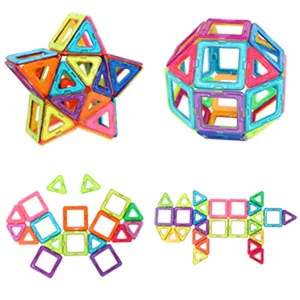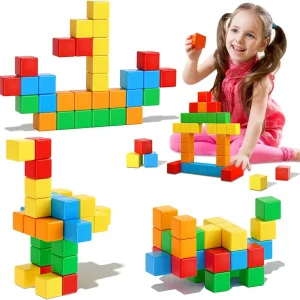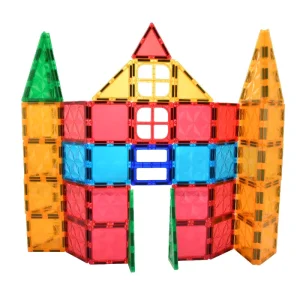
Direct-from-factory STEM educational tiles, 3D cubes, and building blocks manufactured with sonic-welded ABS and rare-earth NdFeB magnets.
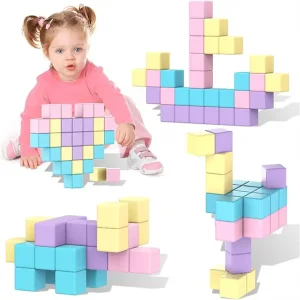


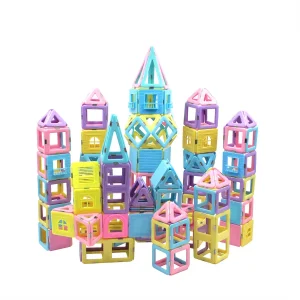
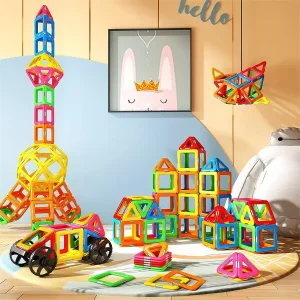
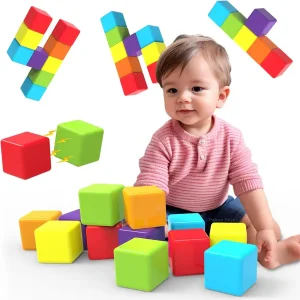
Analyzing the migration from manual toy assembly to high-precision automated ultrasonics, rare-earth material optimization, and stringent global compliance.
Over the past decade, the global market for STEM (Science, Technology, Engineering, and Mathematics) educational toys has undergone a radical transformation. At the focal point of this shift are China magnetic pieces manufacturers and suppliers, who have advanced from producing basic plastic novelties to engineering high-precision, safety-critical magnetic tiles, 3D cubes, and modular building sets. Modern magnetic building toys represent a complex convergence of polymer chemistry, structural physics, and precision magnetic assembly.
Driven by rising global demand for open-ended learning tools, China's manufacturing ecosystem—centered predominantly in industrial hubs like Zhejiang and Guangdong—has integrated automated ultrasonic welding, automated optical inspection (AOI), and non-toxic virgin ABS resin molding. This technological maturation ensures that magnetic pieces satisfy strict international toy safety directives such as North America's ASTM F963-17 / CPSIA and Europe's EN71 (Parts 1, 2, 3) & REACH.
For international buyers—ranging from educational institution procurement officers to private-label e-commerce brand owners—navigating China's supplier ecosystem requires an in-depth understanding of technical specifications, factory quality management systems (ISO 9001), material traceability, and intellectual property frameworks. This whitepaper serves as a technical blueprint and sourcing manual for global enterprises purchasing magnetic building pieces from leading Chinese manufacturers.
Key drivers influencing global retail, early childhood education, and OEM manufacturing demands through 2030.
Schools and early childhood learning centers globally are phasing out single-use static toys in favor of magnetic tile kits that facilitate hands-on geometry, architectural balance, and spatial cognition.
Following stringent CPSC regulations on small rare-earth magnets, top-tier Chinese suppliers now utilize double-welded perimeter rivets and encapsulated internal housings to eliminate magnet detachment risks.
Amazon FBA sellers and boutique toy labels are partnering directly with Chinese factories for custom color matching (Macaron pastels, transparent crystal, glitter resins) and bespoke FSC retail packaging.
Commercial buyers are increasingly seeking long-term manufacturing partners capable of offering end-to-end supply chain integration. Rather than operating merely as assembly plants, leading Chinese factories function as co-development hubs—assisting clients with custom mold prototyping, CAD structural engineering, FEA stress analysis, and international regulatory testing.
Dissecting the material science, ultrasonic sonotrode welding, and mechanical encapsulation protocols.
The core structural integrity and building height capacity of a magnetic piece depend directly on its internal magnet chemistry. Chinese suppliers utilize cylindrical or rectangular Sintered Neodymium-Iron-Boron (NdFeB) magnets, typically specified at N35, N38, or N42 energy products.
Safety considerations prohibit the use of recycled or brittle plastics. Tier-1 China factories mandate 100% Virgin Food-Grade ABS (Acrylonitrile Butadiene Styrene) resin. ABS provides superior impact strength, scratch resistance, and high optical transparency for translucent crystal tiles.
| Parameter / Specification | Standard Commercial Grade | Premium Institutional Grade (China Tier-1) | Testing Standard / Compliance Method |
|---|---|---|---|
| Internal Magnet Type | N30 - N33 NdFeB | N35 - N38 Sintered NdFeB (Ni-Cu-Ni Coated) | Vibrating Sample Magnetometer (VSM) |
| Plastic Housing Resin | Semi-Recycled ABS Mix | 100% Virgin Food-Grade ABS (BPA & Phthalate Free) | FDA / EU 10/2011 Chemical Analysis |
| Sealing Technique | Solvent Bonding / Single Sonic Weld | Dual-Step Ultrasonic Sonotrode Welding + Perimeter Rivets | ISO 8124-1 Impact & Drop Test |
| Tensile Separation Force | < 45 Newtons | > 70 – 90 Newtons (Zero Magnet Detachment) | ASTM F963-17 Tension Test (Clause 8.9) |
| Heavy Metal Limits | Standard Lead Screening | Zero Lead, Cadmium, Arsenic, or Antimony | CPSC-CH-E1002-08.3 / EN71-3 ICP-MS |
A crucial quality differentiator between generic suppliers and specialized OEM manufacturers lies in the enclosure sealing process. High-speed ultrasonic welding horns (sonotrodes) apply localized high-frequency acoustic vibrations (typically 20 kHz) to melt plastic along pre-engineered internal lattice ribs.
Furthermore, leading Chinese factories incorporate stainless-steel perimeter eyelet rivets at critical stress corners. This dual-layer containment strategy ensures that even under severe mechanical impact (e.g., dropping from a 3-meter elevation onto concrete), the ABS shell flexes without fracturing, keeping magnets safely enclosed.
How global distributors and brands execute custom mold production, branding, and quality assurance in China.
OEM projects begin with 3D CAD modeling and mold flow analysis. Precision CNC steel molds allow custom geometric shapes, surface textures (e.g., anti-scratch diamond facets), and embedded logo branding.
Suppliers offer exact Pantone color matching for masterbatch plastics. Options include translucent crystal tints, opaque modern pastels, glow-in-the-dark bio-polymers, and glitter-infused resins.
Complete turnkey retail box solutions: window display boxes, heavy-duty storage buckets, velvet carry bags, and multi-language instruction booklets with barcode serialization for worldwide fulfillment.
When evaluating potential Chinese suppliers for wholesale magnetic pieces, audit teams should verify four essential operational markers:
From classroom learning environments to specialized sensory therapy and mainstream retail.
Used as interactive visual aids for geometry lessons (2D nets transforming into 3D polyhedrons), physics fundamentals (magnetic polarity), and collaborative architectural engineering challenges.
The clear tactile feedback (magnetic click) and vibrant colors make magnetic building pieces effective tools for pediatric occupational therapy, assisting children with fine motor skill refinement and focus enhancement.
High inventory turnover and strong consumer gift appeal position magnetic piece sets among the top-tier performing SKUs in specialty toy stores, museum gift shops, and online marketplaces.
Emerging technology trends shaping the next decade of magnetic building products.
Leading Chinese manufacturers are investing heavily in R&D to maintain competitive advantage. Promising technological developments set to launch across global markets include:
Addressing common technical, safety, and supply chain questions when working with Chinese magnetic toy suppliers.
Leading Chinese manufacturers employ a multi-stage safety containment framework. First, magnets are housed in internal molded plastic pockets. Second, the outer ABS shells undergo high-frequency ultrasonic welding that fuses the halves at a molecular level. Third, stainless steel rivets reinforce outer perimeter points. Finally, batch samples undergo rigorous drop testing (dropping 10 times from 1.5 meters onto tile over concrete) and tension pull testing exceeding 70 Newtons to guarantee zero magnet exposure.
For the United States, imports must comply with ASTM F963-17 (specifically heavy metals screening, physical safety, and magnet use criteria) and CPSIA (lead and phthalate limits), accompanied by a Children's Product Certificate (CPC) from an CPSC-accredited laboratory. For the European Union, products require CE marking backed by EN71-1 (Mechanical and Physical), EN71-2 (Flammability), EN71-3 (Migration of elements), and REACH chemical compliance.
For standard catalog SKUs with custom packaging or color tweaks, MOQs typically range from 500 to 1,000 sets, with production turnaround in 20 to 30 days. For fully custom OEM projects requiring new injection mold tooling, mold fabrication takes approximately 30 to 45 days, followed by sample approval and mass production within 25 days. Air freight or ocean shipments are arranged based on customer destination requirements.
Magnet grade indicates the maximum energy product of the magnet material. N35 is the baseline for basic building shapes. Upgrading to N38 or N42 increases magnetic flux density by 10% to 20%, allowing constructed towers and 3D structures to maintain stability at greater heights without collapsing under structural load. Higher grade magnets also preserve rotational freedom inside internal channels, ensuring smooth snap-together alignment.
Solvent bonding relies on chemical adhesives to melt plastic joint edges together, which can leave trace chemical residues and leads to uneven bond strength over time. Ultrasonic welding uses high-frequency mechanical vibrations to cause localized frictional melting of pure ABS resin. Ultrasonic welding creates a uniform, chemical-free molecular weld that is significantly stronger, visually clean, and fully compliant with food-contact and non-toxic child safety standards.
Discover our full catalog of wholesale 3D building sets, toddler-safe sensory blocks, and custom OEM magnet lines.