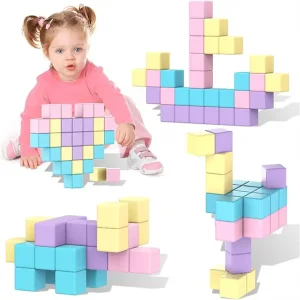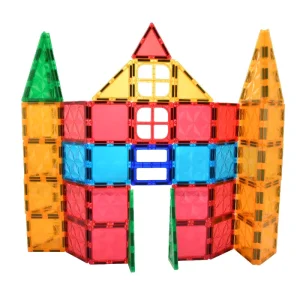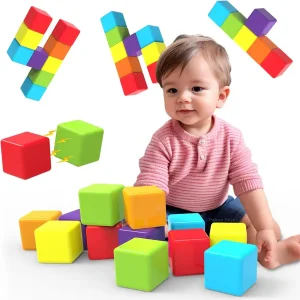
High-precision injection molded educational building sets engineered with reinforced internal lattice structures, non-toxic virgin ABS polymers, and sonic welded neodymium magnets.
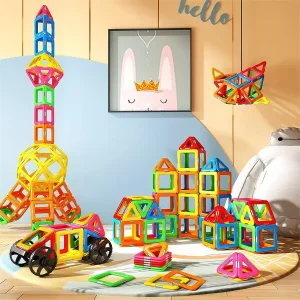
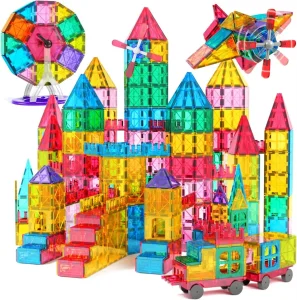
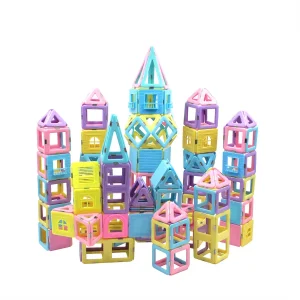
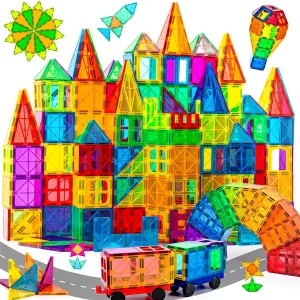
Over the past decade, the global market for STEM (Science, Technology, Engineering, and Mathematics) educational toys has undergone a profound paradigm shift. At the epicenter of this evolution is China's advanced plastic injection molding and rare-earth magnet manufacturing cluster. B2B procurement managers, educational toy brands, and institutional distributors no longer view Chinese factories merely as low-cost assembly lines, but rather as specialized engineering partners capable of high-precision manufacturing, material innovation, and strict compliance execution.
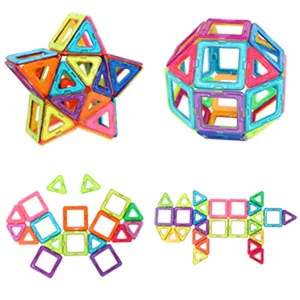
Magnetic tiles—characterized by transparent geometric shapes housing free-rotating internal magnets—demand a sophisticated synthesis of structural design, polymer science, and safety testing. As consumer awareness around hazardous toy recalls intensifies across North America and Europe, certified Chinese factories have upgraded production processes. Modern facilities now feature cleanroom injection molding, automated robotic assembly, inline ultrasonic welding monitoring, and 100% vision-guided inspection systems.
Decoding the architectural parameters that separate premium enterprise-grade magnetic building tiles from sub-standard market imitations.
Premium OEM factories exclusively utilize 100% virgin, non-toxic Acrylonitrile Butadiene Styrene (ABS). Virgin ABS provides superior optical clarity, high impact resistance (preventing splintering upon impact), and zero chemical off-gassing, ensuring compliance with heavy metal limits under EN71-3.
The magnetic force is generated by Grade N35 or N38 Neodymium-Iron-Boron magnets. To prevent rust and degradation, magnets undergo triple-layer nickel-copper-nickel (Ni-Cu-Ni) plating before being encapsulated inside individual internal ABS retention chambers.
Rather than relying on chemical adhesives (which degrade over time and pose toxic ingestion risks), upper and lower tile shells are fused using high-frequency 20 kHz ultrasonic transducers. This forms a permanent molecular bond capable of withstanding 50+ kg drop tests.
According to ASTM F963-17 Clause 4.25 and EN71-1, loose magnets present severe internal perforation risks if swallowed. China's top tier magnetic tile factories design tiles so that internal magnets remain permanently trapped within dual-sealed outer shells and inner structural ribs. Furthermore, the flux index of any accessible part remains strictly below 50 kG²mm², balancing strong 3D construction stability with stringent pediatric physical safety standards.
From initial 3D CAD modeling and custom mold fabrication to private label packaging and freight optimization.
Leading manufacturers provide rapid SLA/SLS 3D printing for physical prototype validation within 48 hours. Custom steel mold cavity creation (S136 hardened steel) ensures up to 1,000,000 shot cycles with sub-millimeter precision tolerances.
During injection molding and ultrasonic welding, vision-guided AI cameras screen for micro-cracks, surface blemishes, and magnet alignment. Automated pull-force testers sample units every 30 minutes to verify bond strength.
To reduce international sea freight costs (CBM), factories offer customized gift boxes, color sleeves, and compact storage tubs with high-density EPE foam inserts that prevent friction scratching during transit.
Magnetic tiles have expanded beyond retail consumer sales into formal educational spaces. Modern nurseries, STEM academies, and primary school curricula integrate 3D magnetic tiles to teach spatial geometry, architectural load-bearing, color mixing optics, and collaborative problem-solving.
To meet diverse enterprise buyer profiles, Chinese manufacturers offer differentiated product tiering:
Key specifications enterprise buyers analyze prior to issuing Purchase Orders (PO):
Exporting to regulated international markets requires stringent documentation and laboratory verification by accredited third parties (SGS, TÜV, Intertek).
| Target Region | Mandatory Standard | Key Testing Parameters | Compliance Status |
|---|---|---|---|
| United States | ASTM F963-17 / CPSIA | Magnet flux index testing (<50 kG²mm²), Lead content (<90 ppm), Phthalate restrictions (8 prohibited plasticizers). | 100% Factory Pass |
| European Union | EN71 Parts 1, 2, 3 & CE | Mechanical/physical drop safety, flammability rating, 19 toxic heavy metal migration limits under EN71-3. | 100% Factory Pass |
| Australia / NZ | AS/NZS ISO 8124 | Tension test for internal component accessibility, sharp edge/point evaluation, hazard warning labeling. | 100% Factory Pass |
| Global / Universal | ISO 9001 / BSCI / SMETA | Factory quality management systems, ethical labor practices, supply chain environmental audits. | Certified Facility |
Anticipating market demand through continuous engineering R&D and sustainable manufacturing transitions.
Next-generation R&D focuses on integrating bio-based ABS and recycled ocean-bound plastics without sacrificing optical transparency or structural tensile strength, fulfilling corporate ESG initiatives.
Embedding passive RFID chips inside magnetic tiles allows companion tablets to recognize constructed shapes in real time, bridging physical play with augmented reality (AR) STEM learning modules.
Developing gear assemblies, motor-driven magnetic axles, and solar-powered kinetic units that snap onto standard tile geometry to elevate 3D static builds into dynamic mechanical systems.
Direct answers regarding production lead times, MOQ requirements, custom branding, and quality assurances.
Explore our full line of magnetic building blocks, sensory cubes, and STEM architectural expansion kits available for global distribution.