
Explore our industrial-grade, STEM-accredited magnetic building tile and cube product lines engineered for global B2B procurement, wholesale distribution, and private-label retail brands.
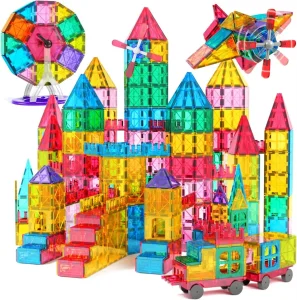
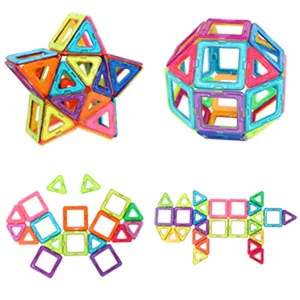

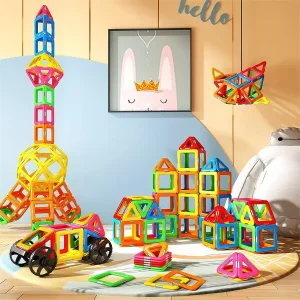
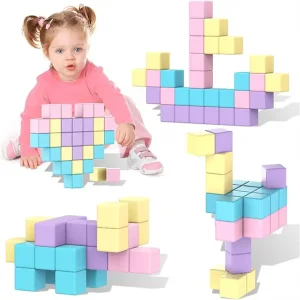
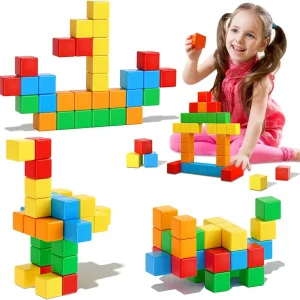
The global market for open-ended, STEM-focused physical construction toys has undergone a fundamental structural shift over the past decade. Among various sub-categories, magnetic construction toys—comprising translucent magnetic building tiles, 3D magnetic cubes, and interlocking magnetic structural blocks—have evolved from niche educational aids into dominant revenue drivers for Tier-1 retail chains, specialized educational distributors, and e-commerce brand aggregators across North America, Western Europe, and the Asia-Pacific region.
As global consumer demand accelerates toward durable, multi-generational learning toys that foster spatial awareness, early geometry, fine motor control, and structural engineering concepts, international buyers face mounting pressure to secure supply chain partners capable of delivering uncompromising safety compliance, structural reliability, and cost-effective scalability. China has solidified its position as the world's primary manufacturing powerhouse for magnetic construction systems. However, navigating the vast network of China magnetic construction suppliers and manufacturers requires deep technical insight into polymer chemistry, rare-earth magnet sourcing, ultrasonic welding precision, and international toy safety legislation.
In today's highly scrutinized regulatory climate, sourcing decisions extend far beyond basic unit economics. Leading global brands must audit candidate factories against stringent criteria: material purity, internal ribbing engineering, ultrasonic weld seam integrity, flux density safety parameters, and social compliance audits (such as BSCI and ISO9001). This technical whitepaper provides B2B procurement officers, product managers, and enterprise buyers with an exhaustive, engineering-grade analysis of China’s magnetic construction manufacturing ecosystem, establishing benchmark criteria for selecting world-class manufacturing partners.
A premium magnetic construction tile or cube appears simple on the surface, but its internal architecture represents a sophisticated balance of materials science, structural mechanics, and magnetic field calibration. The engineering performance of a magnetic construction set relies on three primary pillars: polymer housing composition, magnet metallurgy, and ultrasonic welding execution.
Formulated using pure Acrylonitrile Butadiene Styrene (ABS) resin without recycled scrap fillers. Provides crystalline light transparency, extreme impact strength, and total freedom from toxic bisphenols or heavy metal plasticizers.
Utilizing Neodymium Iron Boron rare-earth magnets ranging from N35 up to ultra-strong N52 grades. Magnet surfaces undergo triple-pass Ni-Cu-Ni anti-corrosion electroplating to prevent degradation over multi-year lifecycles.
High-frequency acoustic energy fuses the upper and lower plastic housings at a molecular level. Creates a hermetically sealed internal cavity that permanently locks magnets inside, eliminating detachment hazards.
The plastic housing must simultaneously deliver high optical transparency (for aesthetic vibrant colors), structural rigidity, and shock absorption under high-energy impact (e.g., repeated drop testing onto concrete). Substandard suppliers frequently blend post-industrial recycled regrind plastic into their production lines to reduce raw material costs by 15% to 30%. However, regrind ABS introduces micro-impurities, molecular chain degradation, and internal stress concentrations that severely compromise structural integrity, leading to premature cracking under stress.
Tier-1 Chinese suppliers enforce strict raw material validation protocols, using exclusively virgin, food-grade ABS resin (such as Chi Mei POLYLAC® or Covestro Bayblend®). Virgin ABS features precise chemical homogeneity, high tensile yield strength (40–50 MPa), and excellent flexural modulus (2,000–2,500 MPa). This ensures the tile resists flexural fatigue while maintaining crystal-clear clarity under ambient illumination.
The magnetic force within building sets is generated by sintered Neodymium-Iron-Boron (NdFeB) permanent magnets. NdFeB represents the most powerful commercial magnetic alloy available, exhibiting high remanence (Br), coercivity (Hc), and maximum energy product (BHmax).
In 3D magnetic cubes and rotational tiles, magnet design involves a sophisticated mechanical innovation: 360-degree free-rotating cylindrical cylindrical magnets enclosed within precision internal retention pockets. Unlike fixed-polarity magnets that can repel each other when mismatched, free-rotating cylindrical magnets instantly auto-align their North and South magnetic poles upon proximity. This guarantees that every side of a block or tile attracts adjacent components, enabling effortless 3D construction without magnetic repulsion.
The primary safety hazard in low-quality magnetic toys is magnet detachment. If a small, high-powered magnet escapes its housing, it poses a severe, potentially fatal ingestion risk for young children. To eliminate this vulnerability, reputable Chinese manufacturers avoid chemical glues and adhesives, which degrade over time due to thermal expansion and moisture ingress.
Instead, advanced manufacturing facilities utilize automated 20 kHz ultrasonic plastic welding machines. The ultrasonic horn transmits high-frequency vibrational energy into the joint interface of the two ABS tile halves. The localized frictional heat rapidly melts the energy-director ribs on the plastic edges, molecularly fusing the upper and lower shells into a single solid piece. When reinforced with an internal structural lattice (perimeter ribbing and cross-bracing), the resulting weld seam easily exceeds international tensile safety thresholds (>70 N force).
To assist enterprise procurement teams in objective factory evaluation, the table below outlines key technical parameters comparing premium industrial-grade production against low-cost market alternatives:
| Engineering Specification | YuQi Industrial Manufacturing Standard | Generic / Low-Cost Market Baseline | Impact on Product Lifecycle & Safety |
|---|---|---|---|
| Polymer Shell Resin | 100% Virgin Food-Grade ABS (BPA-Free) | Recycled ABS / PC Blends with Fillers | High Impact Strength & Clarity |
| Magnet Metallurgy Grade | Sintered NdFeB N38 – N52 Rare-Earth | Low-grade N30 NdFeB or Ferrite Cores | Superior 3D Structural Height & Stability |
| Magnet Surface Coating | Triple-Layer Ni-Cu-Ni Plating | Single Nickel Flash or Uncoated | Zero Rust / Oxidation inside Plastic Cavity |
| Internal Structure Design | Reinforced Lattice Ribs + Dual Metal Rivets | Hollow Shell without Cross-Bracing | Resists High Drop Impacts (> 1.5 meters) |
| Joint Sealing Technology | 20 kHz High-Precision Ultrasonic Welding | Manual Solvent Gluing or Low-Frequency Weld | Eliminates Magnet Ingestion Hazards |
| Flux Density Safety Margin | Calibrated Flux Index < 50 kG² mm² | Unregulated Flux Output | Full Compliance with ASTM F963 & EN71-1 |
| Color Quality | UV-Resistant Pantone-Matched Masterbatch | Non-Standard Dyestuffs (Fades quickly) | Long-Term Color Vibrancy under Sun Exposure |
Establishing a resilient supply chain for magnetic construction products requires structured project execution across tool engineering, sample prototyping, quality control, and logistics fulfillment. A leading OEM/ODM partner in China provides end-to-end integration across all lifecycle phases:
3D mechanical modeling, DFM (Design for Manufacturability) analysis, and high-precision CNC mold core carving. Multi-cavity injection molds with hardened H13 steel (HRC 48-52) ensure long mold lifecycles over 1,000,000 shots.
Rapid SLA 3D printing and T1 sample production. Physical samples undergo drop-impact tests, flux density meter testing, and third-party laboratory pre-screenings (SGS/TÜV/Intertek) prior to tooling mass release.
High-speed robot-assisted magnet loading into plastic halves, followed by automated ultrasonic welding, inline optical inspection for color integrity, and strict AQL 1.0 Major / 2.5 Minor final audits.
For enterprise brands targeting Amazon FBA, specialized toy boutiques, or mass-market retail channels, packaging design plays a crucial role in brand positioning and damage prevention during shipping. Professional Chinese suppliers support full OEM customization, including:
Because magnetic building sets are designed for young children (typically ages 3 and up), international safety standards enforce rigid performance criteria. Non-compliant products face severe risks of customs seizures, product recalls, substantial fines, and brand reputation damage. Working with an ISO9001-certified factory ensures that every batch meets global market entrance requirements:
Mandatory testing for total lead content, 8 heavy metal migrations, phthalates (8P), and high-powered magnet flux index limitations (<50 kG² mm² for loose magnets).
Full compliance with Mechanical & Physical Safety (Part 1), Flammability (Part 2), and 19 Heavy Metal Elements Migration (Part 3), alongside CE Marking and REACH SVHC chemical clearance.
Comprehensive compliance covering Australian/New Zealand ISO 8124 standards, Gulf Cooperation Council (GCC) G-Mark certifications, and China Compulsory Certificate (CCC).
Top-tier suppliers maintain dedicated in-house testing laboratories equipped to perform continuous batch verification before mass shipment release:
1. High-Impact Drop Testing: Sample tiles are dropped repeatedly from a height of 1.5 meters onto a steel plate embedded in concrete to verify that the ultrasonic weld seam does not fracture or expose internal magnets.
2. Tensile Torque & Tension Testing: A calibrated digital force gauge applies over 70 Newtons of pulling force across the weld joint and corner rivets to simulate extreme abuse by older children.
3. Thermal Cycling & Humidity Chamber: Samples are subjected to thermal swings (-10°C to +60°C) for 72 hours to verify that temperature variations do not warp the plastic housing or compromise magnet strength.
As the market for magnetic building construction sets matures, innovative manufacturers are pioneering breakthrough technologies to differentiate their product lines and enhance educational value. Promising development trends for the coming decade include:
R&D efforts focus on integrating Post-Consumer Recycled (PCR) polymers without compromising optical clarity or ultrasonic weld strength, supporting global sustainability initiatives.
Incorporating embedded conductive tracks within magnetic tiles to allow children to safely snap together illuminated LED structures, switches, and small motor modules.
Pairing physical magnetic construction sets with mobile Augmented Reality (AR) apps that scan physical builds, overlay interactive digital animations, and unlock gamified STEM challenges.
Explore the remaining selection of high-volume magnetic block sets, 3D cubes, and toddler sensory building blocks available for bulk procurement and factory-direct OEM orders.
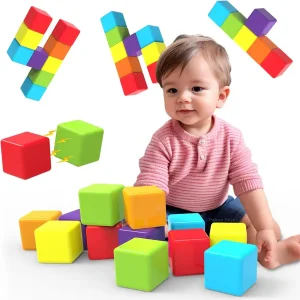
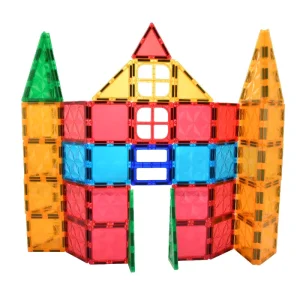
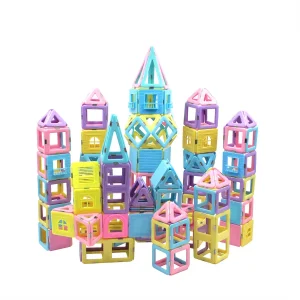
In-depth technical answers addressing procurement, safety compliance, tooling customization, and quality control for global B2B buyers.
Tier-1 Chinese suppliers distinguish themselves through four key parameters: 1) Material Integrity: Utilizing 100% virgin food-grade ABS resin without regrind scrap plastic. 2) Structural Engineering: Implementing high-frequency 20 kHz ultrasonic welding combined with internal perimeter lattice ribbing and steel corner rivets. 3) Magnet Quality: Sourcing high-grade N38 to N52 sintered NdFeB magnets with triple-layer Ni-Cu-Ni corrosion plating. 4) Regulatory Assurance: Holding full ISO9001 and BSCI factory audits with batch-specific laboratory test reports for ASTM F963, CPSIA, and EN71 compliance.
Ultrasonic welding transmits 20,000 Hz acoustic vibrations through the ABS housing plastic. Friction melts the targeted plastic energy directors along the inner seam, creating a continuous molecular bond across the joint interface. Unlike glued joints, which can dry out, crack, or fail under impact, an ultrasonically fused plastic shell acts as a unified single piece. Even under extreme drop tests exceeding 1.5 meters onto concrete, the seam withstands pulling forces above 70 Newtons, safely locking magnets inside their internal chambers.
For custom shape creation or branded tile geometric designs, the OEM tooling development cycle typically requires 25 to 35 days, including 3D CAD modeling, mold core machining (H13 steel), and T1 sample evaluation. Once pre-production samples are approved, standard mass production lead times range between 15 to 25 days depending on total order volume, color customization complexity, and retail packaging specifications.
Yes. All manufactured product ranges are engineered specifically to comply with the most stringent global safety standards. Products regularly pass independent testing at accredited third-party laboratories (SGS, TÜV Rheinland, Intertek) covering ASTM F963-17, CPSIA Lead and Phthalate limits, EU EN71 Parts 1 (Mechanical), 2 (Flammability), and 3 (19 Heavy Metals Migration), CE directives, and ISO 8124. Official laboratory test reports are provided directly to B2B buyers prior to shipment clearance.
Magnet grade directly determines the maximum energy product (BHmax) and surface Gauss force of each tile edge. While lower N35 magnets are adequate for basic flat 2D tile patterns, they lack the shear attraction force required to support complex, multi-tier vertical builds. Utilizing premium N38 to N52 rare-earth magnets increases magnetic attraction force by up to 35%, allowing children to construct tall 3D towers, cantilevered bridges, and complex geometric domes without structural collapse.
Enterprise OEM/ODM services include complete private-label customization: custom Pantone color matching for plastic shells, laser-engraved brand logos directly on tile plastic surfaces, bespoke retail color boxes, plastic storage buckets, custom-designed instruction books, inner blister trays, barcode labeling, and Amazon FBA warehouse-ready master carton prep.