Precision-engineered magnetic vehicle components, STEM building sets, and high-performance educational construction blocks for worldwide B2B distribution.
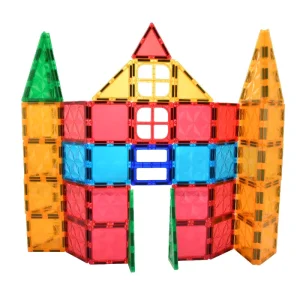
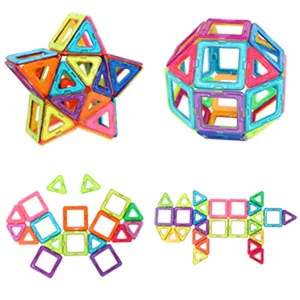
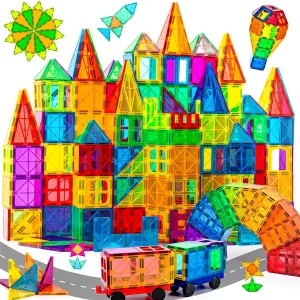
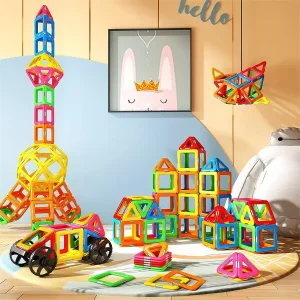
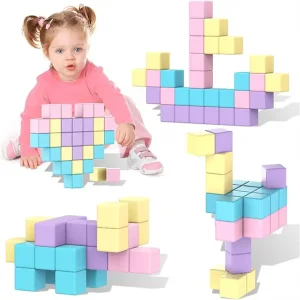
Analyzing the trajectory of kinetic STEM education toys and magnetic vehicle building ecosystems across global wholesale and retail sectors.
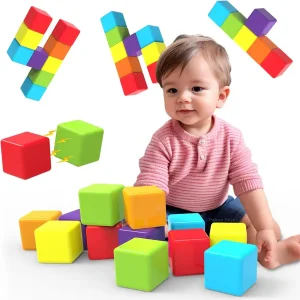
The global market for educational STEM (Science, Technology, Engineering, and Mathematics) toys is undergoing a seismic paradigm shift. Among the various sub-categories, magnetic car toys and kinetic building block vehicle sets have emerged as the fastest-growing segment. Enterprise procurement teams, international toy importers, brand owners, and educational supply distributors are experiencing elevated consumer demand for open-ended play solutions that combine dynamic movement with spatial architecture.
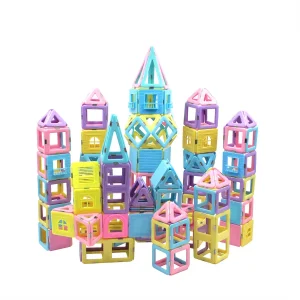
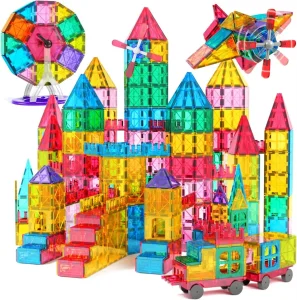
Modern magnetic car toys extend traditional flat magnetic tiles into full 3D kinetic engineering. By integrating specialized magnetic chassis bases, high-durability wheel axles, and modular snap-on geometric bodies, these toys enable children to construct functional velocity vehicles, race tracks, emergency response vehicles, and industrial transport models. As a dominant manufacturing powerhouse, China produces over 85% of the world's certified magnetic educational toys, driven by industrial cluster synergies, automated production facilities, and specialized material engineering expertise in regions such as Yongkang, Zhejiang.
Transitioning from static 2D tiles to active kinetic systems. Kinetic magnetic cars teach friction, acceleration, polarity, and structural dynamics through hands-on vehicle creation.
Global regulatory pressure mandates zero magnet detachment risks. Leading China suppliers utilize dual-sealed ultrasonic encapsulation to guarantee magnet retention during extreme drop tests.
Global retailers demand cross-brand standardization. Leading factories engineer magnetic car chassis with universal dimension spacing (e.g., 7.5cm lattice spacing), ensuring interoperability.
Inside the manufacturing process: Material selection, Neodymium magnet housing, ultrasonic welding, and kinetic wheel assembly.
At the core of premium magnetic car manufacturing is the choice of plastic resin. Low-tier manufacturers rely on recycled PS (Polystyrene) or impure ABS, which exhibits brittle fracture characteristics under mechanical strain. Industrial-grade factories utilize 100% Virgin Non-Toxic ABS (Acrylonitrile Butadiene Styrene) imported from certified polymer suppliers. Virgin ABS delivers high impact strength (Izod Impact Strength > 25 kJ/m²), resistance to stress cracking, and exceptional surface gloss essential for vibrant child safety aesthetics.
The operational force of a magnetic car depends entirely on internal magnet specification. YuQi Industry and leading manufacturing facilities integrate N35 or N38 grade Neodymium-Iron-Boron (NdFeB) permanent magnets coated with triple-layer Nickel-Copper-Nickel (Ni-Cu-Ni) plating to prevent oxidation. Magnets are engineered with 360-degree cylindrical rotation inside internal plastic chambers. This rotational freedom ensures automatic polarity alignment when two magnetic car chassis or building tiles approach one another, preventing repelling forces during play.
To comply with stringent international standard ASTM F963-17 and EN71 safety guidelines, loose magnet risks are mitigated using high-frequency 20kHz Ultrasonic Welding machines. Plastic shell halves are fused at the molecular level, creating a continuous hermetic seal around the magnet pockets. Dual-locking internal lattice ribs prevent the magnet from shattering or dislodging even under drop-impact forces exceeding 1.5 meters onto hard concrete surfaces.
| Engineering Parameter | Standard Market Grade | YuQi Industrial Spec (Enterprise Level) | Testing Standard & Method |
|---|---|---|---|
| Plastic Material Grade | Recycled / Regrind ABS | 100% Virgin Food-Grade ABS (BPA-Free) | FDA 21 CFR / EU No 10/2011 |
| Magnet Grade & Strength | N30 - Low Field Strength | N35/N38 High-Grade NdFeB Magnets | Flux Index Testing (<50 kG²mm²) |
| Enclosure Weld Technique | Glued or Single Snap-Fit | 20kHz High-Frequency Ultrasonic Fusion | ASTM F963-17 Torque & Pull (>70N) |
| Wheel Axle Mechanics | Plastic Axle Pinion | Stainless Steel Core with Brass Bushings | 5,000 Cycle Continuous Roll Test |
| Surface Finishing | Uncoated / Mold Lines Present | Beveled Edge Radius (R=1.5mm) Smooth Polish | EN71-1 Sharp Edge & Point Test |
End-to-end manufacturing workflows tailored for global brand owners, importers, hypermarkets, and educational institutions.
Navigating the supply chain for magnetic cars requires balancing technical feasibility, tooling costs, and speed to market. Established China factories provide modular B2B services that accommodate diverse buyer channels—from Amazon FBA brand builders seeking quick-turn private label packaging to large-scale brick-and-mortar retail chains requiring bespoke injection molds and custom colorways.
In-house CNC mold toolmaking allows custom vehicle chassis shapes, unique wheel rims, and branded embossing within 25–35 days from initial CAD design approval.
Facilities equipped with 30+ automated injection molding machines and dedicated assembly loops deliver monthly outputs exceeding 500,000 magnetic car components.
Full-color window box design, eco-friendly cardboard packaging, custom instruction inserts, and direct FBA pallet preparation compliant with Amazon warehouse requirements.
To eliminate defects and maintain 100% compliance across international borders, top-tier factories implement a rigid 4-tier inspection protocol:
Direct compliance roadmaps for North America, Europe, United Kingdom, Australia, and Middle Eastern import regulations.
Importing magnetic vehicle toys requires strict compliance with international child safety laws. Ignorance of regional mandates can lead to customs seizures, hefty fines, or product recalls. A reliable China supplier acts as a regulatory partner, supplying comprehensive test reports issued by internationally recognized laboratories such as SGS, TÜV Rheinland, Intertek, and BV.
Requires compliance with ASTM F963-17 (Physical & Mechanical, Heavy Metals), CPSIA Section 101 (Total Lead in Substrates), CPSIA Section 108 (Phthalates content), and issuance of a official Children’s Product Certificate (CPC).
Mandates certification under EN71 Part 1 (Mechanical Properties), EN71 Part 2 (Flammability), EN71 Part 3 (Migration of 19 Elements), REACH Annex XVII, and valid CE/UKCA marking documentation.
Compliance with AS/NZS ISO 8124 Part 1-3, with acute focus on mandatory safety standards for small high-powered magnets to prevent internal ingestion hazards.
Optimized freight classification under HS Code 9503.00.89 or 9503.00.70 (Tricycles, scooters, pedal cars and similar wheeled toys; dolls' carriages; dolls; other toys) for streamlined customs declaration.
Next-generation advancements in smart magnetic kinematics, bio-based polymers, and automated factory robotics.
Integration of low-energy micro-sensors and inductive coils into magnetic car chassis, enabling app-free electronic interaction, track speed measurement, and ambient sound effects triggered by magnetic track nodes.
Research and adoption of Bio-ABS and Post-Consumer Recycled (PCR) plastics that deliver identical tensile yield and clarity while reducing manufacturing carbon footprint by up to 40%.
Deployment of robotic arm placement for magnets coupled with real-time AI optical vision systems, achieving zero-defect production lines and reduced operational overhead.
Expert engineering and procurement answers regarding MOQ, custom tooling, safety testing, and global logistics.
For standard catalog magnetic car chassis and building tile sets, MOQ starts at 500 sets for custom packaging. Fully customized colorways or bespoke private molds typically require an initial run of 2,000 to 3,000 sets to amortize setup costs efficiently.
We utilize high-frequency 20kHz ultrasonic welding machines that fuse the virgin ABS plastic shells together at the structural joint. Inside, double-walled internal ribs isolate the Neodymium N35 magnets, ensuring they survive drop-impact tests exceeding 1.5 meters without cracking.
Yes. Our magnetic car chassis and wheel assemblies are engineered using universal grid dimensions (7.5cm base lattice), making them 100% physically compatible with major international magnetic block brands across global markets.
We supply full laboratory test reports for ASTM F963-17, CPSIA, EN71 (Parts 1-3), CE, UKCA, REACH, and ISO 8124. All testing is conducted through accredited third-party laboratories such as SGS, TÜV, or Intertek.
Standard mass production lead time is 25 to 30 days after sample confirmation and deposit receipt. For re-orders with existing packaging molds, production lead times can be compressed to 18–20 days.
We execute legally binding Non-Disclosure Agreements (NDAs) and proprietary mold ownership contracts prior to receiving client CAD files. Molds are stored securely in dedicated facilities and used exclusively for your authorized purchase orders.
High-volume manufacturing options, direct supplier catalog items, and educational STEM magnetic tiles ready for global export.