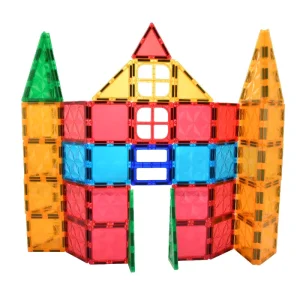
High-precision ultrasonic welded magnetic building tiles, cubes, and blocks engineered to meet ASTM F963-17 & EN71 safety standards.
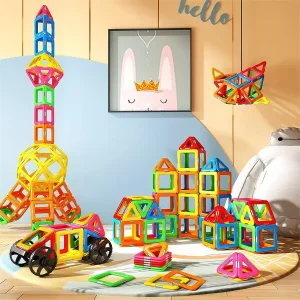
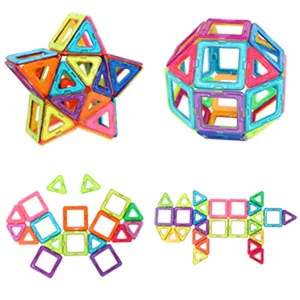


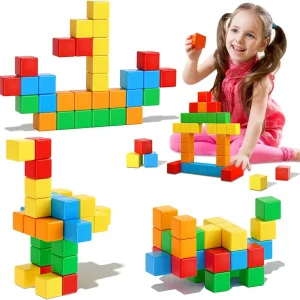
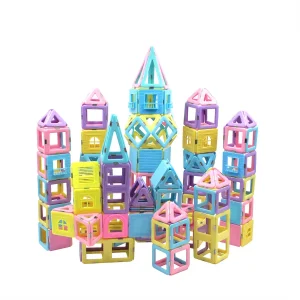
Analytical insights into the evolution of magnetic building sets, shifting procurement models, and global demand for STEM-compliant educational products.
The global shift toward early childhood STEM education has transformed building magnets from basic novelty toys into mandatory pedagogical tools across preschools, primary academies, and home-schooling environments. Modern buyers prioritize sets that foster spatial geometry, 3D architectural reasoning, and magnetic polarity comprehension.
Global regulatory bodies including the US CPSC, EU Safety Gate, and UK CA have intensified scrutiny on small magnet ingestion risks. Leading Chinese factories have responded by implementing multi-cavity automated ultrasonic perimeter welding and internal lattice reinforcement, making magnet displacement virtually impossible under extreme tensile load tests.
Tier-1 retail brands and Amazon FBA sellers require customized color palettes (such as Macaron pastel or Translucent Crystal editions), specialized laser-etched branding, customized magnetic cube geometries, and eco-friendly FSC-certified retail packaging to maintain competitive margin structures.
A comprehensive evaluation of material physics, structural integrity, and magnetic flux efficiency engineered within premier OEM China factories.
To establish long-term market dominance, international procurement directors must evaluate manufacturers based on raw material purity, magnetic flux retention, and structural shear strength. Below is an engineering comparison matrix defining premier China building magnet production specs.
| Parameter | Industrial Standard Grade | YuQi Premium OEM Benchmark | Safety & Reliability Impact |
|---|---|---|---|
| Plastic Resin Base | Recycled GPPS / Low-grade ABS | 100% Virgin Non-Toxic ABS (BPA-Free) | Prevents fracturing, sharp points, and chemical leaching. |
| Magnet Material | N30–N33 Neodymium Sintered Disc | N35–N38 Rare Earth NdFeB Alloys | Ensures higher magnetic attraction & tall 3D structures. |
| Sealing Technique | Solvent Glue / Cold Snap-Fit | High-Frequency Ultrasonic Double-Seals | Eliminates risk of seam popping and loose magnet swallow hazards. |
| Internal Structure | Hollow Core Shell | Diagonal Support Columns + Rivet Reinforcement | Resists 50kg+ compression forces and repeated drop impacts. |
| Surface Finish | Basic Polish (Prone to Scratches) | Anti-Scratch Convex Mirror Matrix | Preserves optical clarity and high light transparency over long term. |
Standard building tiles rely on edge snap joints that degrade under thermal expansion and physical impact. Advanced Chinese OEM factories utilize specialized 20kHz high-power ultrasonic welding horns. The process melts the plastic contact lip at the molecular level, creating a hermetically sealed internal cavity that encapsulates the NdFeB magnet. This guarantees a pull-force strength exceeding 30N, well above the European EN71 safety standard requirements.
Streamlining global logistics, tooling design, and scalable mass-production for multinational distributors.
Modern magnetic building set production begins with 3D CAD modeling and mold-flow analysis. Premium manufacturers offer rapid 3D sample printing within 48 hours, followed by multi-cavity high-speed steel injection tooling that achieves tolerances within ±0.02mm, ensuring precise tile interlocking.
Robotic arms position N35 rare-earth magnets into precise orientation slots to ensure consistent north-south pole rotation. High-speed ultrasonic welding machines automatically seal the casing, followed by vision-sensor cameras that reject off-spec or misaligned components automatically.
Building magnets possess high volumetric density. Qualified Chinese factories offer specialized packaging optimizations—such as nested set layout and vacuum-sealed polybags inside retail gift boxes—maximizing unit capacity per 40ft HQ container and drastically reducing sea freight costs per unit.
Navigating stringent international safety directives through certified factory audit protocols and independent laboratory testing.
Mandatory compliance includes Heavy Metals analysis (16 CFR 1303), Phthalates testing (8P standard), and strict Magnet Use Index testing under ASTM F963-17 to prevent hazardous magnetic flux density in small components.
Compliance with EN71 Parts 1 (Physical & Mechanical Properties), 2 (Flammability), and 3 (Migration of Certain Elements). Products destined for the EU & UK undergo rigorous impact drop tests from 2.1 meters onto tiled surfaces.
Top-tier China magnetic toy manufacturers maintain certified Quality Management Systems (ISO 9001:2015), Environmental Systems (ISO 14001), and complete BSCI or SMETA social accountability audits for instant retail shelf approval.
Pioneering next-generation materials, smart magnetic components, and sustainable manufacturing practices for the toy industry of tomorrow.
Leading research centers are currently testing PLA-ABS hybrid bioplastics and post-consumer recycled (PCR) resins that deliver identical impact resistance and crystal clarity while reducing carbon footprint per production batch by up to 35%.
The next innovation wave replaces flat cylindrical disc magnets with micro-encapsulated internal spherical NdFeB magnets. This structure allows automatic 360-degree rotation inside the tile edge, ensuring instantaneous magnetic connection regardless of tile orientation.
Integrating micro-electronic circuitry directly into magnetic building blocks enables low-voltage LED illumination, magnetic power conduction across built towers, and app-connected STEAM coding modules without compromising drop-test safety.
Direct answers to crucial engineering, compliance, factory capacity, and OEM commercial questions.
According to international safety guidelines, internal magnets must withstand a minimum tension force of 20N to prevent detachment. Premium China manufacturers engineer ultrasonic weld boundaries that withstand tensile forces exceeding 35N to 50N, ensuring the magnet remains safely locked inside the ABS housing under extreme abuse.
High-quality building magnets utilize N35 or N38 Neodymium-Iron-Boron (NdFeB) cores coated with a triple-layer Nickel-Copper-Nickel (Ni-Cu-Ni) anti-corrosion plating. Furthermore, because the outer ABS shell is ultrasonically sealed against moisture and oxygen entry, demagnetization rates remain below 1% over a 10-year lifespan.
Custom shape mold tooling typically takes 25 to 35 days from finalized 3D CAD approval. Once molds are validated through pre-production sample testing (T1 trial run), mass production turnaround is generally 20 to 30 days for 10,000+ set orders.
Yes. While standard catalog colors have low MOQs (often 500–1,000 sets), custom Pantone color matching and customized embossed or laser-etched branding on tile centers usually require a minimum order volume of 2,000 sets per color batch.
Solvent glue degrades over time when exposed to sunlight, temperature fluctuations, or mechanical impacts, creating severe safety risks of exposed loose magnets. Ultrasonic welding creates a permanent, molecular-level plastic bond with zero toxic chemical residue, making it the industry standard for high-end markets.
Factories supply complete compliance files including ISO 9001 certifications, test reports from accredited third-party laboratories (such as SGS, TÜV, or Intertek) covering ASTM F963-17, CPSIA, EN71 Parts 1-3, CE Declaration of Conformity (DoC), and Children’s Product Certificates (CPC).
Browse our extensive manufacturing portfolio of STEM-certified 3D building blocks, magnetic cubes, and educational sets.