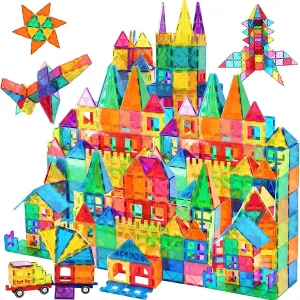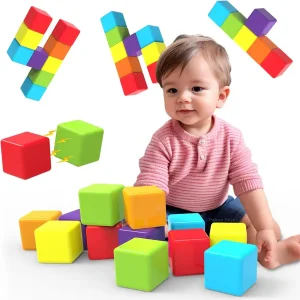
High-precision 3D magnetic building sets engineered for international B2B distributors, educational suppliers, and OEM brand portfolios.
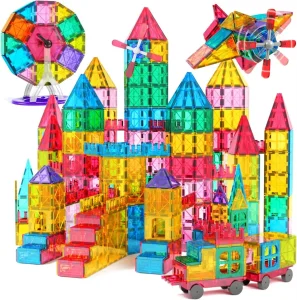
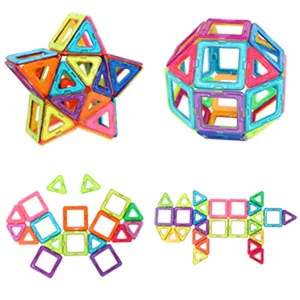
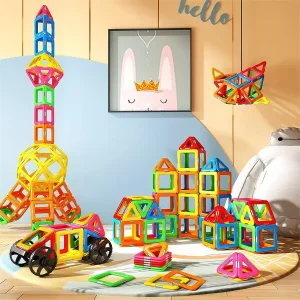
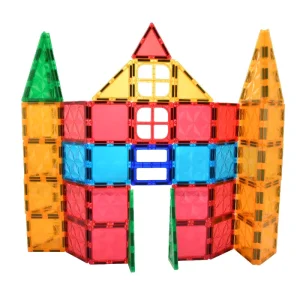
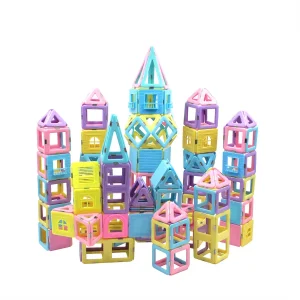
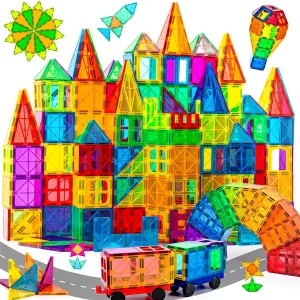
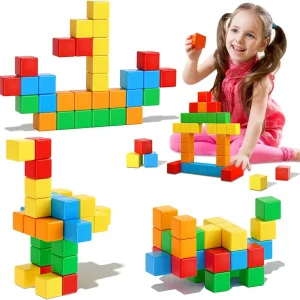
Strategic market analysis detailing the macro-economic dominance, supply chain vertical integration, and structural shift toward STEM-driven educational construction toys.
The global building block games market has experienced a profound structural evolution over the past decade. Historically dominated by standard interlocking plastic bricks, the sector has rapidly diversified into sophisticated magnetic building tiles, 3D spatial construction cubes, and STEM-accredited modular games. China stands as the epicenter of this industrial evolution, producing over 80% of the world’s educational magnetic toys. Within key industrial clusters—such as Yongkang and Shantou in Zhejiang and Guangdong provinces—manufacturers have built end-to-end ecosystems that span raw material polymer synthesis, rare-earth magnet processing, precision mold design, and automated ultrasonic assembly.
Modern commercial buyers, ranging from multinational toy brands to institutional educational procurement agents, rely on a **China Building Blocks Game Manufacturer & Manufacturers** network capable of delivering structural safety compliance alongside high-volume production scalability. The integration of high-grade N35 and N52 neodymium (NdFeB) magnets within impact-resistant ABS (Acrylonitrile Butadiene Styrene) housing has revolutionized early childhood spatial development, creating a distinct commercial category valued at over $12.4 Billion globally with a projected CAGR of 7.8% through 2030.
From a macroeconomic perspective, Chinese manufacturers have moved beyond low-cost OEM assembly to lead global R&D in magnetic retention safety, non-toxic pigment dispersion, and ergonomic geometry. By maintaining direct integration with rare-earth magnetic material refiners, premier Chinese suppliers insulate global buyers from extreme supply chain fluctuations while maintaining strict compliance with Western safety directives, including ASTM F963 (USA), EN71 (European Union), CPSIA, and REACH.
Demonstrating real-world engineering capability, quality assurance protocols, and factory-level E-E-A-T metrics.
Operating a 20,000 m² state-of-the-art manufacturing plant in Yongkang, Zhejiang, equipped with automated injection molding units and high-frequency ultrasonic welding stations.
Employs double-riveted, ultrasonic hermetic welding to encapsulate magnets completely inside ABS frames, eliminating choking hazards and exceeding international pull-force standards.
Certified across ISO9001 quality management, ISO14001 environmental protocols, ASTM F963, CPSIA, Children's Product Certificate (CPC), and EU EN71 Part 1-3 testing.
**Yongkang YuQi Industry and Trade Co., Ltd.** operates with 8+ years of dedicated specialized production and a workforce exceeding 634 technical specialists. In the magnetic block sector, safety is directly governed by polymer density, wall-thickness engineering, and magnetic field retention. Inferior products often suffer from frame cracking or magnet detachment, posing severe safety compliance liabilities for importers. YuQi addresses this through a proprietary triple-stage quality framework:
| Technical Feature | Standard Industry Metric | YuQi Enterprise Benchmark | Compliance & Safety Advantage |
|---|---|---|---|
| Base Polymer Material | Recycled / Mixed ABS | 100% Virgin Food-Grade ABS (Bayer Resin) | BPA-free, high clarity, non-brittle impact resistance. |
| Magnet Specification | N30 - N35 Low Flux NdFeB | N38 - N52 High Magnetism Neodymium | Superior structural stability for larger 3D builds. |
| Sealing Technique | Glued Edges / Single Ultrasonic Weld | Double-Sealed Edge + Ultrasonic Fusion + Internal Lattice | Zero magnet-drop risk; passes 1.5m drop test onto steel. |
| Heavy Metal & Chemical Testing | Basic EN71-1 Compliant | Full Pass: REACH SVHC, Phthalates, Lead, RoHS | Safe for oral contact, compliant across US, EU, JP markets. |
Exploring the technological forces reshaping building block manufacturing, from advanced polymer chemistry to augmented reality integration.
The latest generation of magnetic building tiles features recessed surface architecture and micro-beveled edges. Traditional flat tiles scratch easily during play, leading to loss of optical clarity over time. Advanced manufacturing lines now utilize raised perimeter borders that protect the transparent central window from friction, maintaining crystal-clear transparency across thousands of play sessions.
Consumer demand has shifted from basic primary colors to pastel "Macaron" color palettes, clear translucent jewel tones, and glitter-infused resins. Achieving color uniformity requires micro-dosed masterbatch pigments that do not impair structural cross-linking during injection molding, preserving plastic toughness while maximizing light refraction.
Leading China building block factories are bridging magnetic tile sets with traditional mechanical gear drives, marble run tracks, and LED light pipelines. This hybrid model allows children to construct dynamic, moving architectural models, expanding the target age bracket from toddlers (ages 3+) to middle childhood (ages 8-12).
Environmental stewardship has become a core purchasing criterion for Western retail chains. Top manufacturers are pioneering bio-based ABS resin formulations derived from plant sugars and recycled post-consumer materials, achieving up to 40% reduction in carbon footprint without compromising mechanical yield strength.
Analyzing how building block products are utilized across distinct commercial, educational, and consumer environments worldwide.
In Montessori, Reggio Emilia, and STEM-focused preschool curricula, magnetic building blocks are deployed as foundational kinesthetic teaching aids. Teachers utilize 3D magnetic cubes to demonstrate geometry, fractions, symmetry, and architectural balance. Sets designated for school environments demand oversized storage tubs, heavy-duty ABS frames, and reinforced magnetic strength to endure continuous daily classroom use.
Online merchants on Amazon, Walmart Marketplace, and specialized retail chains require bespoke retail packaging, branded colorways, and unique piece counts (e.g., 32-piece starter sets to 120-piece deluxe castle sets). Direct factory collaboration with a leading **China building blocks games supplier** allows brands to launch high-margin private label SKUs with low MOQs and customized instruction booklets.
Occupational therapists utilize magnetic building toys for sensory integration therapy, fine motor skill rehabilitation, and cognitive stimulation for children with Autism Spectrum Disorder (ASD) or ADHD. The tactile feedback of snapping magnetic components provides immediate positive reinforcement, facilitating hand-eye coordination and spatial problem-solving in clinical environments.
Indoor play parks, resort kids' clubs, and family entertainment centers integrate jumbo-sized magnetic tiles and soft magnetic blocks into giant building areas. These high-traffic commercial environments prioritize sanitization-resistant plastics, smooth corner radii to prevent cuts, and vibrant aesthetic appeal that attracts children visually.
A strategic vision outlining technological milestones, automated production scaling, and next-generation product design.
Implementation of 100% automated optical inspection (AOI) cameras on injection lines to detect micro-cracks, surface blemishes, and color anomalies at line speeds exceeding 120 pieces per minute. Transition from conventional ultrasonic welding to precision laser-assisted polymer fusion for ultra-tight hermetic seals.
Integration of low-power Bluetooth mesh sensors, micro-LED circuits, and RFID chips inside transparent magnetic tiles. This technology enables real-time physical-to-digital (Phygital) interaction, where completed physical builds sync with tablet apps to trigger sound effects, lighting animations, and interactive storybooks.
Achieving full carbon neutrality across core manufacturing hubs through solar-powered injection plants, 100% bio-based or ocean-recycled polymers, and closed-loop manufacturing where end-of-life magnetic toys can be completely disassembled and recycled into pristine new sets.
Turnkey custom product development workflows for international buyers, retail brands, and educational distributors.
In-house CNC mold-making allows custom shape fabrication (curved pipelines, windows, character figurines) in as few as 15–20 days from CAD approval.
Full customization across gift boxes, color sleeves, plastic storage bins, canvas carry bags, and blister tray inserts with localized multi-language manuals.
Direct sea/air freight booking, FBA preparation, Palletization, Duty-Delivery-Paid (DDP) logistics handling, and customs compliance documentation.
Detailed answers addressing critical compliance, technical specifications, ordering procedures, and quality control inquiries.
Top factories like Yongkang YuQi Industry utilize double-layer security locking mechanisms. The neodymium magnets are encapsulated inside internal grooves, and the exterior ABS shell is fused together using high-power ultrasonic welding (not glue). This creates a permanent molecular bond. Additionally, products undergo 100% automated tension tests and 1.5-meter drop tests onto concrete covered with steel plates to guarantee magnet encapsulation stays intact under severe abuse.
The "N" rating indicates the Maximum Energy Product (BHmax) of the neodymium material. N35 is standard commercial quality, while N38 and N52 offer significantly higher magnetic flux density (measured in Gauss). Higher grade magnets provide stronger attractive force, allowing children to build taller 3D structures without collapsing. Premium sets manufactured by YuQi feature optimized N38-N52 magnets balanced for structural hold without pinching small fingers.
For North America (USA & Canada), importers require ASTM F963-17 (specifically Section 4.38 for magnets), CPSIA (Lead and Phthalate content), and a Children’s Product Certificate (CPC). For the European Union, compliance with EN71 Parts 1 (Physical/Mechanical), 2 (Flammability), 3 (Migration of elements), and REACH chemical regulation is mandatory. YuQi provides full testing documentation issued by accredited third-party labs like SGS, TÜV, and Intertek.
For standard factory color sets with custom logo printing on packaging, standard MOQs start at 500 to 1,000 sets per SKU. For completely custom plastic colors (pantone matching) or proprietary injection mold designs, MOQs range from 2,000 to 5,000 sets depending on mold complexity and raw material requirements.
Yes, modern OEM manufacturers support hybrid physical-digital play systems. Customized instruction manuals can include QR codes linking to 3D interactive building guides, and physical pieces can be molded with specialized mounting points for smart sensor chips or LED light modules.
Scratch resistance is achieved through mold design rather than chemical coatings. Precise mold cavities create a slightly raised outer perimeter lip around each geometric piece. When tiles slide across a hard surface or against one another, contact is restricted to the raised border, protecting the central transparent viewing panel from friction and scuff marks.
Standard OEM production lead times are typically 20 to 30 days after sample approval and deposit confirmation. Shipping times vary by destination: 12-15 days for air freight, 25-35 days for ocean freight to West/East Coast USA or Western Europe. Direct factory logistics teams coordinate container loading and export customs clearance seamlessly.
Complete your wholesale product line with certified magnetic building cubes, toddler-safe blocks, and specialized educational sets.