
Why Are Magnetic Building Blocks Popular Worldwide?

Time:2026-09-15 Author:Sophia
0%

Why Are Magnetic Building Blocks Popular Worldwide?

Magnetic Building Blocks have moved from niche playrooms into homes, classrooms, and therapy settings worldwide. Their appeal is easy to see: children connect bright tiles, lift a finished tower, and watch it fall safely onto the carpet. This simple cycle encourages experimentation without requiring complicated instructions. It also supports spatial reasoning, fine-motor coordination, and early problem-solving through hands-on play. Children can build houses in one minute and bridges the next. The possibilities feel open-ended.

Rudy Valenta, inventor of Magna-Tiles, expressed the core idea clearly: “The best toys are the ones that let children create.” That principle helps explain the category’s international popularity. Magnetic connections provide immediate feedback, while repeated designs allow children to learn through experience. Parents often value their quiet operation, reusable parts, and shared-play potential. Teachers may use them to demonstrate balance, symmetry, geometry, and basic engineering concepts. The learning is visible.

Still, popularity does not guarantee perfect learning outcomes. Some sets offer weak magnets, confusing instructions, or plastic parts that break too easily. Safety guidance matters, especially around small magnetic components and younger children. Responsible brands should provide clear age recommendations, durable construction, and transparent testing information. Cultural preferences also shape how families use these toys. In some homes, free building matters most. In others, structured challenges feel more practical. Magnetic Building Blocks are not magical solutions, but they create a useful space where curiosity becomes physical, social, and measurable. Their worldwide growth may reflect something ordinary yet powerful: children want to make ideas stand.
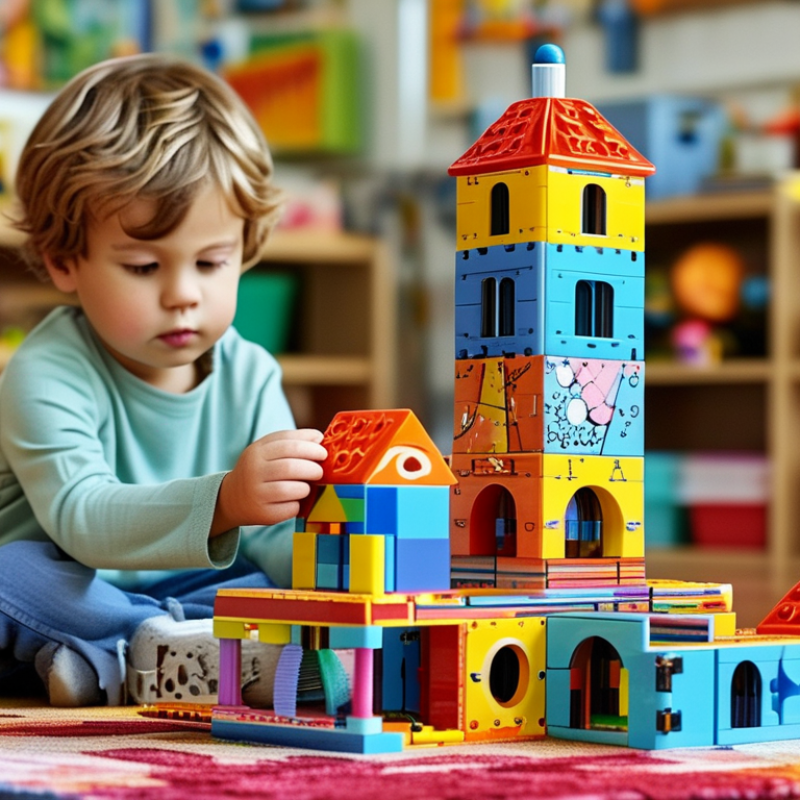
Why Are Magnetic Building Blocks Popular Worldwide?

What Are Magnetic Building Blocks?

Magnetic building blocks are construction pieces joined by embedded magnets. Each piece usually has flat edges, geometric faces, or rods and panels. The magnets attract through the parts, so children can connect, separate, and rebuild quickly. No glue is needed. No tools are needed.

A triangle can become a roof, while squares form a small house. Transparent panels may reveal the changing shape inside. This hands-on process makes geometry easier to see and touch. It also encourages children to test balance, symmetry, and structural support.

Their compact size makes storage and group play convenient in many homes and classrooms. In my experience, younger builders often begin with a tower, then discover that wider bases stand longer. I once underestimated how quickly a tall model could collapse. That failure was useful, but adult supervision still matters.

Caregivers should check for cracked pieces, loose magnets, and age-appropriate designs. Magnetic building blocks are not ordinary blocks with decoration; their connection system changes how children explore ideas.

They can support solo play, shared projects, and classroom demonstrations. Still, they do not automatically teach creativity. Children need time, questions, and permission to make imperfect structures.

How Magnetic Building Blocks Work

Why Are Magnetic Building Blocks Popular Worldwide?

How Magnetic Building Blocks Work

Magnetic building blocks use small permanent magnets sealed inside their edges. Each magnet has two poles, creating attraction or repulsion. When two compatible edges meet, they pull together and form a joint. This connection allows squares, triangles, and other shapes to become three-dimensional structures.

The magnets do not carry the entire load alone. Shape, weight, friction, and the number of connected pieces also affect stability. A wide base usually supports a taller model better than a narrow base. Small gaps matter. If a magnet sits slightly off-center, the structure may twist or collapse.

In practical play, children can test these principles without complex equipment. I once assumed that stronger magnets always made better buildings. That assumption was wrong. Excessive force can make pieces difficult to separate and may weaken fragile connections during repeated use. A balanced design encourages control, adjustment, and problem-solving.

Quality construction also matters. Magnets should remain fully enclosed, and pieces need smooth, durable surfaces. Caregivers should inspect blocks for cracks or loose parts. Small magnets can cause serious injury if swallowed, especially when more than one is involved. These products require age-appropriate supervision.

A simple experiment shows the mechanism clearly. Build two identical towers, then add one piece at a time. The taller tower will eventually lean as its center of mass shifts. Remove one block and observe the change. The result may not match your prediction, which is part of the learning.

Why Are Magnetic Building Blocks Popular Worldwide? — How Magnetic Building Blocks Work
Dimension How It Works Why It Supports Global Popularity Practical Consideration
Magnetic attraction Magnets have north and south poles. Opposite poles attract, allowing blocks to connect when their magnetic faces are brought together. Children can assemble structures quickly without requiring complex joining techniques or advanced fine-motor skills. Connections may separate when a structure is pushed, pulled, or overloaded.
Magnetic repulsion Like poles repel each other. Building pieces are commonly designed so the exposed magnetic sides align mainly for attraction. Predictable connections make the construction process easier to understand and more satisfying during play. Incorrect orientation or specially designed pieces may produce resistance instead of a connection.
Enclosed magnets Small permanent magnets are placed inside plastic, wood, or other protective housings, allowing the pieces to connect without exposing the magnetic material. Enclosed connection systems are reusable, visually simple, and suitable for repeated building and rebuilding. Pieces should be inspected regularly for cracks, loose parts, or damaged housings.
Permanent magnetic force Many construction toys use permanent magnets that retain their magnetic properties without a battery or electrical power source. They can be used at home, in classrooms, or while traveling without charging, wiring, or special equipment. Magnetic strength can vary by piece size, magnet type, distance, and the materials between the magnets.
Open-ended construction Basic geometric pieces can be combined into flat patterns, three-dimensional models, frames, and towers. One set can support many play possibilities, encouraging creativity and reducing the need for fixed instructions. Stable designs usually require attention to balance, symmetry, weight distribution, and the position of supporting pieces.
STEM learning Building activities demonstrate concepts such as force, polarity, geometry, symmetry, balance, structure, and spatial reasoning. The concepts are experienced through hands-on experimentation rather than explained only through abstract theory. Learning outcomes improve when adults ask questions and encourage children to test and revise their designs.
Fine-motor development Picking up, aligning, joining, separating, and repositioning pieces involves controlled hand and finger movements. The activity combines physical manipulation with an engaging construction goal, supporting repeated practice. Piece size should match the user's age and motor abilities.
Immediate feedback A successful connection can often be felt and heard as the magnetic faces attract and join. Fast feedback helps users understand cause and effect and makes experimentation accessible across language backgrounds. Very strong connections can make some pieces difficult for younger children to separate.
Collaborative play Multiple people can add, remove, and modify pieces within the same structure without following a single fixed sequence. Shared building supports communication, planning, negotiation, and cooperative problem-solving. Clear turn-taking and shared goals can help prevent conflicts during group use.
Low language dependence The basic action of joining compatible pieces can be understood through visual demonstration and physical interaction. The same core play pattern can be used across countries, languages, and educational settings. Instructions, safety information, and age guidance should still be provided in the user's language when possible.
Reusability Unlike many single-use craft materials, durable pieces can be disassembled and rebuilt repeatedly. Repeated use supports long-term play value and allows users to progress from simple forms to more complex structures. Long-term durability depends on material quality, construction, cleaning, and storage conditions.
Safety awareness Magnets can be harmful if swallowed, particularly when multiple high-strength magnets are ingested because they may attract through tissue. Clear safety labeling and age-appropriate design help families and educators select suitable products. Keep loose or damaged magnetic pieces away from young children and seek urgent medical advice after suspected magnet ingestion.

Key Educational and Developmental Benefits

Why Are Magnetic Building Blocks Popular Worldwide?

Magnetic building blocks turn abstract learning into something children can touch and test. In classrooms and homes, educators often observe children planning towers, bridges, and unusual shapes. This play strengthens spatial reasoning because children compare direction, balance, distance, and size. It also introduces early engineering ideas without requiring worksheets. Children make predictions, connect pieces, and revise designs when structures fall.

The developmental value reaches beyond construction. Holding and joining pieces can support fine-motor control and hand-eye coordination. Group building encourages communication, turn-taking, and flexible problem-solving. A child may explain why a wall needs support, then listen to another idea. That small discussion matters. Educational specialists generally recommend open-ended play because it allows children to practice decisions at their own pace. Still, not every child benefits in the same way. Some may feel frustrated by collapsing models or strong magnetic connections. Adult guidance should support curiosity, not control every step.

Tips:

Offer a flat building surface and begin with simple shapes. Ask, “What could make it stronger?” instead of giving the answer. Encourage children to draw their designs before rebuilding them. Check pieces regularly for cracks or loose parts, and follow the safety guidance provided with the product. Keep play supervised for younger children. Let the structure fail sometimes. That is often where meaningful learning begins.

Why Families and Schools Use Them Worldwide

Families often choose magnetic building blocks because they make shared play simple. A child can connect two pieces and see an idea take shape. Parents can sit nearby, ask questions, and join without taking control. The activity works in small apartments, busy homes, and quiet classroom corners. It needs no screens. That matters.

Open-ended building also invites conversation. Children explain bridges, houses, or imagined machines. Adults can ask why a tower leans or how to make it stronger. These exchanges support language, spatial reasoning, and patient problem-solving. Schools value the same flexibility. Teachers can use the blocks for geometry, design challenges, storytelling, or cooperative projects. One group might build a shelter, while another tests different shapes for stability. Students learn by changing the structure, not only by hearing instructions.

Still, magnetic blocks are not a perfect learning tool. Some children may focus only on speed or height. Others may feel frustrated when a model collapses. Teachers need clear rules, age-appropriate materials, and supervision, especially with younger children. Adults should inspect pieces regularly and remove damaged parts. Cultural preferences also matter; a building activity should not assume every family plays the same way. That limitation is useful. It reminds educators to observe children carefully, adjust the challenge, and leave room for quieter forms of creativity.

Why Are Magnetic Building Blocks Popular Worldwide?

Why Families and Schools Use Them Worldwide

Magnetic building blocks are attractive because they support hands-on learning, creative construction, spatial reasoning, and collaborative play. These benefits are relevant across early childhood, primary, and secondary education, making the activity suitable for both family learning and classroom use.

Context indicators: approximate worldwide school participation and completion levels based on UNESCO Institute for Statistics global education data. They show the broad educational settings in which hands-on construction activities can be used.

Common Designs, Uses, and Safety Considerations

Magnetic building blocks remain popular because they turn simple pieces into visible ideas. Common designs include flat tiles, geometric panels, rods, and connector balls. Some sets use transparent surfaces, while others use solid plastic shapes. These parts support houses, bridges, animals, and abstract sculptures. Children can test balance, symmetry, and spatial reasoning through repeated rebuilding. In supervised workshops, adults often see quiet children explain structures with surprising confidence. The play feels practical, not merely decorative.

At home, blocks encourage open-ended play without requiring screens or complicated instructions. Teachers use them to introduce shapes, measurement, teamwork, and basic engineering concepts. Designers may also build larger models to discuss proportion and structure. These activities work best when adults ask questions instead of fixing every mistake. Still, results depend on guidance. Some children copy patterns without exploring new possibilities. A prompt to change one wall can invite deeper thinking. That small intervention is easy to overlook.

Safety begins with age-appropriate design and careful supervision. Small magnetic parts can cause serious medical emergencies if swallowed, especially multiple magnets. Adults should check age guidance, product instructions, and recognized safety information before purchase. Look for securely enclosed magnets and clear testing details. Inspect pieces regularly for cracks, loose parts, or damaged surfaces. Discard damaged components. Keep them away from young children and pets. Strong magnets may affect certain medical devices, so families should seek professional advice. Storage matters too. A closed container prevents scattered pieces and reduces accidental access. Not every colorful set is equally durable. That is worth remembering.

FAQS

How do magnetic building blocks connect?

Small permanent magnets sit inside the edges. Compatible poles attract and create joints between pieces. The connection is simple, but not always perfectly aligned.

What affects the stability of a magnetic structure?

Shape, weight, friction, and the number of pieces all matter. A wide base usually supports a taller tower. Tiny gaps can make a model twist or collapse.

Are stronger magnets always better?

No. Excessive magnetic force can make pieces hard to separate. It may also stress fragile connections during repeated use. I once believed stronger was better. That was incomplete.

What can children learn through magnetic construction?

Children can explore balance, symmetry, shapes, measurement, and spatial reasoning. They may build houses, bridges, animals, or unusual sculptures. Mistakes become visible and useful.

How can adults support better learning?

Ask questions instead of repairing every mistake. Suggest changing one wall or widening the base. This encourages experimentation. Too much help can quietly limit discovery.

What simple experiment demonstrates magnetic building principles?

Build two identical towers. Add one piece at a time to each tower. The taller tower may lean as its center of mass shifts. Remove one block and compare the result.

What safety checks should adults make?

Magnets must remain fully enclosed. Inspect pieces for cracks, loose parts, or damaged surfaces. Discard damaged components immediately. Store the blocks in a closed container.

Why is supervision important?

Small magnets can cause serious injury if swallowed, especially multiple magnets. Keep the blocks away from young children and pets. Follow age guidance and safety instructions carefully. Some magnets may affect certain medical devices, so professional advice may be needed.

Conclusion

Magnetic Building Blocks are creative construction toys made from pieces that connect through embedded magnets, allowing children to build structures without complicated fasteners. Their simple connection system makes it easy to create, take apart, and rebuild different designs, from basic shapes to imaginative buildings and moving models. By combining color, form, and hands-on experimentation, these blocks introduce children to early ideas about balance, symmetry, geometry, and engineering.

Families and schools use Magnetic Building Blocks worldwide because they support learning through play and suit a wide range of ages and abilities. Building activities can strengthen fine motor skills, spatial awareness, problem-solving, concentration, and creativity, while group projects encourage communication and cooperation. Common designs include tiles, rods, panels, and themed construction pieces that can be used for free play, classroom challenges, or guided activities. Safe use requires age-appropriate products, strong and secure magnetic components, regular inspection for damage, and adult supervision for young children.

Sophia

Sophia

Sophia is a dedicated marketing professional with an exceptional depth of knowledge about her company's products and services. With a keen understanding of market trends and customer needs, she crafts insightful blog posts that not only inform but also engage readers, enriching the company’s online......