Choosing a Magnetic Building Set in 2026 requires more than comparing colors, piece counts, or online ratings. Parents and educators increasingly want toys that support open-ended play, spatial reasoning, and repeated use. The NPD Group, now part of Circana, has consistently tracked construction toys as an important category within the global toy market. Its retail research also shows that shoppers are paying closer attention to value, durability, and developmental benefits during uncertain economic periods.
Market growth alone does not prove quality. A larger box may contain weaker magnets, thinner plastic, or connectors that loosen after a few sessions. In my experience, children quickly reveal these problems. A bridge collapses when lifted. A wheel detaches during imaginative play. Small details matter.
A reliable Magnetic Building Set should be judged through several practical tests. Check whether magnets remain enclosed after bending and twisting. Examine edge finishing, connector strength, storage design, and age guidance. Safety information should align with recognized standards, such as ASTM F963 in the United States or EN 71 in Europe. These standards do not replace careful supervision, but they provide an essential quality reference.
Professional market reports can guide purchasing decisions, yet they cannot test every brand on a living-room floor. No checklist is perfect. Packaging claims may also sound better than real performance. This guide compares magnetic strength, material quality, creative flexibility, safety documentation, and long-term value, helping families choose with clearer evidence and fewer disappointments.
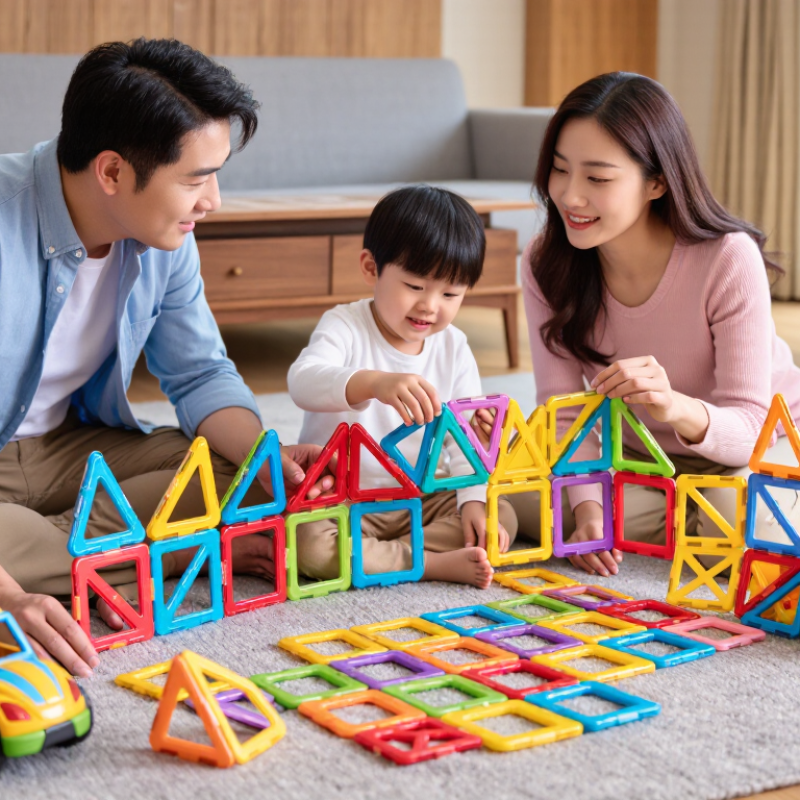
A magnetic building set is a construction system made from pieces joined by magnetic force. Each tile, rod, or connector contains enclosed magnets that attract nearby parts. Children can build towers, bridges, houses, and moving shapes without glue or tools. The pieces offer hands-on practice with balance, symmetry, and simple geometry. They also encourage children to test ideas, make mistakes, and rebuild them.
A reliable set should have smooth edges, strong connections, and magnets that remain fully enclosed. Check the recommended age range carefully. Younger children need closer supervision, especially when pieces are small. Look for varied shapes, clear instructions, and durable plastic or coated materials. More pieces are not always better. Fit matters. In practical play, a set with thirty useful parts may outperform one with a hundred awkward pieces. I sometimes value imaginative freedom too much, though. Beginners may need a few guided models before creating independently.
Tips: Inspect every piece before use, especially after a hard fall. Try building a small cube and a stable bridge. If connections separate too easily, children may lose interest quickly. Read the cleaning and storage guidance. Keep damaged pieces aside, even when the defect seems minor. Safety checks can feel repetitive. They still matter.
Quality in a magnetic building set begins with magnet security, not colorful shapes. Magnets should sit inside sealed, durable casings that resist drops, twisting, and repeated bending. Check for cracks, loose panels, or unusual rattling after play. Small parts matter. The U.S. Consumer Product Safety Commission estimated 231,453 toy-related emergency-room injuries among children under 15 in 2022. That figure deserves attention, even though it covers all toy types.
Safety testing should match the child’s age and play behavior. Look for clear age grading, small-parts warnings, and test documentation referencing ASTM F963 or EN 71 requirements. Independent laboratory reports are more useful than vague phrases such as “non-toxic” or “fully tested.” The 2023 European Safety Gate report recorded 3,412 product alerts across the market, with toys listed among frequently notified categories. Traceable batch numbers can help identify problems quickly.
Inspect the connector strength, too. Pieces should join firmly but separate without excessive force, especially for younger users. Stronger is not always safer. High-powered magnets can cause severe internal injuries if swallowed, so sealed construction is essential. Keep sets away from toddlers and check every piece before storage. I would also question unclear magnetic-strength claims; sellers rarely explain the measurement method. A practical choice combines rounded edges, smooth surfaces, secure magnet capsules, readable instructions, and responsive safety support. Safety is easy to promise. It is harder to verify.
| Evaluation Dimension | Reliable Quality or Safety Benchmark | Why It Matters | How to Verify It Before Purchase | Priority |
|---|---|---|---|---|
| Age Suitability and Small-Parts Risk | The stated age range should match the child’s developmental level. Sets intended for children under 3 should not contain detachable small parts. | Small components can create choking hazards, especially when separated from larger construction pieces. | Read the age label and inspect whether any detached piece can fit completely inside the small-parts test cylinder used in toy-safety testing: approximately 31.7 mm in diameter and 57.1 mm in length. | Essential |
| Magnet Retention | Magnets should remain permanently enclosed during normal use, foreseeable misuse, and reasonable impact testing. | Swallowed high-powered magnets can attract each other through intestinal tissue and may cause perforation, blockage, or other serious injury. | Look for robust heat-sealed, ultrasonically welded, or mechanically secured housings. Avoid pieces with cracked shells, loose rivets, gaps, or magnets that can be felt through damaged plastic. | Essential |
| Safety Compliance Documentation | Products sold in the United States should meet applicable requirements such as ASTM F963 and the Consumer Product Safety Improvement Act. Products sold in Europe should comply with the Toy Safety Directive and relevant EN 71 requirements. | Compliance testing covers hazards such as mechanical safety, flammability, chemical migration, and magnet-related risks. | Request a current third-party test report or Declaration of Conformity that identifies the exact product, model, age grade, applicable standard, test date, and laboratory. | Essential |
| Magnet Housing and Edge Protection | Plastic shells should have smooth, rounded edges and no exposed magnet, sharp flashing, splitting seam, or brittle surface. | Well-finished housings reduce cut, pinch, impact, and ingestion risks while extending product life. | Inspect corners and seams under bright light. Run a clean fingertip over the surface and reject pieces that feel sharp, split, swollen, or unusually thin. | Essential |
| Magnetic Performance Consistency | Pieces should connect reliably in multiple orientations without unexpectedly detaching under the weight of the intended structure. | Consistent magnetic performance improves structural stability and reduces frustration caused by weak or uneven connections. | Test several pieces from different parts of the set. Build a simple vertical wall and small tower; check for inconsistent attraction, slipping, or magnets that repel when they should connect. | High |
| Material and Chemical Safety | Materials should comply with applicable limits for restricted substances, including heavy metals, certain plasticizers, and specified chemical migration limits under the relevant toy standard. | Children may touch pieces frequently and, depending on age, may place them near the mouth. | Check for material information, compliance statements, and laboratory testing. Avoid strong chemical odors, oily surfaces, peeling coatings, and unverified painted finishes. | Essential |
| Structural Durability | Pieces should tolerate repeated assembly, disassembly, and ordinary drops without cracking or exposing internal components. | Durability lowers the chance that a hidden magnet or sharp internal component will become accessible over time. | Examine sample pieces for uniform thickness, secure seams, and resistance to light flexing. After use, inspect for hairline cracks, loose panels, and unusual rattling. | High |
| Instructions, Warnings, and Storage | Instructions should clearly state the recommended age, magnet warning, supervision advice, cleaning guidance, and disposal instructions for damaged pieces. | Clear information helps caregivers identify hazards and remove defective components promptly. | Confirm that warnings are permanently provided on the packaging or documentation and are written in the language required for the intended market. | High |
| Cleaning and Hygiene | Surfaces should be non-porous, easy to wipe, and compatible with the manufacturer’s stated cleaning method. | Easy-clean surfaces reduce the buildup of dirt and microorganisms during frequent handling. | Prefer smooth, sealed surfaces without fabric inserts or deep grooves. Follow the stated cleaning instructions and do not immerse pieces unless they are specifically designed to be water-resistant. | Medium |
| Replacement and Recall Support | A responsible seller should provide a traceable product identifier, recall information, and a process for replacing damaged or missing pieces. | Traceability makes it easier to respond to safety notices and remove defective parts from use. | Record the product code and purchase date. Check the relevant government product-recall database in the sales region before and after purchase. | High |
Matching a magnetic building set to age and skill level matters more than choosing the largest box. For toddlers, select age-appropriate pieces with smooth, oversized components and secure construction. Always check the manufacturer’s recommended age and inspect magnets regularly. Loose or damaged magnets can create serious safety risks if swallowed. Adult supervision remains important, even when a set appears simple.
For preschool children, larger pieces and simple shapes support color recognition, balance, and hand control. A child who builds a flat road may not yet enjoy a tall tower. That is normal. Older children often need stronger connections, varied geometric shapes, and challenge cards. Look for sets that allow open-ended designs, such as bridges, animals, or small buildings. Skill matters more than birth date. Some children build confidently at four, while others need more time.
Tips: Start with a small set and observe how the child plays. Can they connect pieces without frustration? Do they repeat one design or test new structures? Add complexity slowly. Mixing too many shapes can overwhelm beginners. Experienced users may enjoy magnetic tiles with wheels, angles, or engineering tasks. I once gave a child an advanced set too early, and the impressive box became discouraging. A simpler choice would have supported better progress. Recheck the pieces after each session.
Choosing a magnetic building set in 2026 starts with comparing materials, not counting pieces. Most sets use plastic shells around small magnets, but strength, thickness, and finish can differ greatly. Look for durable, food-contact-safe plastic and securely enclosed magnets. Smooth edges matter when children build for long periods. Still, no material is perfect. Some coatings scratch, while stronger magnets may make pieces harder for small hands to separate.
Piece counts can be misleading. A box with 100 tiny squares may offer fewer building possibilities than one with 40 varied shapes. Compare triangles, squares, windows, arches, rods, and connector pieces. Check whether the set includes enough repeated shapes for stable walls and balanced towers. In practical use, a wider shape range supports more creative builds. However, more options can also create clutter. I sometimes overestimate how many specialty pieces children will use.
Tips: Spread the pieces on a table before buying. Sketch three possible builds. Then inspect the instructions. Clear diagrams help beginners, while open-ended designs suit experienced builders. Test whether the magnets connect reliably at corners, not only along flat edges. Also check age guidance, storage quality, and replacement-piece availability. A thoughtful set should support simple houses, moving structures, and unusual ideas without forcing one building style.
How to Choose a Magnetic Building Set in 2026?
Choosing a magnetic building set starts with its purpose, not its piece count. For quiet play, choose medium-sized tiles with clear colors and simple shapes. For engineering practice, look for triangles, squares, wheels, and connector parts. A larger set is not always better. Too many repeated pieces can overwhelm children and waste shelf space.
Set a budget before comparing features. A basic set can support towers, houses, and simple patterns. A mid-range set usually offers more shapes and stronger construction options. Expensive sets may include specialty parts, but those pieces matter only when your child uses them regularly. Check the magnet housing carefully. Edges should feel smooth, and magnets should remain sealed during ordinary play. Follow the stated age guidance, especially for younger children.
I have found that durability matters more than impressive packaging. Build a small bridge in the store or at home, then test whether it stays aligned. Ask whether replacement pieces are available, because one lost connector can change the whole experience. Storage also affects value. A fabric bag saves space, but a divided box makes sorting faster. My own mistake was buying a large collection too early. Half the pieces stayed unused for months. A smaller, purposeful set may offer more creative time and fewer abandoned parts. Check safety information from reliable sellers and inspect the pieces regularly for cracks.
It contains pieces joined by enclosed magnetic force. Children can build towers, bridges, houses, and moving shapes without glue or tools. Small experiments teach balance, symmetry, and simple geometry. Mistakes are useful.
Look for smooth edges, durable surfaces, and magnets sealed inside strong casings. Connections should feel firm but separate without excessive force. Clear instructions help beginners. More pieces are not always better.
Inspect every piece for cracks, loose panels, or unusual rattling. Keep damaged pieces aside immediately. High-powered magnets can cause serious injuries if swallowed. Safety checks feel repetitive. They still matter.
Toddlers need age-appropriate, oversized pieces with secure construction. Always follow the recommended age range and supervise play. Check the magnets regularly. Small parts require extra care.
Larger shapes can support color recognition, hand control, and balance. Begin with a flat road, simple cube, or short wall. A tall tower may come later. Start small.
Watch how the child connects pieces and handles frustration. Beginners often need simple shapes and guided models. Experienced children may enjoy angles, wheels, or engineering challenges. Skill matters more than age.
Check for readable age guidance, small-parts warnings, care instructions, and test documentation. References to ASTM F963 or EN 71 can support evaluation. Vague safety claims deserve questions. Verification matters.
Choose pieces that fit together easily and support several designs. Thirty practical parts may outperform one hundred awkward pieces. Variety helps, but too many shapes can overwhelm beginners. I may value imaginative freedom too much.
Choosing the right Magnetic Building Set in 2026 starts with understanding how it works: magnetic pieces connect through built-in magnets, allowing children to create structures, patterns, and imaginative designs without complicated tools. A quality set should use durable, non-toxic materials, securely enclosed magnets, smooth edges, and connections strong enough to support stable building. Clear safety information and age guidance are also essential, especially for younger children.
The best set should match the child’s age, coordination, creativity, and previous building experience. Beginners may benefit from larger, easy-to-handle pieces and simple construction ideas, while older or more experienced builders may prefer smaller parts, varied shapes, and more challenging possibilities. When comparing options, consider the number and types of pieces, material quality, storage, compatibility within the set, and the range of structures it can create. Finally, balance price with purpose: choose a compact set for casual play, a versatile collection for long-term learning, or a larger set for shared family projects and advanced creativity.