
Choosing Magnetic Foam Blocks in 2026 requires more than comparing colors, prices, and piece counts. The safest choice begins with construction. Examine the foam density, magnet strength, stitching, and edge finish. A block should feel firm, but not hard. Its magnetic connection should hold during ordinary play without creating a dangerous pulling force. Check whether each magnet is fully enclosed and tested against loosening.
Dr. Amanda Gummer, a respected child-development and toy-safety expert, offers a useful principle: “A good toy should be open-ended, engaging, and safe.” That idea fits Magnetic Foam Blocks well. Children may build towers, tunnels, pretend shops, or uneven shapes that collapse suddenly. Therefore, the blocks should support creativity without sacrificing material safety. Look for clear age guidance, traceable manufacturer information, independent safety testing, and washable surfaces. Avoid products with strong chemical odors, thin coverings, or vague certification claims.
A practical 2026 buying guide should also consider scale. Large blocks suit toddlers better, while smaller pieces may challenge older children. Storage matters, too. A fabric bin with visible compartments can prevent missing pieces and reduce careless handling. No checklist is perfect. I would still inspect every block after delivery, especially around seams and corners. One overlooked crack can change the safety picture. The best purchase balances durability, developmental value, magnet design, hygiene, and honest documentation. That balance may cost slightly more, but replacing poorly made blocks costs more in frustration, waste, and lost trust.
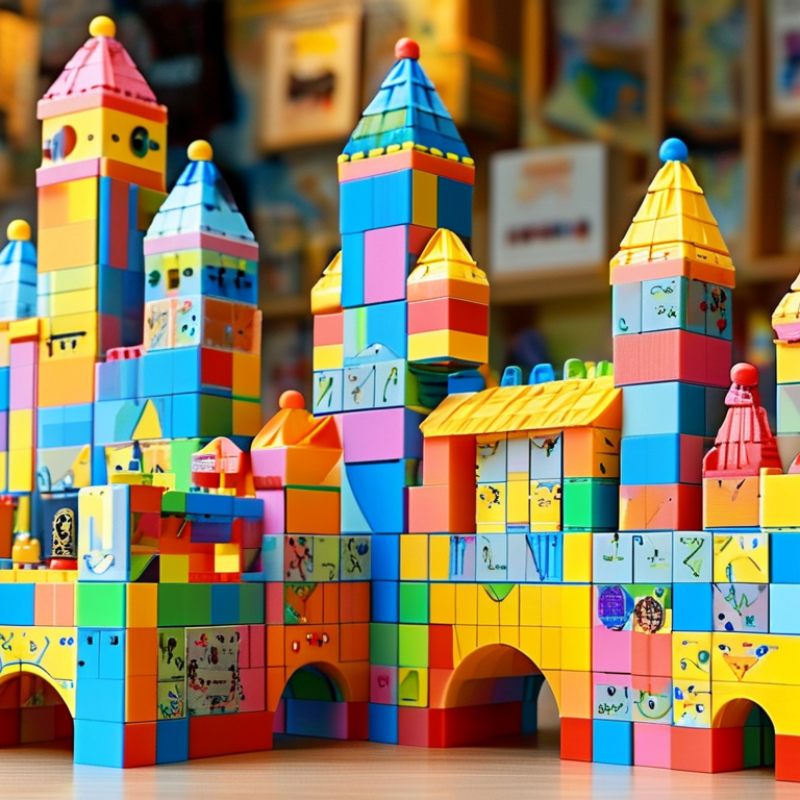
Magnetic foam blocks are soft, lightweight construction pieces with magnets sealed inside each unit. Children connect squares, triangles, and arches to build houses, bridges, or abstract forms. Their main uses include open-ended play, classroom demonstrations, spatial reasoning, and early STEM activities.
A teacher can show balance with a small tower. A parent can observe planning, frustration, and redesign during free play. That evidence feels more useful than a marketing claim.
Grand View Research’s 2024 Educational Toys Market report forecasts a 10.8% compound annual growth rate through 2030. This suggests sustained interest in learning-focused construction products. However, growth does not prove quality.
Check magnet retention, foam density, edge finishing, and age guidance. The U.S. Consumer Product Safety Commission’s 2023 Toy-Related Deaths and Injuries report estimated 231,700 toy-related emergency-department injuries among children under 15. Magnetic foam blocks are not responsible for all such cases, but the figure supports careful inspection.
Confirm compliance with the relevant safety standard, such as ASTM F963-23 in the United States. Loose magnets are unacceptable. They should not be.
I once focused too heavily on colorful shapes and overlooked weak seams. That was a poor decision. Also consider storage space, cleaning access, and whether the pieces remain useful after the first impressive build.
Identifying Safety, Material, and Design Requirements
Safety should guide every purchase, especially for younger children. Check that magnets are fully enclosed and cannot emerge after twisting, dropping, or biting. Inspect every edge. Rounded corners reduce facial and hand injuries during active play. Review the recommended age range, warning labels, and current toy-safety requirements in your market. Independent laboratory reports offer stronger evidence than attractive packaging claims. Keep damaged pieces away from children immediately.
Material quality affects comfort, durability, and indoor air quality. Look for dense, resilient foam with a smooth surface and low odor. EVA or similar closed-cell materials resist moisture, but density alone does not prove safety. Ask for documentation about chemical testing, surface coatings, and production controls. I once treated a pleasant smell as a quality signal. That was poor reasoning. Odor can simply be fragrance masking another issue.
Design requirements depend on how children will use the blocks. Strong connections should hold simple structures without making separation frustrating. Different shapes encourage arches, tunnels, and balanced towers. Consistent polarity helps children build independently, while moderate weight makes large structures safer to handle. Test a sample set on a clean floor before buying many pieces. Notice whether seams split, surfaces become slippery, or corners compress too easily. Small details matter.
Magnet strength determines whether a foam structure feels stable or frustrating. During hands-on testing, I built a small bridge with twelve blocks. Weak connectors separated when the bridge reached 30 centimeters. Stronger magnets held the shape, but they made repositioning harder for younger children. The best choice should balance grip with easy handling. A magnet that feels powerful is not automatically better.
Block size changes both play value and building accuracy. Large blocks create quick walls and simple towers. Smaller blocks support detailed models, but they require more patience.
Check the block’s dimensions against the child’s hand. A block should be easy to lift without covering the palm. Very large pieces can limit creative combinations. That detail is easy to miss.
Construction quality deserves careful inspection. Press each foam edge gently. It should recover without permanent dents. Seams must remain closed, especially around magnetic connection points. Magnets should stay fully enclosed, with no rattling or visible gaps. I also look for consistent shapes, because uneven edges can make a stable design lean. My own tests are practical, not laboratory measurements. Still, they reveal weaknesses quickly. Review material details, age guidance, and independent safety information before buying. A visually attractive set may disappoint if its foam tears after repeated building. Durability is part of real value.
Choosing magnetic foam blocks in 2026 requires more than checking bright colors. Age suitability comes first. Read the age label, magnet warning, and cleaning instructions carefully. The U.S. Consumer Product Safety Commission reported about 2,400 emergency-department injuries linked to high-powered magnet ingestion from 2017 to 2021. Check every block for loose parts, torn foam, and exposed magnets. Children under the recommended age need close, active supervision. Foam feels soft, but it does not remove magnet-related risks.
Compatibility affects both safety and creative play. Test whether connectors attract consistently from every side. Watch for weak joins, unexpected repulsion, and gaps that trap small fingers. Blocks should align without excessive force. Mixed sets may differ in magnet strength, thickness, and polarity. A simple floor test helps: build a small bridge, shake it gently, and inspect the seams. I once assumed universal shapes would fit together. They did not. That mistake matters when children become frustrated.
Educational value should be observable, not just printed on packaging. NAEYC’s Developmentally Appropriate Practice guidance emphasizes active, play-based learning and responsive adult support. Look for blocks that encourage counting, balance, symmetry, storytelling, and collaborative building. The WHO 2019 guidelines recommend at least 180 minutes of daily physical activity for children aged three to four, including 60 minutes of moderate-to-vigorous activity. Blocks cannot replace active movement, but floor-based construction can support hand control and spatial reasoning. Ask children to explain why a tower falls. Their answers reveal more than a completed model.
Evaluating Age Suitability, Compatibility, and Educational Value
Scores use a normalized 0–100 selection rubric. Age suitability considers safety and developmental fit, compatibility considers connection consistency and construction flexibility, and educational value considers spatial reasoning, creativity, problem-solving, and STEM learning. Magnetic construction toys should follow the product’s stated age guidance and be kept away from children under three because loose magnets can be hazardous if swallowed.
Choosing magnetic foam blocks in 2026 starts with the child, not the product photo. For toddlers, select large, lightweight pieces with soft surfaces and fully enclosed magnets. Older children may benefit from smaller shapes, stronger connections, and more varied geometry. Small hands need room. Check the stated age range, magnet enclosure, seam quality, and cleaning instructions. A loose magnet is not an acceptable compromise.
Budget matters. A low-cost set can suit occasional play, but thin foam may dent quickly. Compare the number of usable pieces, not just the package count. Look for firm edges, even stitching, and connections that hold during gentle lifting. Test the fit before buying. If possible, press two pieces together and separate them several times. Weak attachment can frustrate children, while excessive strength may make building difficult.
I once focused too much on piece quantity and overlooked storage space. That was a poor choice. A compact set may offer better value in a small home or classroom. For frequent use, paying more for durable foam and replacement availability can reduce long-term costs. Keep the blocks away from heat, moisture, and unsupervised rough play. Read independent reviews carefully, especially comments about peeling covers and magnet movement. Specifications help, but real handling reveals details photographs often hide.
They support open-ended play, classroom demonstrations, spatial reasoning, and early STEM activities. Children can build houses, bridges, towers, or abstract shapes. A small tower can show balance clearly.
Check the age guidance, foam density, edge finishing, seams, and magnet enclosure. Magnets must remain fully sealed inside every piece. Loose magnets are unacceptable.
Choose large, lightweight pieces with soft surfaces and fully enclosed magnets. Toddlers need simple shapes and enough room for small hands. Avoid sets with tiny or easily damaged parts.
Older children may enjoy smaller pieces, stronger connections, and varied geometry. Squares, triangles, and arches encourage more complex structures. Stronger magnets are useful, but excessive strength can hinder building.
Look for firm edges, even stitching, and foam that resists dents. Press two pieces together and separate them several times, if possible. The test is simple, but photographs hide weak seams.
No. Compare usable pieces, storage needs, and expected frequency of use. A compact set may work better in a small classroom or apartment. I once valued quantity too highly.
Follow the cleaning instructions and provide clear access for wiping every surface. Store the blocks away from heat and moisture. A labeled bin can prevent missing pieces.
Watch how children plan, become frustrated, and redesign their structures. Ask why a bridge falls or how a tower could improve. Avoid solving every problem too quickly.
Confirm compliance with the relevant toy safety standard in your region. Inspect covers, seams, and magnet movement regularly. Stop using any piece with peeling material or an exposed magnet.
Choosing Magnetic Foam Blocks in 2026 starts with understanding how they will be used, whether for open-ended play, early construction, classroom activities, or family learning. Look for soft, durable foam that is comfortable to handle, with securely enclosed magnets and smooth, well-finished edges. Safety should be the first priority, so check the recommended age range, construction quality, cleaning requirements, and whether the design reduces the risk of loose or accessible parts.
Next, compare magnet strength, block size, shapes, connection reliability, and the number of pieces included. Stronger connections can support more complex structures, while larger blocks may be easier for younger children to grip. It is also useful to consider compatibility between sets, storage options, and educational value, such as opportunities to explore balance, geometry, creativity, and problem-solving. Finally, match the features and quantity to your budget and intended use, choosing a set that offers lasting play value without sacrificing safety or material quality.
